Heat pump or condensing boiler: which should you choose?

Heat pump or condensing boiler: which should you choose?
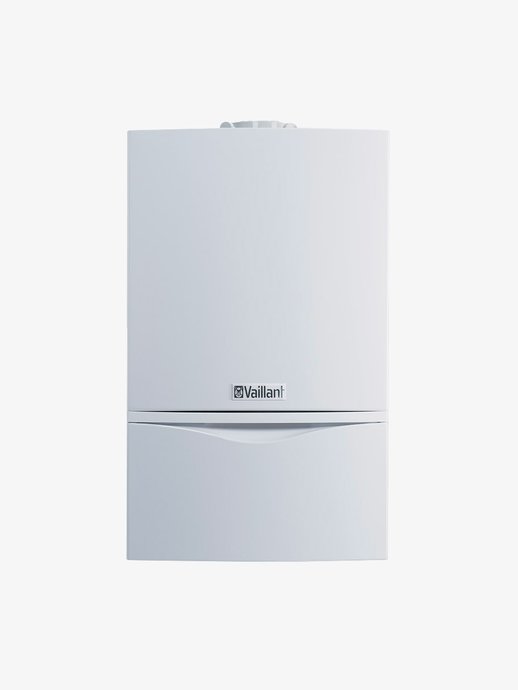
A boiler that breaks down, or is approaching 15–18 years of age, always raises the same question: should you replace it with an identical model, or switch to a heat pump? As recently as 2025, the answer depended mainly on the home’s insulation. In 2026, another factor carries at least as much weight: taxation on heating has changed significantly, shifting the financial calculation between the two options by several thousand euros. This guide compares the two options item by item, to help you make an informed choice rather than a knee-jerk decision.
Firstly, the actual condition of your property
Even before we talk about cost or tax implications, one question determines everything else: can your home cope with a lower temperature? A heat pump produces heating water at 35–45 °C when operating at peak efficiency, compared with 70–80 °C for a conventional boiler. If your radiators date from the 1980s and have never been resized, they were designed for that high temperature, not for that of a standard heat pump.
This isn’t necessarily a deal-breaker. In more than seven out of ten renovation projects, correctly sized steel or aluminium radiators work with a heat pump, provided the property is reasonably well insulated. For more challenging situations, there are high-temperature heat pump models, capable of reaching temperatures of up to 65–70 °C without needing to alter the existing radiators. The guide Air-to-water heat pumps: are they the best choice for renovation? sets out in detail exactly what you need to check before you start: the volume of water in the circuit, descaling and the power supply.
If you’re starting from scratch with this, our guide how to choose your future heat pump lays the foundations, and our comparison heat pump, boiler or underfloor heating: which to choose broadens the discussion to include heat emitters, a topic that goes beyond the scope of this article but remains central to correctly sizing a complete project.
What really changed in 2026: VAT is shaking things up
This is the point that most online comparison sites get wrong, even though it can add several thousand euros to the cost of a project. Until 28 July 2025, the installation of a gas or oil-fired boiler, like any renovation, was subject to a 6 per cent VAT rate in a property over 10 years old. Since 29 July 2025, this is no longer the case: the supply and fitting of a fossil-fuel boiler are subject to 21 per cent VAT, regardless of the age of the building. A transitional measure still allowed the 6 per cent rate for contracts signed before that date, but it expired on 30 June 2026.
Conversely, heat pumps have gained ground in this specific area. They were already subject to 6 per cent VAT in homes over 10 years old, as with any renovation. Since 1 January 2026, this reduced rate has also applied to homes less than 10 years old, including new-builds, and will remain in force until 31 December 2030. For an installation costing €15,000 excluding VAT, the difference between the two rates amounts to €2,250 – a sum which, on its own, tips the balance in many cost-benefit analyses.
In a combined quotation, certain items not specific to the fossil-fuel boiler (radiators, valves, thermostat) may still be charged at 6 per cent if they are clearly itemised in the quotation. It is worth asking your installer for this breakdown rather than accepting a lump-sum price.
How much does it cost to buy, including premiums?
A gas condensing boiler now costs between €2,500 and €8,000 to install, including the unit and fitting, with VAT at 21 per cent now included in this calculation. An air-to-water heat pump, when installed, tends to cost between €8,000 and €18,000, including 6 per cent VAT, for a house of 100 to 150 m². The initial cost difference therefore clearly favours the boiler, which explains why it continues to be the preferred choice when replacing systems on a tight budget.
Bonuses only bridge part of this gap, and, more importantly, they no longer have the same effect as they did a few years ago.
Aid or device | Gas condensing boiler | Air-to-water heat pump |
| TVA | 21 per cent since 29 July 2025 | 6 per cent by 2030, all types of housing |
| Wallonia Bonus (MyWallonia) | Not eligible | Up to €3,600; scheme valid until 30 September 2026 |
| Brussels Premiers | Not eligible since 2023 | Renolution suspended; ECORENO credit offered as an alternative |
| Prime Flandre (My Renovation Grant) | Discontinued since November 2023 | Remains unchanged; amount depends on income bracket |
The Walloon scheme covering amounts up to €3,600 expires on 30 September 2026, which leaves a short window of opportunity as you read this article. Otherwise, it is advisable to exercise caution: these amounts and conditions change every year, and a Facq adviser can check the exact situation with you at the time of your appointment.
The utility bill – the one that spans ten years
This is where the calculation is turned on its head. A correctly sized air-to-water heat pump consumes on average 3,000 to 5,000 kWh of electricity per year to heat a house of 120 to 150 m², which amounts to approximately €900 to €1,500 per year at the current Belgian tariff. A gas condensing boiler, for a comparable floor area, costs around €1,500 to €2,400 in gas per year, depending on the insulation and heating habits.
Over a ten-year period, the initial price difference (often an extra €5,000 to €8,000 for a heat pump) is generally recouped through savings on energy bills, not to mention that gas prices are set to follow a tax trajectory that is unfavourable in the medium term, with a European carbon tax announced for 2028. This calculation varies from property to property: it depends on the installed capacity, the electricity tariff chosen and, above all, the level of insulation, which can cause the heat pump’s actual COP to vary by as much as a factor of two.
When is a condensing boiler still the right choice?
The condensing boiler is not an outdated technology, even with the VAT increase. It maintains an efficiency of over 100 per cent based on lower calorific value (LCV), can be connected to existing high-temperature radiators without any modifications, and its installation takes half a day rather than a project lasting several days.
It remains the most sensible choice in four specific situations: an emergency replacement, where it is not possible to wait for a thermal assessment; a flat in a block of flats, where collective decision-making limits the options or where there is no external access for a heat pump unit; a property where the insulation has not yet been upgraded, with old radiators that are difficult to operate at low temperatures; and a strictly limited purchase budget, where the difference in VAT is not enough to influence the immediate decision. In these cases, it is better to install a correctly sized condensing boiler today than a heat pump that is ill-suited to a property that is not yet ready.
When is a heat pump the right choice?
An air-to-water heat pump becomes the most sensible choice when three conditions are met: a properly insulated home (PEB C or better), heating emitters that are compatible with low temperatures or can be replaced without too much work, and a project designed for the long term rather than merely as an emergency replacement. It combines heating and domestic hot water production in a single unit, with efficiency that remains, in the Belgian climate, largely positive even in very cold weather.
It also has an advantage that a boiler does not: reversibility. A reversible heat pump can be used to heat in winter and cool in summer with the same unit – a real selling point in Belgian summers, which are increasingly characterised by heatwaves. This is not the same as an air-to-air heat pump, which operates on a different principle and does not produce domestic hot water: the operation, advantages and limitations of the air-to-air heat pump are worth reading up on if your home does not have a hydronic system to supply.
The hybrid: the compromise for those who are still undecided
Between the two, a third option remains available and legal, at least until 2026, in all three regions: the hybrid system, which combines a heat pump with an existing or new condensing boiler. The control system automatically selects the most economical heat source depending on the outside temperature: the heat pump covers most of the heating season, whilst the boiler takes over during the rarest cold spells.
This is a sensible solution for homes that are neither sufficiently well-insulated to rely on a heat pump alone, nor forced to remain entirely dependent on fossil fuels. It also allows an existing boiler in good working order to be retained, rather than being scrapped before the end of its useful life. The guide ‘Which equipment to combine with a heat pump’ sets out this setup in detail, along with other useful combinations, such as a thermodynamic hot water tank or a smart thermostat.
What the Belgian regulations say, region by region
The legal framework is changing rapidly, and it varies from one Region to another. Heating oil is the clearest target: banned in new builds in Flanders since 2022, in Brussels since 2025, and in Wallonia since 1 March 2025, with replacement with an identical system still permitted until 31 December 2025 for existing installations. Natural gas is being phased out more gradually: Flanders and Brussels have stopped new gas connections in new-build properties, whilst Wallonia allows greater flexibility for renovation projects, with no ban date set as yet.
The replacement of an existing gas boiler with a new condensing boiler remains permitted in all three regions to date. It is tax incentives, rather than an outright ban, that are currently driving the shift towards heat pumps. These rules change every year: a Facq adviser at EXPOcenter can check with you exactly what applies to your local authority and your project before you commit to anything.
Frequently asked questions
Q1. Heat pump or condensing boiler: which is cheaper to buy?
A condensing boiler is cheaper to buy, costing between €2,500 and €8,000 including installation, compared with €8,000 to €18,000 for an air-to-water heat pump. The difference narrows over time thanks to lower electricity bills than gas bills, but the initial investment remains higher for the heat pump.Q2. Is it true that VAT on gas boilers will rise to 21 per cent in 2026?
Yes. Since 29 July 2025, the installation of a gas or oil-fired boiler has been subject to 21 per cent VAT, regardless of the age of the property. A transitional measure had previously allowed the 6 per cent rate to apply to contracts signed before that date, but this expired on 30 June 2026.Q3. Will it still be possible to install a new condensing boiler in 2026?
Yes, as a replacement for an existing system, in all three Belgian Regions. What has changed is not the permission to install, but the tax regime and the grants: VAT has risen to 21 per cent and regional grants for gas boilers have almost all been phased out since 2023–2024.Q4. How much does heating cost to run – a heat pump or a boiler?
For a house measuring between 120 and 150 m², you can expect to pay around €900 to €1,500 a year in electricity costs for an air-to-water heat pump, compared with €1,500 to €2,400 a year in gas costs for a condensing boiler. The difference depends heavily on the insulation of the property and the energy tariff you are on.Q5. Is the hybrid solution a good compromise?
Yes, in homes that are not yet ready for a heat pump alone. The hybrid system combines a heat pump with a gas boiler, with the control system automatically selecting the most economical heat source depending on the outside temperature. This is a gradual transition, which remained lawful in all three regions at the time of writing.