Air-to-air heat pump: how it works, benefits and limitations

Technology that draws energy from the outside air
How does your heat pump capture heat?
Your air-to-air heat pump works on a simple yet effective principle: it recovers the energy naturally present in the outside air. This technology, known as aerothermal energy, harnesses a free and constantly available resource.
The air contains thermal energy even in cold weather, including when temperatures drop below zero. The outdoor unit of your system captures this energy using a fan that draws in ambient air. A refrigerant circulates through the evaporator, where it absorbs the recovered heat. This refrigerant has a very low boiling point, which allows it to turn into a gas very quickly as soon as it absorbs even a small amount of heat.
The heating process during winter
This refrigerant follows a specific path through four distinct stages. First, it absorbs heat from the outside air in the evaporator and turns into vapour. The compressor then draws in this vapour and increases its pressure, causing its temperature to rise significantly.
This hot vapour reaches the condenser located in the indoor unit. It is here that the refrigerant releases all its heat, which is distributed throughout your rooms via a ventilation system. During this process, the gas cools and returns to a liquid state. The expansion valve then reduces the pressure of the refrigerant, returning it to its initial state. The cycle begins again immediately.
Summer air conditioning thanks to the reversible mode
Your air-to-air heat pump completely reverses its operation during the summer. A special valve changes the direction of the refrigerant flow within the circuit. The indoor unit then acts as an evaporator and absorbs heat from the air in your rooms. The outdoor unit acts as a condenser and expels this heat outside.
This principle is similar to the way your fridge works, drawing heat away from the food. As a result, the temperature inside your home drops by several degrees, providing you with a pleasant coolness.
The components of your system
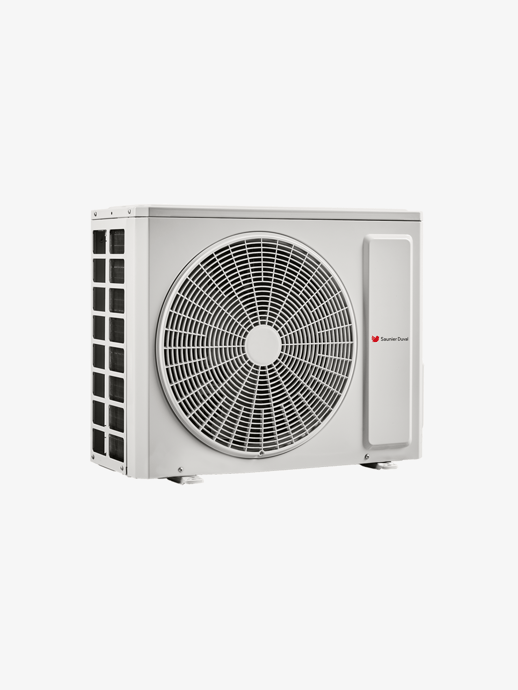
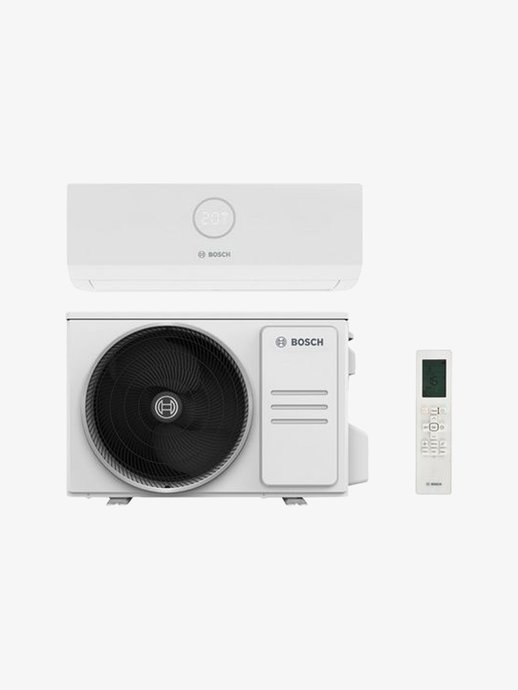
Two main units form the heart of your system. The outdoor unit houses the evaporator, compressor, expansion valve and fan. The indoor unit contains the condenser and the air distribution system. Refrigerant lines connect these two components and allow the refrigerant to circulate.
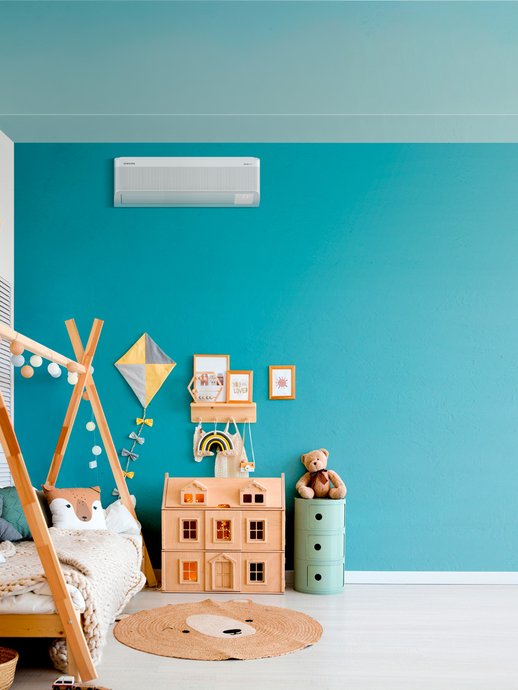
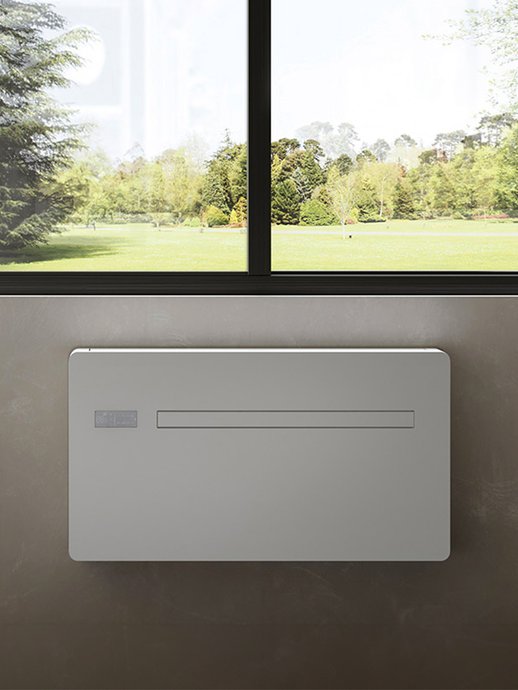
You can choose from a range of configurations to suit your needs. A single-split system comprises a single indoor unit, ideal for heating or cooling a specific room. A multisplit system can power several indoor units, up to seven or eight depending on the model. These indoor units can be adapted to suit your home: wall-mounted, floor-standing units, discreet ceiling-mounted cassettes, or ducted systems that are completely hidden in your loft.
Why choose an air-to-air heat pump?
Quick and easy installation
Your installation takes just one day for a single-split system. No groundworks or major alterations to your home are required. The installer mounts the outdoor unit on your façade or on the ground, installs the indoor units in your rooms, and then makes the connections through simple wall penetrations. This ease of installation contrasts with geothermal heat pumps, which require costly and complex drilling.
Substantial savings on your bill
Exceptional efficiency is the key benefit of this solution. For every kilowatt-hour of electricity you use, your heat pump produces between 3 and 5 kWh of heat. It draws up to 75% of its energy directly from the outside air. If you replace your conventional electric radiators, you can reduce your heating bill by up to 40%. The seasonal coefficient of performance (SCOP) of over 3 ensures consistent efficiency throughout the winter.
Environmentally friendly energy
Outdoor air is a free and inexhaustible source of energy. Your heat pump produces no harmful emissions and runs entirely on electricity. With the growth of solar panels and wind turbines, you are playing your part in the energy transition. With a lifespan of around twenty years, it delivers long-term improvements to your home’s energy efficiency.
Personalised comfort and intelligent control
The reversible system provides heating in winter and air conditioning in summer with a single unit. You can adjust each indoor unit to suit your specific needs, room by room. The temperature can be controlled to the nearest degree using your remote control or smartphone. The temperature rises quickly, without any unpleasant odours or draughts.
The latest models come with apps that allow you to control your system from your smartphone. You can programme the system to suit your lifestyle.
What you need to know before making a decision
No domestic hot water supply
An air-to-air heat pump only heats the air in your rooms. Unlike air-to-water models, it cannot supply your domestic hot water system. You will therefore need to install additional equipment for hot water: electric water heater, a thermodynamic water heater or a condensing boiler. This requirement means you will need extra space in your home.
The noise from the outdoor unit
The outdoor unit generates background noise of between 55 and 65 decibels. The fans and compressor produce vibrations that can be a nuisance, particularly at night when the windows are left open. Regulations set strict limits of approximately 45 dB during the day and 40 dB at night at the property boundary.
To minimise noise pollution, choose the location of your outdoor unit carefully. Avoid enclosed corners, which amplify noise, install anti-vibration mounts and direct the airflow away from bedrooms. Wall-mounted indoor units remain discreet, operating at 19 to 32 dB depending on their power output – equivalent to the level of a quiet conversation.
Reduced performance in very cold weather
The efficiency of your heat pump decreases as temperatures drop. Most models operate effectively down to around -7°C. Below that, the outside air contains fewer calories and the compressor has to work harder.
However, some newer models are designed to operate at temperatures as low as -20°C, or even -25°C in the extreme cold versions. In regions with harsh winters, an electric backup system or a wood-burning stove is often necessary during prolonged periods of freezing weather.
Little financial support is available
Financial support schemes remain limited for this type of installation. Air-to-air heat pumps are not eligible for regional grants in Wallonia and Brussels, unlike air-to-water or geothermal models.
Only Flanders offers financial assistance through the Mijn VerbouwPremie scheme, with grants ranging from €300 to €600 depending on your income. The good news, however, is that VAT has been reduced to 6% has applied across the whole of Belgium since January 2026.
Installation and sizing tailored to your needs
Determine the right power rating for your home
Accurate sizing ensures the optimal comfort and energy savings you’re looking for. We help you calculate the required capacity based on your floor area, ceiling height and the insulation in your home. This precise assessment prevents oversizing, which unnecessarily increases your purchase and running costs.
Choosing the right location for your units
The outdoor unit requires an open space of approximately 1 m², ideally sheltered from prevailing winds. Leave a gap of 40 to 50 cm between the unit and the wall to minimise vibrations and facilitate maintenance.
For wall-mounted indoor units, we recommend installing them at least 2 metres above the floor and at least 10 cm from the ceiling. The floor-standing units are the perfect replacement for your existing electric radiators, whilst optimising heat distribution.
Have the installation carried out by a qualified professional
Handling refrigerants requires a mandatory certificate of competence. Use a certified installer to ensure installation complies with standards and to optimise your system’s performance.
A modern solution for your comfort
The air-to-air heat pump offers an efficient solution for heating and cooling your home without the need for major building work. Its outstanding energy efficiency and attractive installation costs make it an appealing option for many households.
However, we must be transparent: this technology does have certain limitations. As it does not produce domestic hot water, additional equipment is required, and the noise generated by the outdoor unit means that particular care must be taken when choosing its location.
Before making your decision, assess your actual heating and cooling needs, as well as the climate in your area. This solution is particularly suitable for well-insulated homes located in areas with mild winters.
We are here to guide you through this process and help you choose the heating solution best suited to your needs.
Frequently asked questions
Q1. What are the main drawbacks of an air-to-air heat pump?
The main drawbacks include the inability to produce domestic hot water, which requires the installation of additional equipment such as a thermodynamic water heater. Furthermore, noise levels from the outdoor unit can reach 55 to 65 decibels, and performance decreases during periods of extreme cold, sometimes making a supplementary heating system necessary.Q2. Is it advisable to switch off your air-to-air heat pump at night?
No, this is generally not recommended. Switching off your air-to-air heat pump at night means it will use more electricity in the morning to bring the temperature back up to the desired level. Paradoxically, this can increase your overall energy consumption, particularly if your home is poorly insulated.Q3. How can I reduce the electricity consumption of my air-to-air heat pump?
To optimise consumption, maintain a stable temperature throughout the day without frequent fluctuations. Ensure your system is regularly serviced and keep a close eye on your electricity consumption. Avoid activating the auxiliary electric heater unnecessarily, as it consumes much more energy than the heat pump’s normal operation.Q4. Down to what outdoor temperature can an air-to-air heat pump operate?
Most models operate correctly down to around -7°C. However, some newer models can guarantee operation down to -20°C or even -25°C for versions specifically designed for harsh climates. Below these thresholds, a supplementary heating system is generally required.Q5. What energy savings can be achieved with an air-to-air heat pump?
For every kilowatt-hour of electricity consumed, it produces between 3 and 5 kWh of heat. When used as a replacement for conventional electric radiators, savings of up to 40% on heating bills can be achieved, as it draws up to 75% of its energy from the outside air.