Heat pump, boiler or underfloor heating: which should you choose?

The essentials
1. The choice of your heating system depends primarily on your home’s energy efficiency. An air-to-water heat pump is currently the most efficient solution for well-insulated homes: it generates more energy than it consumes, reduces your energy bills and meets the requirements of the new Belgian regulations.Book an appointment
2. Condensing boilers remain a viable option in older or poorly insulated homes, where heat pumps reach their technical limits. They ensure high room temperatures without requiring major work on the building envelope.
3. Hydraulic underfloor heating is not a heat generation system but a low-temperature heat emitter: it is ideally suited to a heat pump to maximise performance. Together, they form the most efficient combination on the Belgian market in 2026.
First and foremost: generators and transmitters – do not confuse their roles
The first point of confusion to clear up is a fundamental one. In a heating system, there are two categories of equipment, each of which plays a distinct role.
The generator produces heat: this could be a heat pump, a condensing boiler or a biomass boiler. It draws energy (from the air, the ground, gas or wood) to convert it into heat and transfer it to a water circuit.
The heat emitter distributes this heat throughout the rooms: this could be a radiator, underfloor heating or a fan coil unit. It receives the hot water produced by the boiler and releases it into the ambient air.
This distinction completely changes the logic of the project. You don’t choose between a ‘heat pump’ and ‘underfloor heating’ as if they were alternatives. You choose a heat source suited to your home, and then one or more heat emitters that are compatible with that heat source.
In Belgium, the European Energy Performance of Buildings Directive (EPBD) imposes increasingly stringent standards. From 2024, new buildings will no longer be permitted to install fossil-fuel boilers. For major refurbishments, grants are now conditional upon the chosen system meeting a minimum performance standard.
The three main solutions: a comparison table
| Solution | Rôle | Effectiveness | Ideal for | Stage of works |
|---|---|---|---|---|
| Air-to-water heat pump | Generator | Very high (COP 3 to 5) | Detached houses, whether newly built or renovated | Moderate to severe |
| Geothermal heat pump | Generator | Maximum (COP 4 to 6) | Large plots of land, ambitious projects | Important |
| Gas condensing boiler | Generator | Good (efficiency > 90%) | Old houses, poorly insulated homes | Lightweight (identical replacement) |
| Biomass boiler (wood/pellets) | Generator | Good, carbon-neutral | Rural areas, access to fuel | Moderate (storage space required) |
| Hydraulic underfloor heating | Low-temperature transmitter | Maximum with a heat pump | Suitable for all surfaces; new builds and renovations welcome | Heavy (wet) or moderate (dry) |
| High-temperature radiators | High-temperature transmitter | Suitable for use with a boiler | Renovation without any floor work | Lightweight (easy to replace) |
| Fan coil units | Transmitter + refresh | Suitable for reversible heat pumps | Modern homes, suitable for both summer and winter use | Moderate |
The air-to-water heat pump: the leading choice in 2026
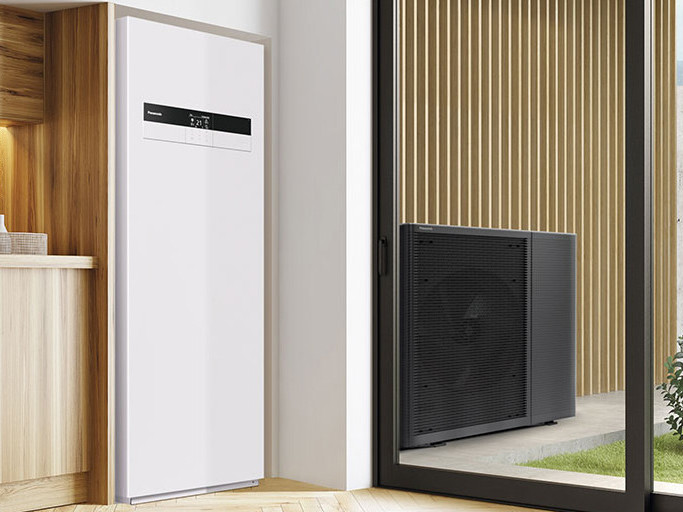
In Belgium, the air-to-water heat pump has become the standard choice for all new-build projects and for the majority of full-scale renovations. The principle is simple: it captures the heat present in the outside air and transfers it to the home’s heating water circuit. Even in cold weather, the outside air contains recoverable thermal energy.
What makes it remarkable is its efficiency. Whereas a boiler consumes 1 kWh to produce 1 kWh of heat, a heat pump produces 3 to 5 kWh for the same 1 kWh of electricity consumed. This is known as the COP, or coefficient of performance.
When an air-to-water heat pump is the right choice
It is particularly suitable in three situations:
- Whether it’s a new build or a major renovation: the building envelope is well insulated, heating requirements are low, and the heat pump can operate at low temperatures (35 to 45 °C), where its efficiency is at its best.
- Replacement of a boiler in a partially insulated property: provided that the existing radiators are upgraded or replaced. A heating engineering consultancy can assess suitability within a few hours.
- Projects with underfloor heating: The low temperature of the underfloor heating system is exactly the ideal operating condition for a heat pump. The two are a perfect match.
Things to bear in mind before you start
A heat pump is not the right solution in every case. In a poorly insulated home with old high-temperature radiators (70 to 80 °C), it would be forced to operate under sub-optimal conditions, with a low COP and a disappointing energy bill.
The noise from the outdoor unit is also something to bear in mind, particularly in densely populated urban areas or where properties are built close together. Recent models have made significant improvements in this regard, but careful planning of the installation location remains essential.
The winning duo in 2026
An air-to-water heat pump combined with a underfloor heating system: this is the system that offers the best overall efficiency, the greatest thermal comfort and the lowest energy bills. The underfloor heating operates at 30–35 °C, the temperature at which the heat pump achieves its maximum COP. The result: a quiet, evenly heated and energy-efficient home.
Condensing boilers: when are they still the right choice?
How it works and its benefits
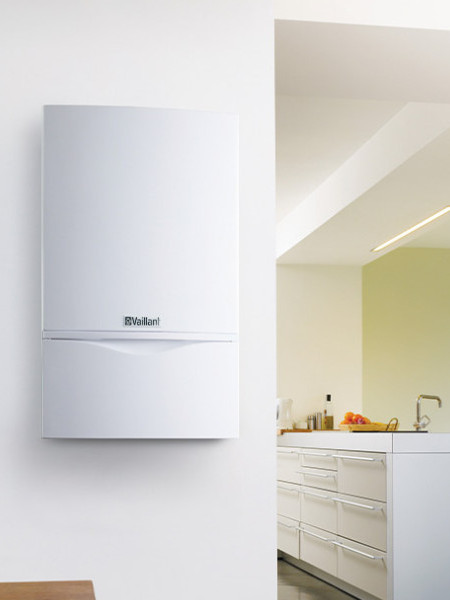
The condensing boiler recovers the latent heat contained in the flue gases, enabling it to achieve efficiency levels in excess of 100% based on the lower calorific value (LCV). It is compatible with existing high-temperature systems, without the need for additional work on the radiators or the building envelope.
Whether in a flat, an older house with high-temperature radiators, or a property where the insulation is insufficient to justify a heat pump, a condensing boiler remains a sound, reliable and cost-effective solution.
Signs pointing to the boiler
Urgent replacement without the possibility of carrying out insulation work at the same time.
A flat in a block of flats where collective decisions limit your options.
Property with an existing high-temperature heating system and a limited budget for radiators.
A region with harsh winters where the performance of an air-to-water heat pump may drop significantly (although current models operate down to -20 °C).
Facq Advice
If you are replacing a boiler and are planning to carry out energy-efficiency improvements within the next five years, it may be wise to opt for a hybrid boiler (heat pump with a gas boiler as a backup) right now. This system automatically optimises the use of both energy sources depending on outdoor conditions and provides a gradual transition towards an all-electric system.
Underfloor heating: the surface that makes all the difference
Underfloor heating is perhaps the most sensorially transformative investment in a renovation project. Walking barefoot on a gently warm floor in winter, with no draughts, no noise, and no hot or cold spots: it’s an experience that’s hard to forget once you’ve had it.
The principle behind it is a network of pipes embedded in the floor (either within a screed or as a dry-lay system) through which low-temperature hot water (28–35 °C) circulates. Heat is distributed across the entire floor surface through radiation and natural convection. Unlike radiators, there are no localised hot spots.
Underfloor heating with screed vs dry-lay systems: choosing the right option for your situation
There are two installation methods, each designed to meet different requirements.
| Hydraulic screed | Dry system (pads) | |
|---|---|---|
| Installation | Laying a concrete screed (4–7 cm) | Prefabricated modules installed without a screed |
| Deadline | Drying time: 28 days minimum | Quick implementation (a few days) |
| Thermal inertia | High (slow temperature rise) | Low (faster response) |
| Suitable for renovation | Complex (raised ground level) | Possible (limited height gain) |
| Relative cost | Lower on large construction sites | Higher, but less work involved |
| Performance with a heat pump | Optimal | Very good |
Underfloor heating in a renovation project: is it really possible?
This is often the first concern: "My floor is already laid; it's too late." That isn't always the case. The dry system using pedestals allows underfloor heating to be installed without a screed, raising the floor by just 2 to 4 cm. This is feasible in many renovation projects, provided you take into account the impact on door thresholds and skirting boards.
For smaller-scale renovations, there is another option: low-temperature radiators, which operate at the same temperatures as underfloor heating (35 to 45 °C) and are therefore a perfect match for a heat pump. They offer a smart alternative when underfloor heating is not an option.
The feeling is like no other
A well-designed underfloor heating system provides warmth that rises from the floor, gently enveloping the body without making a sound. No radiant heat, no draughts. Just an even temperature, from the basement to the attic. Once you’ve experienced it, you’ll never go back to radiators.
Combining solutions: partnerships that really work
An efficient heating system is rarely a one-size-fits-all solution. In Belgium, the best systems in 2026 will intelligently combine heat generators and radiators to meet the specific needs of a home.
Heat pump + underfloor heating: the perfect combination
This is the most common combination in new builds and full-scale renovations in Belgium. The heat pump supplies water at 30–35 °C, which is precisely the optimal operating range for underfloor heating. The COP remains at its maximum throughout the season, energy bills are kept to a minimum, and the level of comfort is unrivalled.
If the property has rooms without underfloor heating (attic bedrooms, extensions), low-temperature radiators or fan coil units are installed in these areas, whilst maintaining the same low temperature range.
Heat pump + low-temperature radiators
In a renovation project where the floor is inaccessible, low-temperature radiators (also known as large-surface-area radiators) allow the system to operate at 45–55 °C, which is compatible with a properly sized heat pump. This offers a sensible compromise between performance and site constraints.
Condensing boiler + existing underfloor heating
If you already have underfloor heating and are thinking of replacing your boiler, a condensing boiler remains a compatible option, even if it does not make the most of the low temperature of the underfloor system. Switching to a heat pump in this case is straightforward and makes a lot of sense in the long run.
Hybrid system: heat pump + gas boiler for backup
It is also the most flexible solution for households wishing to phase out fossil fuels at their own pace, without compromising on comfort during harsh winters.

Benefits and financial assistance in Belgium: what matters in 2026
The key principles guiding the aid
Air-to-water heat pumps are automatically eligible for grants in all three regions, provided they meet the performance thresholds (COP and seasonal coefficient of performance, SCOP).
Hydraulic underfloor heating may be included in a comprehensive grant application (renovation package / réno-pass), depending on the region.
New gas boilers are no longer eligible for grants in new builds as of 2024. For renovation projects, the conditions vary.
These grants can be combined with federal tax deductions in certain cases. A Certified Energy Advisor (CEA) can provide you with a full breakdown.
In Wallonia, grants are administered through Mywallonia. In Brussels, they are administered through Bruxelles Environnement (Energy Grants and Rénopack). In Flanders, they are administered through the Vlaams Energiebedrijf (grants). The amounts, conditions and limits change every year. A Facq advisor can guide you during your appointment at the EXPOcenter.
Frequently asked questions
Q1. Heat pump or condensing boiler: how to choose in 2026?
The answer depends primarily on how well your home is insulated. If your home is well insulated (PEB rating C or better) and is fitted with, or planned to be fitted with, low-temperature radiators, an air-to-water heat pump is the most sensible choice in terms of energy efficiency and long-term cost-effectiveness. If your home is poorly insulated, with existing high-temperature radiators, a condensing boiler remains a reliable and cost-effective solution until a more extensive renovation can be carried out. A hybrid system is the best option in situations that fall somewhere in between.Q2. Is it really possible to install underfloor heating during a renovation?
Yes, in many cases. The dry-lay system allows underfloor heating to be installed without pouring a screed, raising the floor level by just 2 to 4 cm. This method is suitable for most renovation projects, provided that adjustments to door thresholds and skirting boards are planned in advance. In areas where underfloor heating is not feasible (mezzanines, converted attic rooms), low-temperature radiators or fan coil units provide an equally effective alternative.Q3. Does a heat pump really work in a Belgian winter?
Yes. Modern air-to-water heat pumps operate at outdoor temperatures as low as -20 °C, and their COP remains positive even at -10 °C. In Belgium, where temperatures rarely drop below -5 to -8 °C for any length of time, the heat pump covers the vast majority of heating needs throughout the season. The rare days of extreme cold can be covered by an integrated electric backup (heating element), included in most units, or by a hybrid system with a gas boiler.Q4. What is the recommended COP for a heat pump in Belgium?
A COP of 3 means that the heat pump produces 3 kWh of heat for every 1 kWh of electricity consumed. In Belgium, the SCOP (seasonal coefficient of performance) is the most relevant indicator as it takes into account climatic variations throughout the entire season. A good SCOP for the Belgian climate is between 3.5 and 4.5 for an air-to-water heat pump. Ground-source heat pumps can exceed 5. The higher the SCOP, the lower the bill. Correct sizing of the installation is essential to maintain this level of performance over the long term.Q5. Can underfloor heating be used to cool a room in summer?
Yes, this is possible with a cooling underfloor heating system combined with a reversible heat pump. In summer, the heat pump operates in cooling mode and circulates cool water through the underfloor heating system (between 18 and 20 °C). The cooling effect is gentle and silent, with no draughts. It is more limited than a conventional air conditioning system (cooling by 2 to 4 °C on average), but perfectly suited to the Belgian climate. Condensation on the floor is the main issue to watch out for, and it requires a humidity control system.
Design your heating system with a Facq expert
Heat pumps, underfloor heating, hybrid boilers: we have the right solution for every home. At one of our 17 EXPOcenters across Belgium, our advisors will assess your situation, suggest the most suitable solutions and support you right through to installation. Book a free, no-obligation appointment.Book an appointment