What are the 2026 trends for shower trays?
The invisible effect: aiming for zero visual break
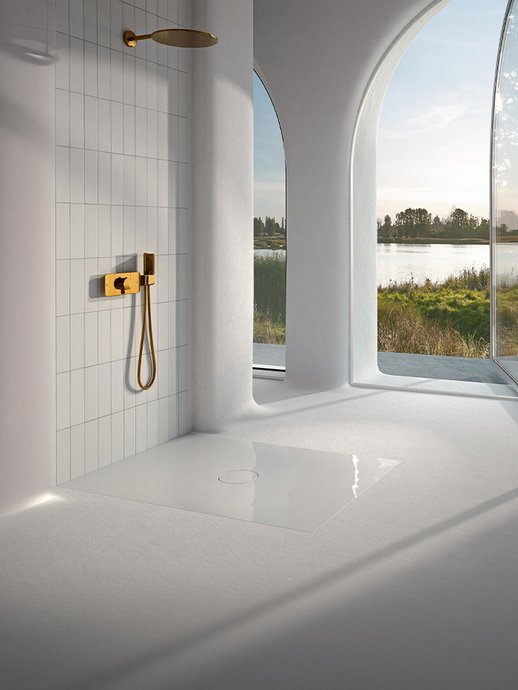
The big underlying trend is that the shower tray is slowly disappearing as a visible part of the room. The goal is no longer to have a nice-looking tray, but to barely notice it at all, so the shower blends naturally into the rest of the bathroom.
A smooth flow between the floor and the shower
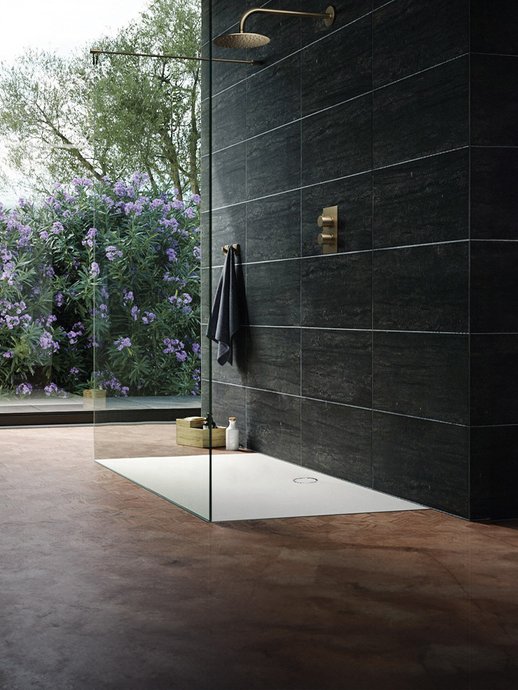
The new standard is to use the same floor colour all the way into the shower area, with no change in material or colour between the two spaces. This creates a feeling of more room, even in small bathrooms, where every visual break tends to make the space feel smaller. This has become one of the most sought-after points in current renovation projects, even more than the exact material of the tray itself, which becomes almost a secondary choice once this first point is respected.
A drain that blends into the design
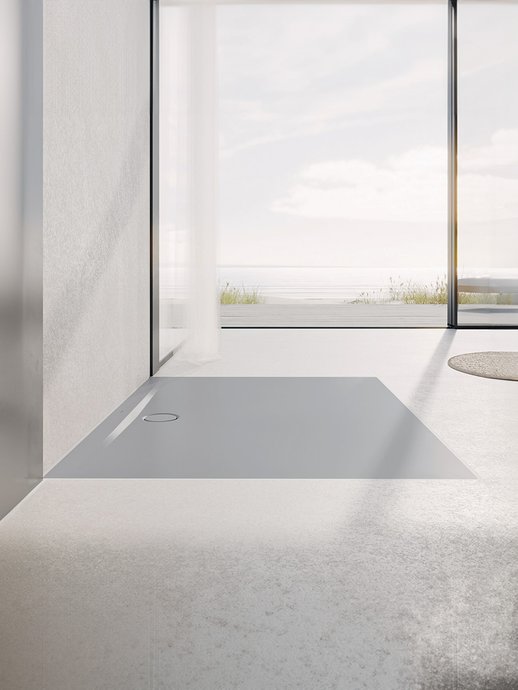
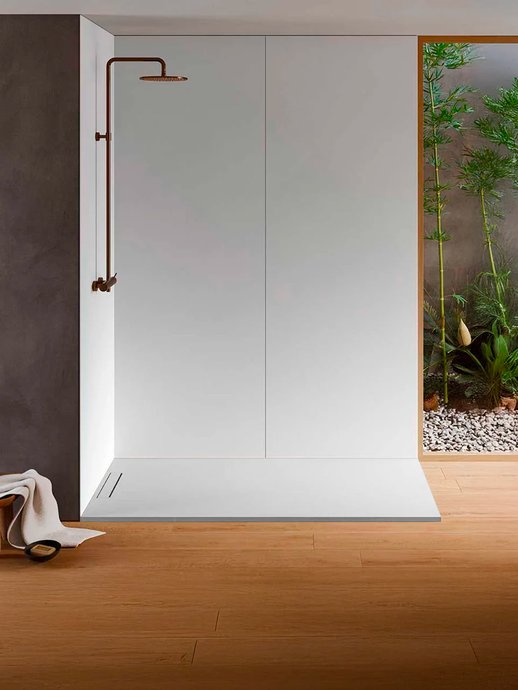
Instead of a round, visible drain in the middle of the tray, a linear drain channel has become the common choice in new installations. It is discreet, usually placed against a wall or in a corner rather than in the centre, and blends in with the tray so well that it is almost impossible to spot at first glance, even with bare feet in the shower.
The stone and slate look, the finish that leads the way
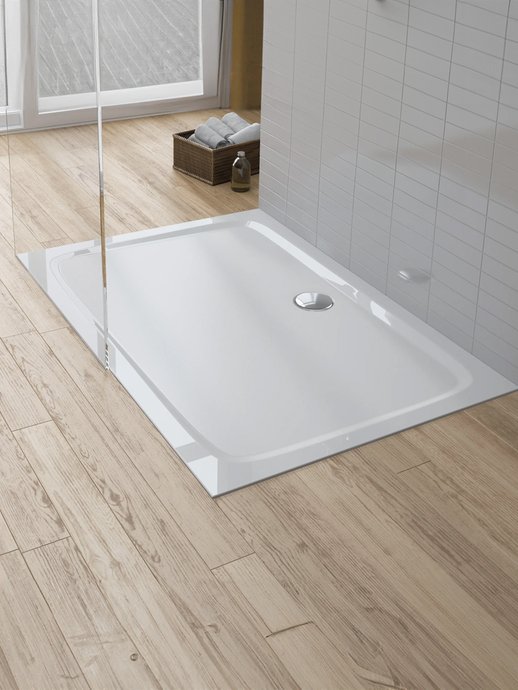
If one finish trend had to sum up 2026, it would be this: surfaces that copy the look of natural stone or slate are clearly the most popular choice in the new ranges shown by manufacturers, well ahead of the smooth, glossy finishes that used to be the norm.
A texture that changes everything, to touch and to look at
These finishes closely copy the grain and matte look of real stone, which gives the tray a warmer, more natural feel than a perfectly smooth, cold surface. The look is closer to a natural stone floor than to a standard bathroom fitting, which is a big part of why it appeals to people who want a bathroom that feels like a real living space, almost an extension of the rest of the home, rather than a plain, impersonal utility room.
Bigger sizes, for a shower that becomes a real space
The shower is no longer seen as a small, purely practical corner, just enough to wash quickly in the morning. In 2026, it is meant to be spacious, even generous, more like a true wellness experience than a simple step before leaving the house.
The XXL size becomes affordable
Trays over 120, or even 140 centimetres long, once reserved for costly custom projects that were hard to produce, are now becoming common thanks to progress in composite materials, which now make large-scale production much easier. This fits naturally with the trend of turning an old bathtub into a large shower space, a renovation project that keeps growing year after year, driven by the wish for a simpler, more comfortable daily life.
Zero threshold, zero step, for fully open access
Having no raised edge at the entrance of the shower remains one of the strongest signs of a modern, well-designed installation. This is no longer just about looks or a clean visual style, but also a real question of everyday accessibility, for every age and every level of mobility in the home, which makes this a trend that is clearly here to stay, unlike some more short-lived finishes.
Colours that move away from all-white
White is still a classic, but it is no longer the automatic choice it was until recently when picking a shower tray. The range of colours on offer has widened a lot in recent seasons, with shades that feel closer to natural materials than to the colder, more clinical look of the past.
Shades inspired by nature
Sand beige, taupe, light terracotta or deep stone grey: these natural shades are by far the most common in this year's new shower tray ranges, matching the idea of a bathroom designed as a warm, cosy space rather than a cold, impersonal room with a clinical white look. They also make it easier to hide everyday marks while keeping a timeless look, less likely to feel dated than brighter colours, which can quickly make a bathroom look old-fashioned.
A tray that matches the rest of the room
The real trend, more than picking one exact colour, is the wish to make the tray, the tiles, the taps and the furniture work together, rather than choosing the tray on its own in plain white without thinking about the rest of the room. A tray whose colour matches or complements the surrounding floor gives a far more finished and coherent result than a plain white basin placed with no thought for the room as a whole, even if the material and build quality are otherwise the same.
Shapes that fit every layout
While the classic rectangle is still the most common shape, more shapes are now offered to better fit real bathroom layouts, especially smaller or unusual ones.
The quarter-circle, to make the most of small spaces
In compact bathrooms, a quarter-circle tray fits a comfortable shower in without getting in the way of movement around the room. This shape is coming back strongly, driven by the need to make good use of ever-smaller spaces, especially in city homes.
The made-to-measure tray, a real long-term trend
Rather than fitting their project around standard sizes, more and more people are choosing a tray cut to measure, which fits exactly into their bathroom, even in the trickiest corners or nooks. This has become a real selling point for many brands, and a practical way to avoid the layout compromises that used to frustrate renovation projects with unusual constraints.
How to follow the trends without getting your project wrong
Following trends doesn't mean copying the latest look without thinking about your own space. Here are a few pointers to help you make the right choices for your situation.
Start by thinking about matching the rest of the floor
Even before picking a texture or a specific colour, it's best to look first at the existing floor in the rest of the bathroom. A successful tray in 2026 is above all one that matches its surroundings rather than an item chosen on its own. Before you start, it also helps to know about the design mistakes to avoid at all costs when planning your shower area, so you don't repeat choices that look trendy at first but make everyday use harder.
Choose the right size for your existing setup
The extra-flat shape, which makes the smooth floor effect possible, is not always easy to fit depending on your existing installation. To better understand the options and what each one means, this comparison of walk-in showers, extra-flat trays versus tiled screeds goes over the differences in look, budget and feasibility depending on your bathroom's layout.
Match the material to how the shower will really be used
Beyond looks, the tray's material should above all suit how the shower is used every day. A bathroom used by the whole family faces different demands than a spare shower or a rarely used washroom. Impact resistance, comfort underfoot, ease of cleaning and long-term durability are all things to weigh up. Acrylic, ceramic and resin each have their own strengths, and the right choice depends as much on budget as on how you use it and how long you expect it to last.
A trend that favours understatement and a natural look
If we had to sum up the spirit of the 2026 trends for shower trays in one idea, it would be this: the less the tray stands out as its own thing, the more finished and successful the shower feels overall. A smooth match with the floor, stone-look finishes, larger sizes and shapes suited to each layout: all these trends point to the same goal, a shower that blends naturally into the bathroom rather than standing apart as an isolated fitting cut off from the rest of the room.
To turn these trends into a real project that suits your own bathroom, without getting the choices wrong for your space, Facq's advisors can help you in a showroom, comparing finishes, sizes and materials in person to find the tray that best fits your style and your daily life.
Frequently asked questions
Q1. Do I really need a stone-look tray to be on trend in 2026?
No, it isn't a must, but it is clearly the most popular finish this year. A smooth, plain tray is still a perfectly good choice, especially for a more minimalist style, but the stone or slate look adds a more current, warmer touch that better matches today's décor trends.Q2. Does a linear shower drain work for every layout?
A linear drain works especially well with an extra-flat tray or a tiled screed, but it usually needs a more precise installation than a standard round drain, particularly for the drainage slope. It's best to check that it suits your existing setup before committing to this choice.Q3. Can I follow the trend for larger sizes in a small bathroom?
Yes, to some extent, by choosing a shape suited to the space, such as a quarter-circle rather than a large rectangle that would get in the way of movement. The main point is to keep enough walking space around the shower, even if that means adjusting the size of the tray.Q4. Which tray colour should I choose to stay on trend without making a mistake?
Natural shades such as sand beige, taupe or stone grey remain safe choices, as they go well with many bathroom styles and don't date quickly. The most important thing is to pick a shade that matches the existing floor and walls rather than choosing a colour on its own.Q5. Does a made-to-measure tray cost a lot more than a standard model?
Generally yes, a tray cut to measure is a bigger investment than a standard size, because of the custom production it requires. This extra cost is mainly worth it for unusual layouts where no standard size fits well.