How to choose your shower tray? Acrylic, ceramic or resin: a guide to materials

The three materials we recommend for your shower tray
The choice of material determines the comfort, durability and maintenance of your shower for years to come. Discover the three solutions we have selected for you, each with its own specific advantages depending on your project.
Ceramics: a safe and economical choice
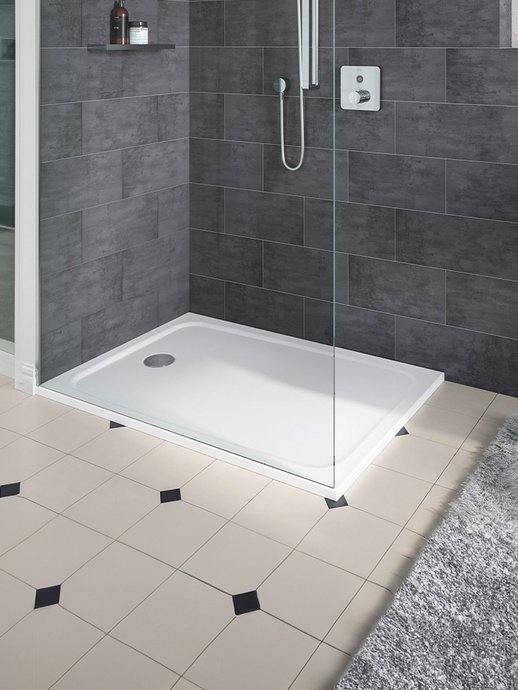
Ceramic remains a popular choice due to its exceptional robustness. This material is highly resistant to everyday knocks and scratches and retains its original appearance for decades.
It is particularly easy to maintain: its non-porous surface naturally repels limescale and stains. Simply wipe with a sponge and mild detergent to restore its original shine.
Please note, however, that its considerable weight (between 30 and 50 kg) requires a solid floor. If your bathroom is upstairs with a wooden floor, this solution may not be suitable. In addition, its surface becomes slippery when wet, although anti-slip treatments can improve safety.
Its affordable price makes it an ideal solution for controlling your budget without sacrificing quality.
Acrylic: lightweight and comfortable
Acrylic is appealing due to its ease of installation and light weight. Reinforced with technical fibres, this material offers satisfactory stability for everyday use.
Unlike cold ceramic, acrylic retains heat and feels pleasant underfoot. Its naturally non-slip surface improves safety, while its moderate cost makes it ideal for those on a tight budget.
However, we must warn you of its limitations: it is less resistant to impact and can scratch more easily. Over time, its surface may yellow if not properly maintained. As with ceramic, you will need to choose from the standard sizes available.
Resin: modern and tailor-made
Resin represents the pinnacle of customisation. This innovative material perfectly mimics the appearance of stone, wood or even concrete, depending on your preferences.
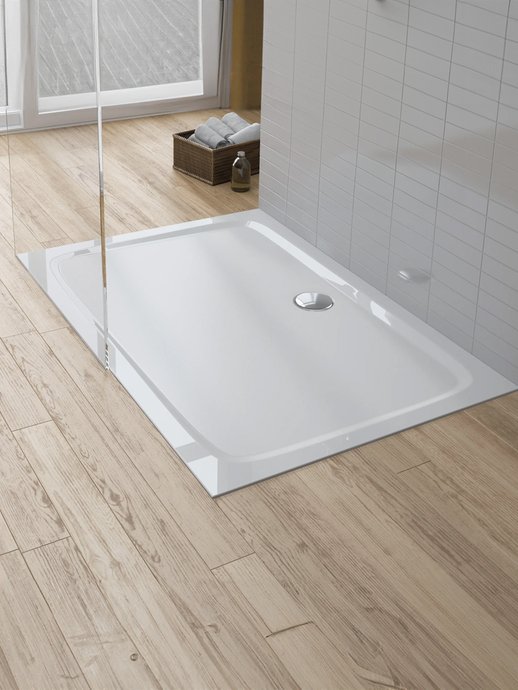
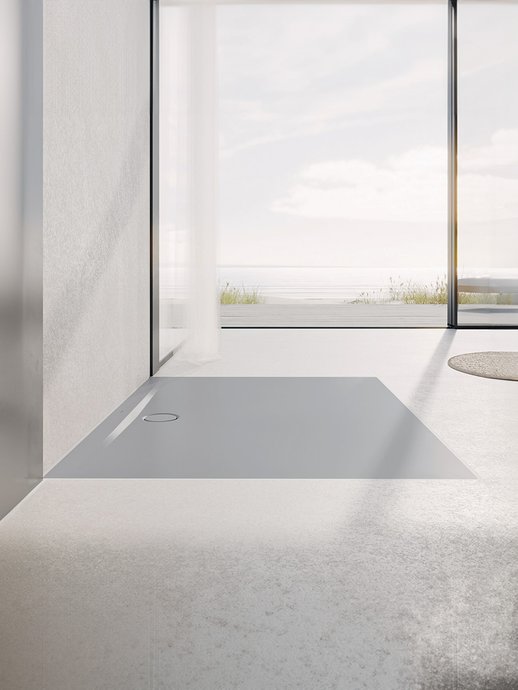
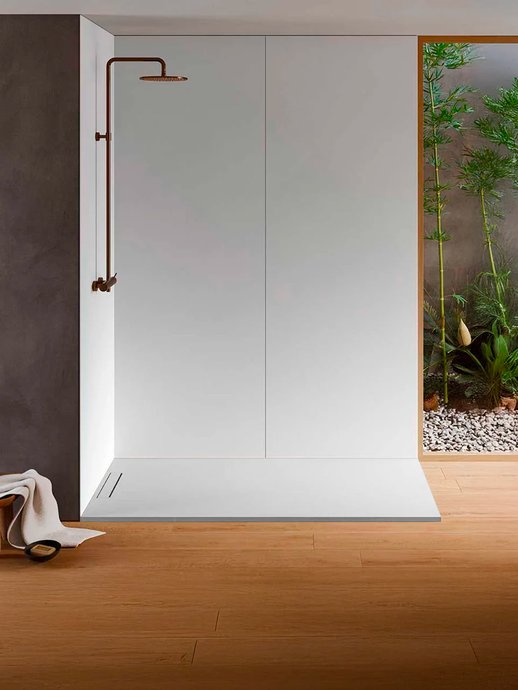
Its greatest strength? The ability to create a tray that is perfectly suited to your space, even with complex cut-outs made directly on site. At just 3 cm thick, the extra-flat models fit perfectly into walk-in showers.
The resin also excels in terms of resistance: it withstands shocks, prevents scratches and is highly resistant to everyday wear and tear. Its non-slip and antibacterial surface guarantees safety and hygiene for the whole family.
The only drawback is the price, which is generally higher than other options. However, the democratisation of this technology is making resin shower trays increasingly accessible.
Adapt your choice to your lifestyle
Your shower tray must first and foremost suit the way you use your bathroom. Each situation has different priorities.
Family bathroom: prioritise durability
A large family puts your shower tray through its paces. Opt for resin, which can withstand everyday knocks and is scratch-resistant. Bonus: its naturally non-slip surface protects young and old alike.
Simplified maintenance quickly becomes essential when the whole family is involved. Whether resin or ceramic, their non-porous surfaces can be cleaned with a simple wipe of a cloth. No more hours of scrubbing!
Installation upstairs: consider the weight
Your wooden floor cannot withstand just anything. Acrylic is ideal, weighing approximately 15 kg.
Please note: a ceramic shower tray weighs up to 50 kg. You will need to reinforce the structure, which will increase your installation budget.
Walk-in shower: opt for an extra-flat design
The extra-flat resin shower trays (3 cm thick) fit perfectly into this type of installation. Also ideal for disabled access.
Safety is non-negotiable: ensure that your shower tray meets Class C adhesion standards, even when wet.
Small budget: acrylic is the way to go
You can find decent quality acrylic shower trays starting at around £100. For moderate use, they are perfectly adequate.
If you have a slightly larger budget, ceramic tiles offer excellent value for money in the long term.
Essential technical criteria for making the right choice
Beyond the material, certain technical aspects determine the safety and comfort of use of your shower tray. We guide you through the essential points to check before making your purchase.
Easy maintenance to suit your lifestyle
Contrary to popular belief, modern non-slip shower trays are easy to clean. Resin surfaces combine safety and ease of maintenance thanks to their non-porous structure.
Follow these simple steps to extend the life of your shower tray:
- Rinse after each use.
- Use a squeegee to prevent limescale marks.
- Clean regularly with black soap or diluted white vinegar.
Avoid abrasive products and metal sponges at all costs, as they damage the anti-slip properties.
Drainage system: vertical or horizontal?
The choice of water drainage directly affects the performance of your shower. There are two main configurations:
Vertical drainage: ideal for new buildings, it guarantees optimal drainage.
Horizontal drainage: more suitable for renovations where existing plumbing limits options.
For extra-flat shower trays, check that the 90 mm drain diameter provides sufficient flow. Walk-in showers require a minimum slope of 1 to 2% towards the drain.
Weight and thickness: adapt according to your installation
The thickness determines the accessibility of your shower. Extra-flat 3 cm models are ideal for walk-in showers and make access easier for everyone.
Take into account the weight according to your configuration:
- Wooden floor: opt for acrylic (10-15 kg) or light resin (15-25 kg)
- Concrete slab: all options are possible, including ceramic (30-50 kg)
This difference in weight also affects installation costs and may require structural reinforcement in some cases.
A design that adapts to your tastes
Your shower tray is no longer just functional. Today, it has become a decorative feature that influences the atmosphere of your bathroom. Discover how to combine aesthetics and practicality.
Colours for all styles
White remains a staple and goes well with any interior design. However, manufacturers now offer a much wider range of colours. Black appeals with its modern elegance, while shades of grey – anthracite, slate or pearl – create a contemporary atmosphere.
For a warmer atmosphere, opt for natural tones: beige, cream, mocha or taupe. Some manufacturers even allow you to customise the colour according to the RAL colour chart. This flexibility helps you create perfect harmony with your tiles, furniture and accessories.
Standard or customised to suit your requirements
Standard formats suit most configurations: squares measuring 70×70 to 120×120 cm, rectangles measuring 70×90 to 90×180 cm, or quarter circles for confined spaces.
Does your bathroom have specific constraints? Customised solutions offer a tailored answer. You can obtain XXL shower trays up to 210 cm in length or specific cut-outs for unusual corners. This personalisation guarantees perfect integration into your space.
Textured finishes
Modern shower trays faithfully imitate natural materials. The stone effect offers slate, granite or marble textures, from Carrara to Onyx. The wood look adds a warm touch, while the concrete effect is suitable for industrial styles.
These finishes combine aesthetics and safety. They often incorporate anti-slip properties that keep you safe without compromising on design. For vintage looks, some brands offer particularly attractive Oxide or Rust patterns.
Find the shower tray that suits you
Choosing a shower tray that suits your needs guarantees years of comfort and safety in your bathroom. Each material has its advantages: ceramic for its robustness and easy maintenance, acrylic for its lightness and affordable price, and resin for its durability and customisation options.
Your lifestyle determines the ideal choice. A family will prioritise durability and safety, while an upstairs installation will require a lightweight model. Walk-in showers naturally lend themselves to extra-flat shower trays.
Do not overlook the technical aspects. The anti-slip rating ensures your safety, while compatibility with your drainage system guarantees optimal performance. Aesthetics are also important: modern finishes allow you to perfectly match your shower tray to the style of your bathroom.
Take the time to assess your priorities and budget. A good shower tray will last you for years. The quality of the materials and safety remain the essential criteria for a successful investment.
Visit our showroom to discover our selection of shower trays and benefit from the advice of our experts.
Frequently asked questions
Q1. What is the best material for a shower tray?
There is no single answer, as it depends on specific needs. Resin offers excellent durability and customisation, ceramic is robust and easy to maintain, while acrylic is lightweight and economical. The choice depends on usage, budget and aesthetic preferences.Q2. Are resin shower trays really more durable?
Yes, resin shower trays are renowned for their excellent resistance to impact, scratches and everyday wear and tear. They also offer a non-slip and antibacterial surface, making them a durable and safe choice for long-term use.Q3. How do you choose a shower tray for a family bathroom?
For a family bathroom, choose a durable and safe shower tray. Resin or ceramic are recommended for their durability and ease of maintenance. Also ensure that the shower tray has good anti-slip properties for the safety of all family members.Q4. What customisation options are available for shower trays?
There are numerous customisation options. You can choose from a wide range of colours and finishes that imitate stone, wood or concrete. Some manufacturers even offer bespoke trays to fit unusual spaces or XXL formats for large showers.Q5. How important is the slip resistance rating for a shower tray?
The slip resistance rating is crucial for safety. Shower trays are rated according to PN (barefoot) or DIN 51097 standards. For a standard bathroom, a PN18 (class B) rating is recommended. For elderly or mobility-impaired individuals, opt for a PN24 (class C) rating, which offers maximum grip.