Integrated shower enclosure vs walk-in shower: the complete comparison

Discover the specific features of each solution
The walk-in shower: elegance at floor level
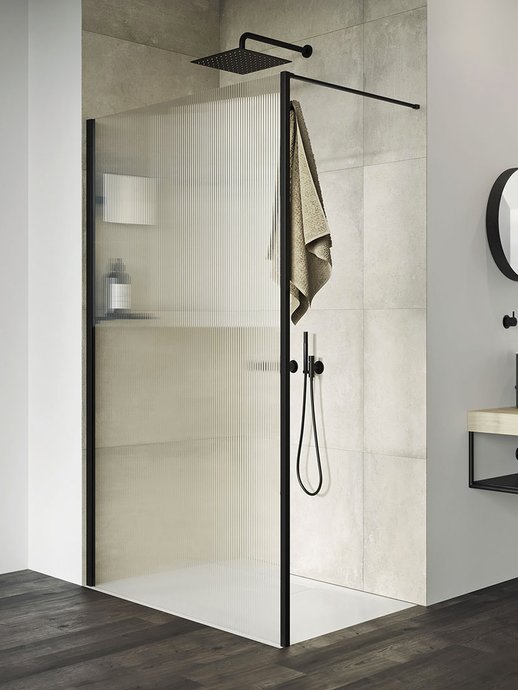
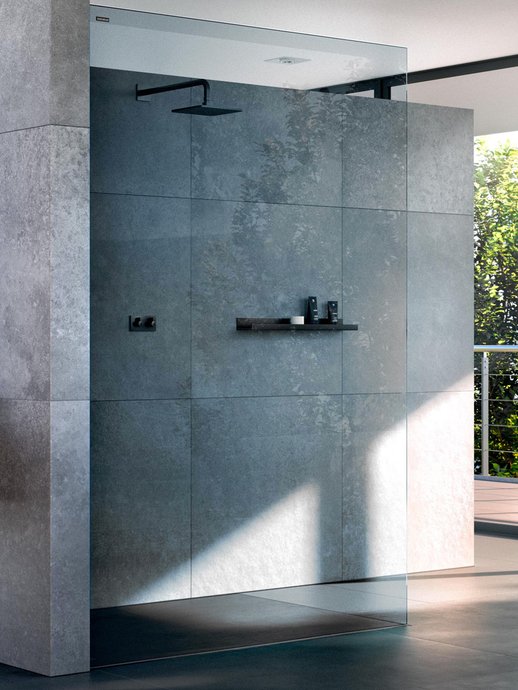
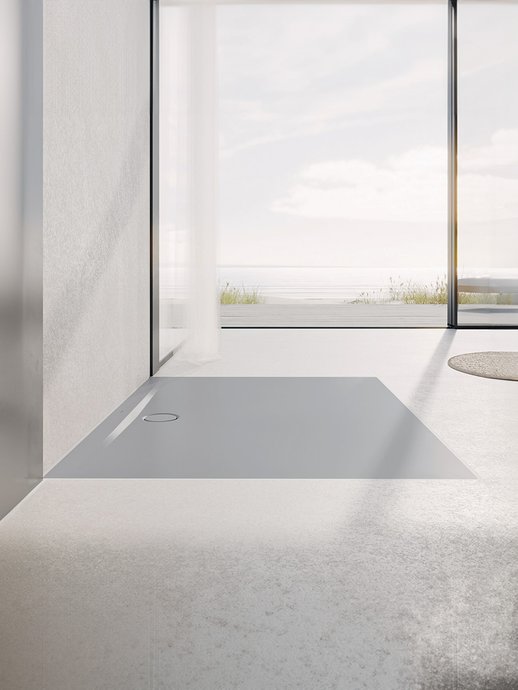
The walk-in shower is appealing because it is installed directly at floor level, without a raised tray. This design creates a level surface that blends naturally into your bathroom. The integrated floor drainage system, with a 1-2% slope, directs water towards the drain discreetly and efficiently.
This solution offers concrete advantages:
- Barrier-free access, ideal for all ages
- A refined aesthetic that visually enlarges the space
- Complete customisation of dimensions and materials
- Easy to clean thanks to the absence of corners
Contrary to popular belief, this installation is also suitable for small spaces. The glass walls delimit the shower area without creating a visual barrier, thus preserving the feeling of space.
The shower cubicle: the all-in-one solution
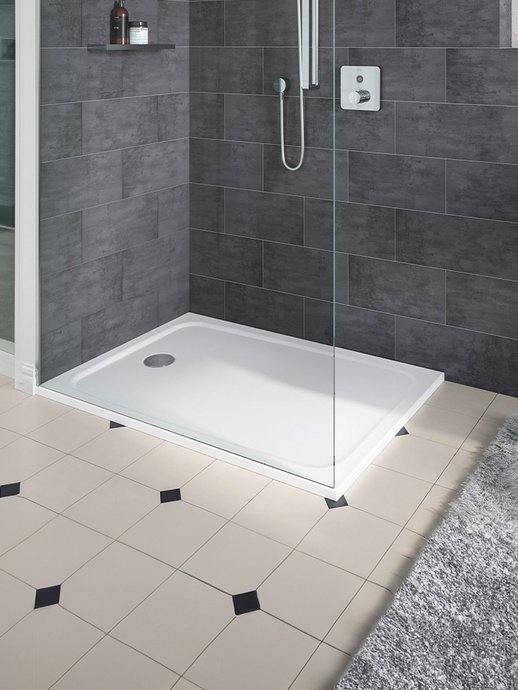
The shower cubicle is a complete, self-contained unit. Its raised tray, integrated walls and door form a prefabricated assembly that is ready to install. This enclosed design ensures optimal watertightness from the moment it is installed.
The strengths of this solution:
- Quick installation thanks to the pre-assembled system
- Watertightness guaranteed by the closed design
- Simplified maintenance in a designated area
- Various options: hydromassage, chromotherapy, music
Current models come in a variety of shapes to suit your space constraints: square, rectangular or quarter circle. Some versions include spa features to transform your daily shower into a moment of relaxation.
Dimensions: flexibility versus standardisation
The walk-in shower offers complete freedom in terms of size. The recommended dimensions for optimal comfort are:
- Surface minimum : 80 x 80 cm
- Comfortable surface area: 90 x 120 cm or larger
- Height: no particular restrictions
This flexibility allows you to tailor the installation precisely to your available space. However, be careful: if the surface area is too small, splashes may be generated in the rest of the bathroom.
The shower cubicle comes in standard sizes:
- Square formats: 70 x 70 cm, 80 x 80 cm, 90 x 90 cm
- Rectangular formats: 80 x 100 cm, 90 x 120 cm
- Standard height: 190 to 210 cm
These fixed dimensions are particularly practical for small bathrooms where every centimetre counts. The closed design optimises hot water usage and prevents heat loss.
Installation: time and complexity according to your choice
Installation is a major difference between these two solutions. The complexity of the work directly affects your schedule and budget.
Preparing the floor: a crucial issue for walk-in showers
A walk-in shower requires specific preparatory work. Creating a 1 to 2% slope directs the water towards the drain.
Digging out the soil is an essential step. Allow for a depth of 8 to 10 cm to incorporate the drainage system.
The shower cubicle avoids these constraints. Its raised tray already incorporates the drainage system, which considerably simplifies the preparatory work.
Installation and sealing: precision required
The installation of a walk-in shower tray requires great precision. Several options are available: extra-flat shower trays ready for tiling, built-in systems or drainage integrated directly into the floor. Waterproofing is therefore essential.
There are two waterproofing solutions available: waterproofing membrane, a flexible membrane applied over the entire surface, or a liquid kit applied with a brush in several layers.
The prefabricated cubicle simplifies this step. It is designed to be watertight, with silicone seals providing additional protection. Installation simply involves positioning and connecting to the existing drainage system.
Materials and finishes: create your bespoke shower
The walk-in shower stands out for its freedom of customisation. Each element can be chosen according to your tastes and needs, creating a unique space that reflects your style. Discover the options we have selected to help you make the right choices.
Walls: transparency and strength
Tempered glass remains the benchmark for shower screens. This durable solution is impact-resistant and comes in several finishes: transparent to enlarge the space, frosted to preserve privacy, or screen-printed to add a decorative touch.
Acrylic is an economical alternative, particularly suited to tight budgets. Lighter than glass, this material is, however, less resistant to scratches over time.
Taps: functionality and design
A simple shower column prioritises efficiency and is ideal for small spaces. For added comfort, opt for a hydromassage column that transforms your daily shower into a moment of relaxation.
Concealed taps free up visual space and blend discreetly into your walls. This streamlined solution highlights the other elements of your shower.
Evacuation: technique and aesthetics
The drainage channel is no longer just functional. Current models come in a variety of finishes—stainless steel, glass, decorative patterns—to match your décor.
Select a system that ensures optimal drainage flow while facilitating maintenance. This attention to technical details guarantees the longevity of your installation.
Budget and concrete examples of quotations
Your budget directly influences the type of shower you can install. There are significant price differences between the two solutions, with considerable variations depending on the materials and finishes chosen.
Walk-in shower: a more substantial investment
A walk-in shower requires a higher budget than a traditional installation. Expect to pay between €4,500 and €7,000 for a complete installation, depending on the complexity of your project. This range breaks down as follows:
- Entry level: €3,500 to €4,500
- Mid-range: around €5,000
- High-end: €7,000 and above
These prices are indicative and may vary depending on your choices. They are based on materials, labour, waterproofing and finishes. To keep costs under control, we recommend that you make an appointment with an advisor at one of our EXPOcentres to accurately assess the investment required.
Shower cubicle: an economical and quick solution
Shower enclosures offer the advantage of controlled costs. Their price ranges from €600 to €3,400 depending on the model and options. High-end versions with hydromassage functions can cost up to €7,000, but are quicker to install.
Some ranges even allow you to replace a bath with a shower in 24 to 48 hours.
New construction: reduced costs
For a new bathroom, prices are more attractive as no removal is necessary. Expect to pay between £2,500 and £4,500 for a walk-in shower.
Find the right solution for your situation
Your choice depends on your specific needs and the characteristics of your home. Find out which option best suits your situation.
Seniors and people with reduced mobility: opt for a walk-in shower
The level access to the walk-in shower eliminates the risk of falling over the edge. This solution also makes it easier for a carer to assist and allows a wheelchair to be used without restriction.
For optimal accessibility, we recommend:
- An extra-flat shower tray with a non-slip surface
- Grab bars positioned between 70 and 80 cm in height
- A folding seat installed 45–50 cm above the floor
- A thermostatic mixer tap to prevent scalding
This configuration completely eliminates the obstacle of stepping over, which is often difficult for elderly people.
Small bathrooms: opt for a shower cubicle
The compact 70x70 cm cubicles optimise every available centimetre. Their enclosed design prevents problematic splashing in confined spaces.
Maximise your space with:
- A quarter-circle corner cubicle
- Sliding doors rather than hinged doors
- Models incorporating storage and bottle holders
Quick comparison: walk-in shower vs shower cubicle
Still unsure between these two solutions? This table allows you to quickly compare the key features to help you make the right choice based on your priorities.
| Criteria | Walk-in shower | Shower cubicle |
| Key features | • Without raised tray • Installation at ground level • Integrated drainage system | • Raised tray • Integrated walls • All-in-one solution |
| Recommended dimensions | • Minimum: 80 x 80 cm • Optimal: 90 x 120 cm or larger | • Square: 70x70, 80x80, 90x90 cm • Rectangular: 80x100, 90x120 cm • Height: 190–210 cm |
| Installation time | • 2-3 days (excluding drying time) • Up to 1 week with drying | • Maximum 1 day |
| Average budget | • Entry level: €3,500–4,500 • Mid-range: €5,000 • High-end: €7,000 and above | • €600 to €3,400 • Up to €7,000 for high-end models |
| Ideal for | • Seniors and people with reduced mobility • Customised design projects • Large bathrooms | • Small spaces • Quick renovations • Limited budgets |
| Necessary work | • Slope 8–10 cm • Slope creation • Complex waterproofing | • Little or no structural modification • Simplified installation |
Find the shower that suits you
Your choice depends on your priorities: ease of use, space constraints and available budget. The walk-in shower appeals with its sleek design and easy access, which is particularly appreciated by seniors. Its unlimited customisation options enhance your bathroom with a unique result.
The shower cubicle offers a practical and economical solution. Its quick installation and guaranteed watertightness make it ideal for small spaces and quick renovations.
The most important thing is to choose a solution that suits your lifestyle. A well-designed shower combines everyday comfort, safety and aesthetics to serve you for many years to come.
Bathrooms are becoming more accessible and elegant. Whatever your preference, we will assist you with your project to create the ideal shower space. Visit your nearest Facq showroom to discover our solutions and receive personalised advice.
Frequently asked questions
Q1. What is the main difference between a walk-in shower and a shower cubicle?
A walk-in shower is installed at floor level without a raised tray, whereas a shower cubicle is an all-in-one solution with a raised tray and integrated walls.Q2. Which type of shower is easiest to clean?
Walk-in showers are generally easier to clean due to their open design and lack of complex joints. However, modern cubicles with smooth surfaces can also be easy to maintain.Q3. Which option is best for people with reduced mobility?
Walk-in showers are recommended for seniors and people with reduced mobility because they are level with the floor and have no steps or thresholds to negotiate.Q4. What is the average installation cost for each type of shower?
A walk-in shower generally costs between £4,500 and £7,000, while a standard shower cubicle ranges from £600 to £3,400, including installation.Q5. Which option is quicker to install?
Shower cubicles are generally quicker to install, often taking just one day, whereas walk-in showers can take several days to install and require drying time.