Fixed panel or hinged door: which solution for a walk-in shower?

Key characteristics of the walk-in shower
Definition and principles of the walk-in shower
A walk-in shower is characterised by a built-in or flush shower tray installed at the same level as the bathroom floor. This level-access configuration creates visual continuity and makes access easier, particularly for people with reduced mobility. Unlike a traditional shower cabin, a walk-in shower blends seamlessly into the space, with no visual break or step to cross.
This type of shower adapts to different layouts: recessed between three walls, in a corner, against a wall or fully open. Choosing the right type of shower enclosure then becomes essential to channel water and structure the shower area.
Aesthetic and practical benefits
Walk-in showers appeal thanks to their contemporary look and their ability to visually enlarge the bathroom. Using transparent shower panels allows light to circulate freely and helps create a more refined space. The result is a brighter, more fluid and more pleasant bathroom.
- Optimal accessibility, practical for people with reduced mobility
- Wide freedom of choice for wall coverings and finishes
- Easier maintenance thanks to a more open shower space
- Suitable for both small and large bathrooms
Technical constraints to consider
The success of a walk-in shower relies on careful installation. The floor must be prepared to accommodate the tray and provide a sufficient slope towards the drain. Watertightness is a key factor, particularly between the shower panel and the tray, to prevent water infiltration into the bathroom.
A well-chosen and properly installed shower enclosure helps limit splashes and ensures long-term safety of the shower space.
Possible configurations
Depending on the layout of your bathroom, several installations are possible. A recessed shower offers excellent protection against splashes, while a corner shower requires a properly sized shower panel to channel water effectively. A fully open shower favours aesthetics but requires careful consideration of the type of panel to install.
In all cases, the shower panel helps create a functional shower space while preserving the open feel that defines a walk-in shower.
The fixed panel for a walk-in shower
What is a fixed panel and its variations ?
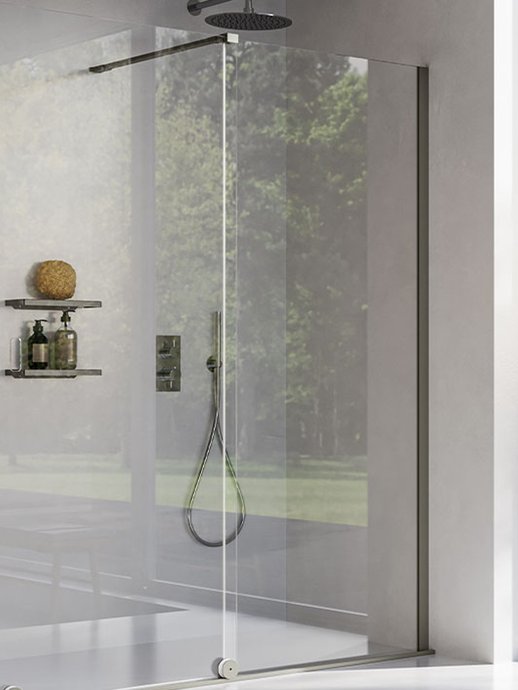
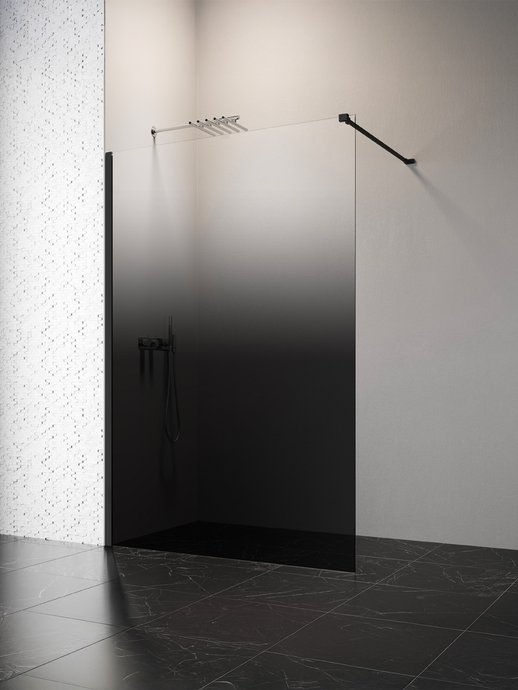
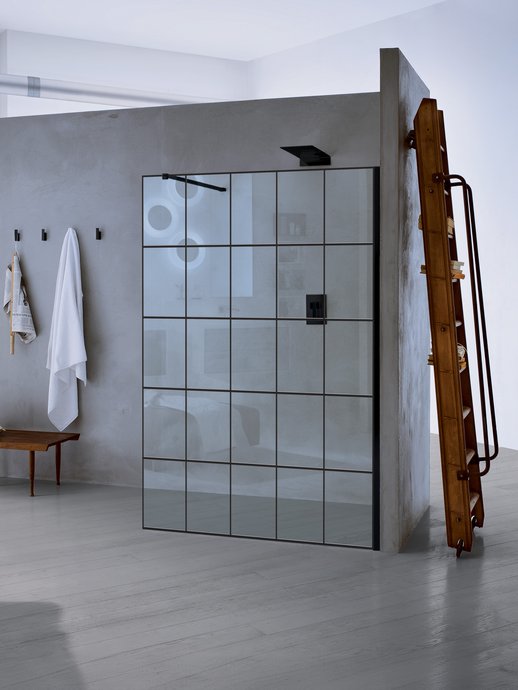
A fixed panel is a shower enclosure without an opening, made of a safety glass panel held in place by discreet profiles. It defines the shower area without closing it off, enhancing the feeling of space in the bathroom.
There are several fixed panel options: single panel, panel with return, fixed panel with pivoting element or frosted band. These solutions allow the shower enclosure to be adapted to the configuration of your shower and the desired level of protection.
Dimensions and positioning
The width of a fixed panel generally ranges from 70 to 140 cm. For an ideal shower enclosure, it is recommended to cover around two-thirds of the shower tray. This rule helps limit splashes while maintaining comfortable access.
Standard height ranges between 185 and 200 cm, with taller models available for larger bathrooms.
Advantages: aesthetics, durability and space saving
The fixed panel is ideal for creating a refined bathroom. Its minimalist design fits perfectly into a modern walk-in shower and helps optimize space, especially in small bathrooms.
- Space saving thanks to the absence of a hinged or sliding door
- High durability, with no complex mechanisms
- Easy day-to-day maintenance
- Suitable for many configurations
Limitations: splashes and comfort of use
While a fixed panel limits splashing, it does not eliminate it entirely. Shower orientation and panel width play a decisive role. An opening that is too narrow can also reduce comfort of access, especially for people with reduced mobility.
To improve usability, some fixed panels include a pivoting flap, offering an interesting compromise between protection and accessibility.
The hinged door for a walk-in shower
Operation and types of hinged doors
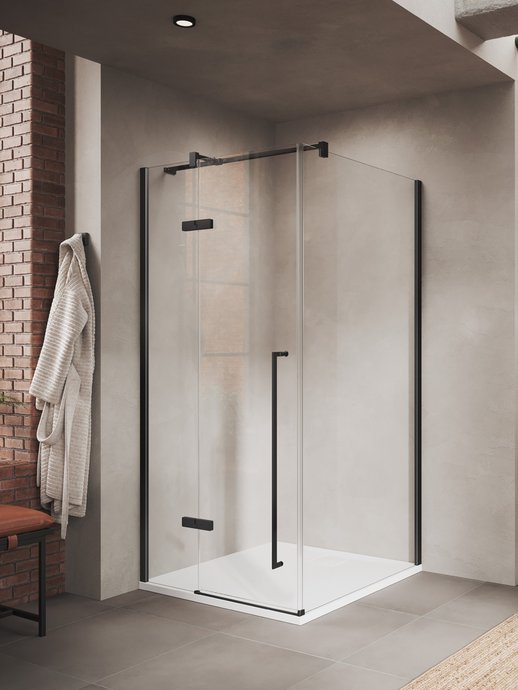
A hinged door operates on a pivot system and usually opens outwards. It can be installed on its own or combined with a fixed panel. This type of shower enclosure ensures effective closure and good watertightness.
Hinged doors can be framed or frameless, depending on the desired style and level of protection.
Dimensions and space constraints
A hinged door requires sufficient clearance space in front of the shower. Its standard width ranges from 70 to 90 cm. This configuration is therefore better suited to larger bathrooms, where circulation space is adequate.
Watertightness and splash control
Thanks to its seals and closing system, the hinged door effectively limits water splashes outside the shower area. It is an ideal solution for those seeking maximum protection against splashing.
Advantages and constraints in daily use
The hinged door provides a wide opening and easy access, making it practical for people with reduced mobility. In return, it requires more regular maintenance of seals and hinges to preserve watertightness over time.
Comparison table
| Criteria | Fixed panel | Hinged door |
| Main advantages |
|
|
Points to consider
|
|
|
| Maintenance |
|
|
| Installation |
|
|
How to choose the right walk-in shower enclosure ?
To choose the right shower enclosure, several criteria must be taken into account to adapt the installation to your bathroom and daily habits.
- The configuration of your bathroom and shower space
- Available space and required clear access
- Users’ needs, particularly in terms of accessibility
- Desired level of watertightness
- Long-term maintenance
A fixed panel is better suited to limited spaces and lovers of clean design, while a hinged door is preferable in configurations requiring enhanced protection against splashes.
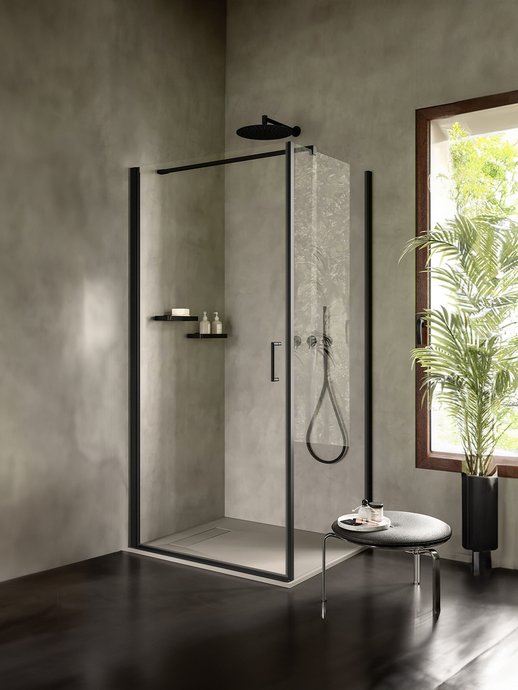
Between a fixed panel and a hinged door, intermediate solutions also exist. A fixed panel with a pivoting return combines a fixed panel with a movable element. This type of shower enclosure helps limit splashes during showering while offering wider access for everyday use.
These hybrid solutions represent an excellent compromise to optimise space, watertightness and comfort, while preserving the aesthetic of a walk-in shower.
Frequently asked questions
Q1. What is the difference between a fixed panel and a hinged door for a walk-in shower?
A fixed panel focuses on design and space saving, while a hinged door offers better watertightness and wider access.Q2. Is a fixed panel suitable for small bathrooms?
Yes, a fixed panel is ideal for small bathrooms as it optimises space without requiring door clearance.Q3. When should you choose a hinged door?
A hinged door is better suited to large bathrooms and users looking for maximum protection against splashes.Q4. What maintenance is required for a shower enclosure?
A fixed panel requires little maintenance, while a hinged door needs regular cleaning of seals and hinges.Q5. Is there a compromise between the two solutions?
Yes, shower enclosures with a pivoting element offer a good balance between aesthetics, watertightness and accessibility.