Electric or hot-water towel warmers: which is more economical?

The essentials
Electric models are better value for money when it comes to both purchase and installation. An electric model plugs into the mains and often costs between €300 and €800, including installation. A hot-water model requires a plumbing connection, which means more labour is involved.
In practice, hot water is by far the more economical option. Residential electricity in Belgium costs around €0.35/kWh, which is among the highest rates in Europe. An electric towel warmer costs between €130 and €260 a year. Achieving the same level of comfort using the central heating system costs €25–30 a year.
Over a 10-year period, hot water is the most economical choice provided there is central heating. The hybrid model remains the best compromise for most Belgian homes.
The real issue is the cost of energy in Belgium
A heated towel rail heats up. The only real difference between the two types is the energy they use to do so.
Electric heating directly converts electricity from the grid into heat. However, residential electricity in Belgium is among the most expensive in Europe. According to Eurostat, the all-inclusive price stood at €0.3499/kWh in the second half of 2025, the third-highest tariff in the EU behind Ireland and Germany, and well above the European average of €0.29/kWh. The CREG’s February 2026 dashboard confirms a Belgian average of around 37.8 c€/kWh, with peaks of over 40 c€ in Brussels.
A hot-water towel warmer, on the other hand, uses virtually no electricity. It draws heat from the central heating system, just like a conventional radiator. Its actual cost therefore depends on the energy used by your boiler. And here, the difference is striking: gas in Belgium is among the least heavily taxed in Europe. A gas condensing boiler produces one kilowatt-hour of heat for around 5 cents. A heat pump costs around 9 to 11 cents, depending on its efficiency.
How is heat generated? | Cost per kWh of heat |
| Electrical resistance (electric towel warmer) | 0,35 – 0,40 € |
| Air-to-water heat pump (COP ~3.5) | 0,09 – 0,11 € |
| Oil-fired condensing boiler | 0,10 – 0,11 € |
| Gas condensing boiler | 0,05 – 0,06 € |
The same amount of heat therefore costs 3 to 7 times more when generated by an electric heating element than via the water circuit. Nowhere else is this ratio so pronounced: it stems from the Belgian pricing structure, where electricity is heavily taxed and gas much less so. This is the point that French articles, based on an electricity price of €0.20, consistently fail to grasp.
Electric: easy to install, expensive to run
An electric towel warmer is connected to the mains. There’s no need to run any pipes or alter the water system. In a bathroom without central heating nearby, or in a flat, this is often the only realistic solution.
In terms of purchase price, entry-level models start at around €150–165 in Belgian shops. A mid-range model such as the Vasco Iris with an electric heating element costs around €580. Models with a fan, which heat the room in a matter of minutes, are more expensive: the Zehnder Forma Air and the Roda Air cost between €1,000 and €1,300. Installation by an electrician takes a few hours and generally costs between €100 and €300, including the RGIE inspection for a new installation in a damp area.
The problem shows up on the bill. A 750 W electric towel warmer used for two hours a day throughout the season consumes around 550 kWh. At Belgian electricity rates, that works out at nearly €190 a year. Go up to 1,000 W and you’ll be looking at over €250 a year.
Power | Usage: approx. 2 hours per day | Consumption | Annual cost (€0.35/kWh) |
| 500 W | heating season | ~365 kWh | ~128 € |
| 750 W | heating season | ~548 kWh | ~192 € |
| 1,000 W | heating season | ~730 kWh | ~256 € |
These figures are based on reasonable use. A heater left switched on continuously throughout the winter will quickly run up a much higher bill. A thermostat and a timer make all the difference here: they cut off the power as soon as the room reaches the desired temperature, and a heater with good thermal inertia continues to give off heat after it has been switched off.
Hot water: more plumbing, but hardly any running costs
In terms of purchase price, the price ranges are similar to those for electric models: entry-level models at around €160, mid-range models at around €375 for a 934 W model, and designer units such as the Zehnder Vitalo Spa costing over €1,000. The difference lies in the installation. Connecting to the heating circuit requires a heating engineer, and the job takes longer if the pipes do not already run close to the intended location. Expect labour costs of between €150 and €350, or more if the circuit needs to be extended.
In return, running costs are virtually negligible. For the same amount of heat that used to cost you €190 with an electric boiler, you’ll pay €25 to €30 a year with a condensing gas boiler. The annual saving is around €150. Over the appliance’s lifetime, the higher initial cost of the plumbing work is recouped within two to three years.
There is one drawback, though: when the boiler is switched off, the hot-water towel warmer stops heating up. In the height of summer, or during those weeks in May that are too chilly to do without a warm towel but too mild to switch the heating back on, it stays cold.
The hybrid system: hot water in winter, electric backup the rest of the time
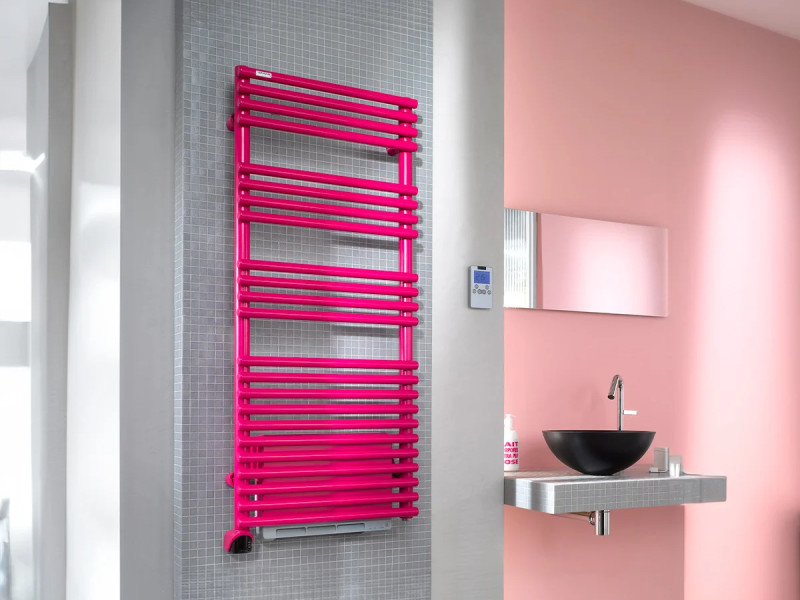
This is the solution that addresses this issue. The body of the dual-system towel warmer is connected to the hot water circuit, but a built-in electric heating element takes over when the boiler is switched off. You benefit from unbeatable hot water costs throughout the heating season, and from the electric backup for just a few weeks a year, during the off-season.
Over these short periods, the electricity cost amounts to just a few tens of euros. As for comfort, that’s there all year round. Prices start at around €218 for a hybrid model, and most major brands offer their designer models in a hybrid version.
When choosing between the three ranges to suit your setup, the power supply type is just one piece of the puzzle: power output, size and how well it fits into the room are just as important. Our comprehensive guide to choosing a towel warmer covers all of these criteria.
The calculation that really matters: the cost over 10 years
Comparing purchase prices is pointless if you overlook how much the appliance will cost over the ten or fifteen years it is in use. Here is the total cost of ownership for a bathroom of around 6 m², including installation and 6% VAT (renovation of a property over 10 years old).
Poste | Electric 750 W | Hot water (gas condensing boiler) | Mixte |
| Achat | 200 – 580 € | 160 – 375 € | 220 – 450 € |
| Pose | 150 – 300 € | 150 – 350 € | 200 – 400 € |
| Use over 10 years | 1 300 – 1 900 € | 250 – 300 € | 400 – 600 € |
| Total over 10 years | 1 650 – 2 780 € | 560 – 1 025 € | 820 – 1 450 € |
The ‘running costs’ category outweighs everything else. The savings you make when buying an electric model are wiped out by your electricity bill by the third year. Over ten years, the difference between an electric model and a hot-water model is well over a thousand euros.
The 2026 argument: consider a heat pump
Heat pumps are therefore becoming increasingly common, and they operate at low temperatures, between 35 and 55 °C. A hot-water towel radiator designed for low temperatures will remain compatible with a future heat pump. An electric model, on the other hand, will always be connected to the most expensive electricity in Europe. If you are renovating your heating system or planning to do so in the coming years, a hot-water radiator is the safest bet.
As for grants, none of them directly subsidise a towel warmer. However, those that do exist – in Wallonia via the Prime Habitation scheme, and in Flanders via Mijn VerbouwPremie – encourage the installation of heat pumps and the associated low-temperature radiators. In Brussels, the Renolution grants have been suspended due to a lack of funding in 2026. This general trend confirms the benefits of a hot-water system.
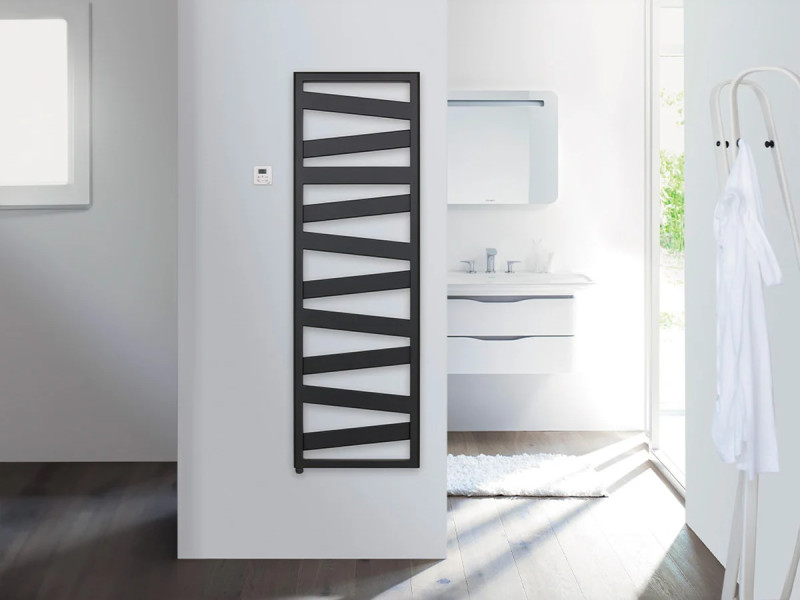
So, which one should you choose?
Your situation | Our recommendation |
| Central heating available (boiler or heat pump) | Hot water, at a low temperature if possible |
| Want to stay cosy all year round, but with the boiler switched off in summer | Mixed — the best Belgian compromise |
| Flat or bathroom without a circuit nearby | Programmable electric, limited use |
| Heating system refurbishment planned for the medium term | Hot water compatible with heat pumps |
| Small secondary bathroom, for occasional use | Slim electric, 400–600 W, with thermostat |
Frequently asked questions
Does an electric towel warmer use a lot of electricity in Belgium?
More so than elsewhere, due to the cost of electricity. A 750 W model used for two hours a day during the heating season costs around €190 a year at Belgian rates. That is two to three times what most French estimates suggest, because they are based on much cheaper electricity. A thermostat and a timer can significantly reduce this bill.Is hot water always cheaper than electricity?
In practice, yes, provided there is a central heating system in place. In Belgium, a kilowatt-hour of heat produced by a gas boiler costs five to seven times less than that produced by an electric heating element. The only situation in which electric heating makes economic sense is where there is no heating circuit nearby, and where installing a connection would cost more than the savings made.How much does it cost to install a hot-water towel warmer?
Allow for labour costs of between €150 and €350 for a heating engineer, or more if the central heating pipes need to be extended to the installation point. When renovating a property that is more than 10 years old, the supply and installation charged by the contractor are subject to 6% VAT.Does a hot-water towel warmer work in the summer?
No, not in its standard version. When the boiler is switched off, it stays cold. That’s why there’s the combi model, with its auxiliary electric heating element: it ensures comfort in the shoulder seasons and in summer, whilst still saving on hot water costs during the winter.Should I opt for hot water if I’m planning to install a heat pump?
Yes, provided you choose a model designed for low temperatures. Heat pumps heat water to between 35 and 55 °C, which is a lower temperature than that produced by a conventional boiler. A low-temperature towel warmer remains effective in this case and means you won’t have to replace it after the heat pump has been installed.Is the mixed model significantly more expensive?
Initially, it costs a little more: entry-level models start at around €218, compared with €150–160 for a basic model. However, the electric booster is only used for a few weeks a year, so the additional running costs remain low. Over ten years, a combi boiler works out much cheaper than an all-electric system and only slightly more than a hot-water-only system, whilst offering constant comfort.