2026 trends for small bathroom
Textured minimalism to visually enlarge the space
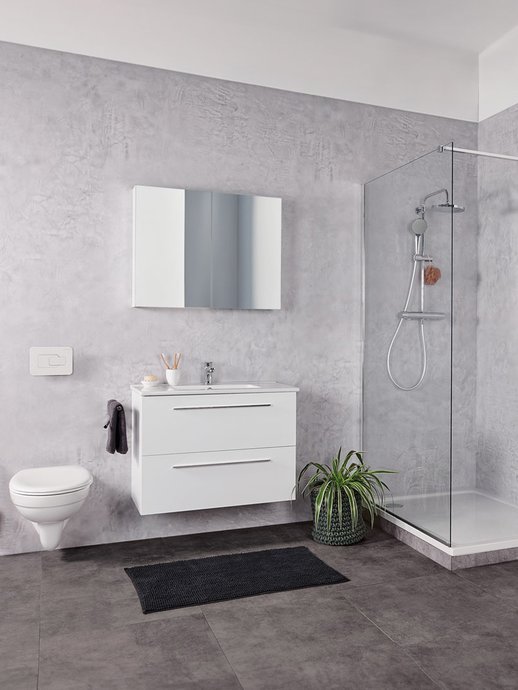
Textured minimalism is redefining the art of bathroom design in 2026. This approach combines simplicity and character, perfectly suited to small spaces. Unlike the austere minimalism of the past, this trend brings warmth and personality while preserving that all-important feeling of space.
What is textured minimalism?
Textured minimalism is changing the rules of traditional minimalist style. It retains the principles of simplicity but adds sensory richness through textures. This approach combines clean lines and tactile surfaces to create spaces that are both soothing and characterful.
Each element finds its place according to a simple principle: beauty and utility. Superfluous objects disappear in favour of an organised space where the eye can roam freely. The major difference with classic minimalism? The attention paid to textures that create depth without cluttering the space.
This trend is based on a few essential rules:
- Reduce the number of visible elements
- Prioritise authentic, raw materials
- Playing with the alternation between smooth and textured surfaces
- Use subtle shades rather than bright colours
- Incorporate concealed storage to maintain a clean look
In 2026, this aesthetic is expressed through materials such as polished concrete, brushed wood, natural stone and textured tone-on-tone tiles. Neutral shades dominate – beiges, greys and off-whites – punctuated with soft hues inspired by nature.
The approach prioritises quality over quantity. A single striking feature, such as a sculpted washbasin or a natural stone wall, is often enough to define the identity of your space while maintaining that feeling of openness.
This approach offers particularly significant advantages for small bathrooms, as it does more than just provide storage: it transforms the perception of space. It creates an illusion of space thanks to its clean lines and absence of visual clutter. By limiting unnecessary decorative elements, you allow the eye to move freely, which instantly enlarges the room visually.
Decor inspiration for 2026: optimising space through colour and sustainable ergonomics
Small bathrooms benefit particularly from the monochrome approach, one of the major trends for 2026. Using different shades of the same colour, enriched with varied textures, creates depth without visual disruption. This chromatic continuity pushes back the apparent boundaries of the space, making corners less prominent and walls appear further away. But aesthetics go hand in hand with practicality, which remains a priority in 2026. Small spaces require optimal organisation: textured minimalism therefore favours built-in storage and multifunctional solutions.
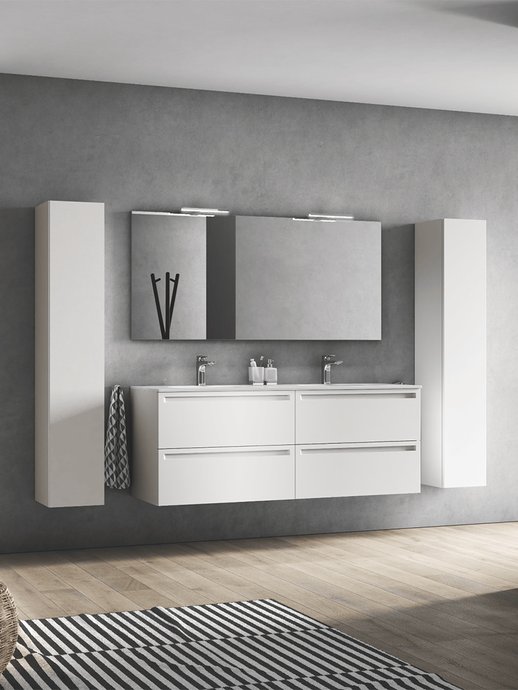
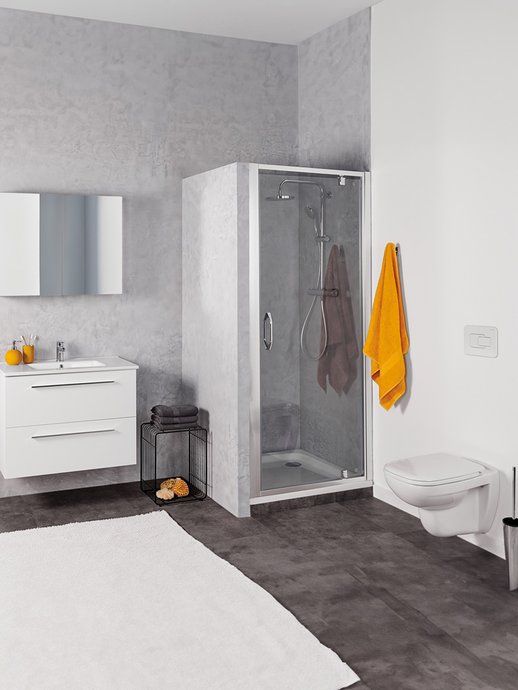
Wall-mounted furniture is essential in this regard: it frees up floor space, extends the line of sight and contributes to a feeling of lightness while offering invisible storage solutions. Finally, this trend promotes a sustainable approach that is in line with current environmental concerns. By favouring high-quality materials and timeless designs, you can create spaces that will stand the test of time without going out of fashion. This is the promise of a bathroom that remains modern, healthy and functional, regardless of changing fashions.
Mineral and organic materials: the essence of textured minimalism in 2026
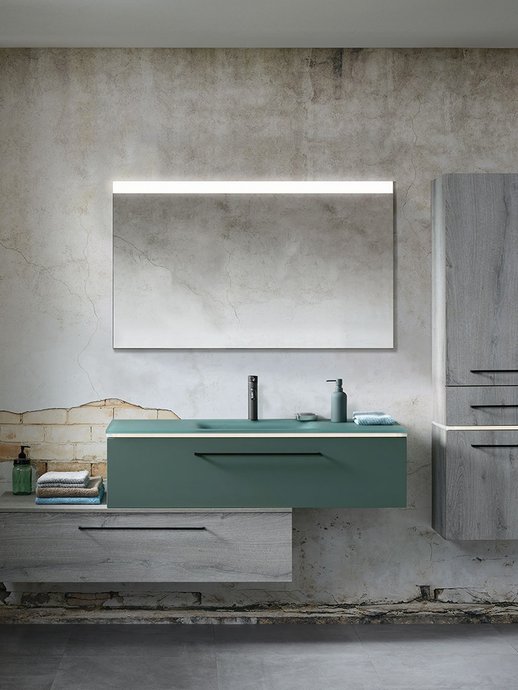
The choice of materials determines the success of your project, because in 2026, materials will replace decorative objects. Waxed concrete is establishing itself as one of the leading materials for small bathrooms. Available in a wide range of neutral shades, it offers a slightly textured surface that adds depth without visually overloading the space. Its potential application as a "total look" on walls, floors and even washbasin tops creates visual continuity that erases the boundaries of the room and enlarges it.
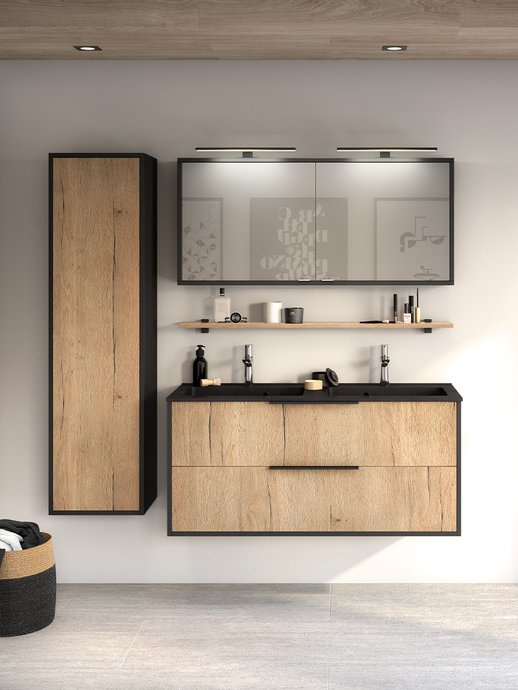
To reinforce this authenticity, natural stone (light-veined marble, beige travertine or limestone) adds understated sophistication in its matt or brushed finishes. In a small space, the trick is to use these noble materials on a single strategic surface, such as a splashback or washbasin top, to avoid overloading the space. In addition, treated wood (oak, ash or maple) in cerused finishes brings essential warmth to textured minimalism. Integrated in the form of wall-mounted cabinets or shelves, it warms up the atmosphere without darkening the room, creating the sensory dialogue characteristic of 2026 trends.
Innovative finishes and coverings: optimising style in small spaces
For surface coverings, the 2026 trend favours medium to large format tiles (60x60 cm) which, by reducing the number of visible joints, create a more continuous and fluid surface. Textured tone-on-tone tiles with subtle geometric patterns add depth without creating visual disruption. This quest for lightness is reflected in the use of textured glass for shower walls. This material, which is grainy or has subtle patterns, is a major alternative to traditional glass: it filters light, preserves privacy and adds a decorative dimension without partitioning the space.
Elegance is finally found in the metal and textile details. For 2026, shiny chrome is being replaced by matt or brushed finishes (brushed brass, satin nickel), which offer touches of brightness without the flashy look. On the textile side, washed linen and thick cotton in neutral shades complete this tactile experience.
Use natural light and oversized mirrors
Natural light is your best asset for enlarging a small bathroom. Combined with oversized mirrors, it can literally double the feeling of space without requiring major work. Discover how to maximise these two elements to create a brighter and visually more spacious room.
Maximise the available natural light
Does your bathroom have a window? Make the most of it. Avoid opaque curtains that block out light. Instead, opt for frosted adhesive films or translucent blinds that preserve your privacy while letting light through.
For bathrooms without windows, there are several alternatives. Skylights are ideal for attic rooms, while an interior glass roof with frosted glass can allow light to pass through from an adjacent room.
Orientation has a significant impact on lighting quality. South-facing rooms offer constant brightness, while east-facing rooms are ideal for morning use. North-facing bathrooms require additional lighting solutions.
Choose the right mirror to make the space look bigger
The XXL mirror remains the most effective solution for creating an illusion of space. A generously sized mirror creates a virtual window that visually doubles the volume of the room. Choose a model that takes up a large part of the wall, or even extends from floor to ceiling.
Position it facing a window so that it captures and reflects natural light, thereby multiplying its presence in the room. This configuration creates an impression of depth that is particularly welcome in confined spaces.
Shape matters too. Vertical models visually extend the ceiling height, while horizontal mirrors make the room appear wider. For a small bathroom, a large rectangular or oval mirror is usually the best choice.
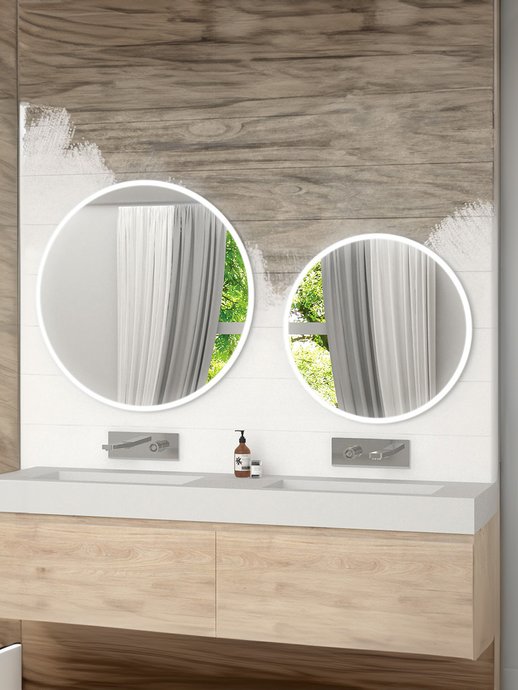
The 2026 trend also favours mirror compositions. Combining several mirrors of different sizes on the same wall creates an artistic effect while maximising light reflection. This solution often saves money compared to buying a single XXL mirror.
Consider mirrors with built-in storage. These practical models combine reflective function with storage solutions, optimising the use of available space. Some even offer built-in lighting, combining three essential functions.
Increase the number of artificial light sources
Even with optimised natural light, an artificial lighting system remains essential. Use multiple light sources rather than just one. Three 20-watt light sources provide a more harmonious result than a single 50-watt light source.
Organise your lighting in three layers:
- General lighting with recessed ceiling spotlights
- Functional lighting around the mirror and washbasin area
- Ambient lighting to create a cosy atmosphere
For general lighting, recessed spotlights provide uniform lighting without visually cluttering the space. Their discreet design fits perfectly with the clean aesthetic sought after in small bathrooms.
Around the mirror, opt for bilateral lighting with wall lights on either side, or for peripheral lighting integrated directly into the mirror. Connected mirrors with integrated LED lighting are a strong trend in 2026, offering different intensities that can be adjusted according to use.
Choose "daylight" bulbs between 4000 and 4200 Kelvin for accurate colour rendering, ideal for applying make-up or shaving. Avoid overly direct lighting above the bath, which can be dazzling.
For bathrooms without windows, LED panels that mimic natural light are an interesting alternative. Fixed to the ceiling, they recreate the illusion of natural lighting with a particularly convincing effect.
The essentials for a modern, optimised bathroom
In 2026, small bathroom design will be based on a subtle balance between simplicity and sensoriality. Thanks to textured minimalism, the limited space is offset by a warm atmosphere where each material, from polished concrete to brushed wood, replaces the superfluous. The strategic use of XXL mirrors and multi-layered lighting completes the transformation of these few square metres into a visually enlarged sanctuary of well-being.
By prioritising high-quality finishes and suspended solutions, this new standard in interior design proves that functionality can be perfectly combined with high-end aesthetics. Opting for these trends means investing in a sustainable and timeless space that enhances your home while optimising everyday comfort.
Frequently asked questions
Q1. What is the best tip for visually enlarging a bathroom smaller than 5m²?
In 2026, the key tip is to adopt textured minimalism combined with an XXL mirror. By removing visual clutter and using continuous materials such as polished concrete (without joints), you can erase the boundaries of the room.Q2. Which materials should be prioritised for sustainable and modern renovation in 2026?
The trend is towards mineral and organic materials. We recommend beige travertine, treated light oak wood and new-generation composites. These materials are not only attractive, they are also chosen for their durability and low environmental impact.Q3. How can you optimise lighting in a small bathroom without windows?
To compensate for the lack of natural light, the solution in 2026 relies on LED panels (which mimic daylight) and three-layer lighting. Install recessed spotlights for general lighting, double-sided wall lights around the mirror for comfort, and LED strips under wall-mounted cabinets.4. Where can I find an installer specialising in space-saving bathroom design near me?
To ensure the success of your renovation project, we recommend calling on the services of a tradesperson or interior designer specialising in "small spaces" or "accessible/comfort bathrooms" in your area.Q5. Is it possible to fit a shower and bathtub into a small space?
Yes, thanks to 2026's multifunctional solutions. The trend is towards a combined "bath-shower" with a fixed textured glass screen, which avoids the clutter of a hinged door. The use of built-in taps also saves valuable centimetres.