How to save water without sacrificing your shower?

How to save water without giving up the pleasure of your shower?
Showering accounts for 36% of a Belgian household's water bill. It is the largest source of water consumption, ahead of toilets and the kitchen. And within this shower and bath budget, the shower itself represents the biggest share, especially when the showerhead is old or when no attention is paid to the length of the shower. A ten-minute shower with a standard showerhead uses as much water as a full bath, around 150 litres.
The good news is that there is no need to choose between saving water and enjoying your shower. The solutions already exist, they are affordable, and most of them pay for themselves within a few months. Here are the most effective ways to reduce your water consumption without sacrificing comfort.
What a Shower Really Consumes
A standard shower head lets out between 12 and 20 litres a minute. Five minutes under the shower with this kind of equipment already means 60 to 100 litres of water used. Ten minutes, and you go past the water used for a bath.
What makes it worse is that shower water is hot. Heating that water takes energy, whether from an electric water heater or a gas boiler. So cutting the flow of hot water isn't just good for the water bill, it also lightens the energy bill.
The Real Cost for a Household
A cubic metre of water costs around €5.50. A family of four, with each person taking an eight-minute shower every day using a standard showerhead, consumes approximately 175,000 litres of hot water per year just for showering. By switching to a water-saving showerhead with a flow rate of 6 litres per minute, annual savings can exceed €300, for an initial investment of only €20 to €30.
The water saving shower head, the first step to take
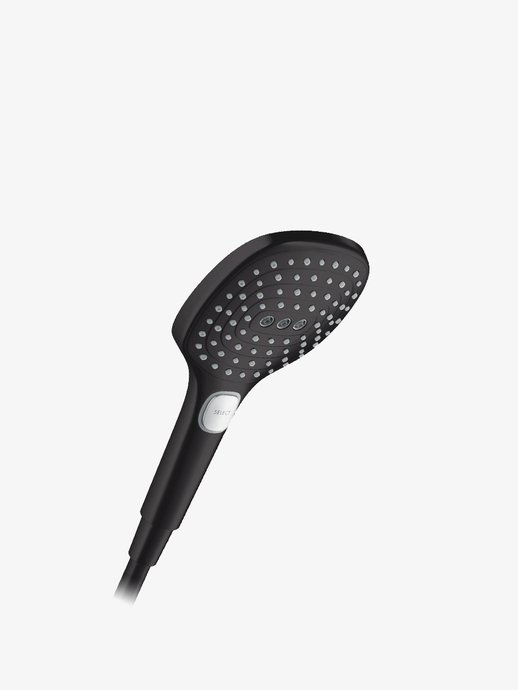
This is the change with the best return for the money spent. A water saving shower head limits the flow to 6 or 9 litres a minute, against 15 to 20 for a standard model. The idea is simple: air is mixed with the water to keep the pressure and the feel of the spray, while cutting the actual amount of water used.
Under the shower, the result often feels better, not worse. The drops are finer, the spray wraps around you more. The 6 litre a minute models from major brands (Hansgrohe, Grohe, and others) regularly score well in independent comparisons, even against high end standard shower heads.
How to choose the right flow rate?
For comfortable daily use, a flow rate between 6 and 9 litres a minute is enough. Below 6 litres, some massage sprays lose their effect. To know if your current shower head is worth replacing, fill a 10 litre bucket under the shower and time it. If the bucket fills in under a minute, the flow rate is above 10 litres a minute and switching will pay off quickly.
Water softener: when limescale becomes a problem
Tap water is often hard, meaning rich in calcium and magnesium. This limescale isn't a health issue, but it has clear effects day to day: white marks on shower walls, skin that feels tight after washing, hair that turns rough, and gradual scale buildup in the shower head, hose, and water heater.
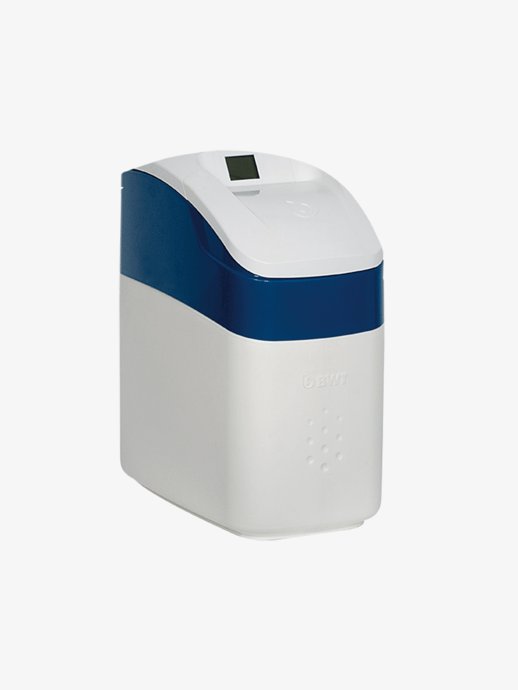
A water softener fixes this at the source. It removes limescale from the whole system, which directly improves shower comfort. Skin is less irritated, hair gets its softness back, and cleaning the walls takes half the time.
That's not its main purpose, but a softener also has an indirect effect on water use. Limescale gradually clogs the small holes in a shower head, which disrupts the spray and often pushes people to compensate by opening the tap wider or staying under the water longer. A shower head clogged with scale doesn't work the way it should. Replacing or descaling it regularly costs time and money. A softener avoids this cycle by protecting the equipment from the start.
The other effect is on energy. A water heater with scale buildup uses up to 25% more energy to heat the same amount of water. Less limescale in the system means less energy used for every shower, without changing any habits.
The water saving shower head, the first step to take
This is the change with the best return for the money spent. A water saving shower head limits the flow to 6 or 9 litres a minute, against 15 to 20 for a standard model. The idea is simple: air is mixed with the water to keep the pressure and the feel of the spray, while cutting the actual amount of water used.
Under the shower, the result often feels better, not worse. The drops are finer, the spray wraps around you more. The 6 litre a minute models from major brands (Hansgrohe, Grohe, and others) regularly score well in independent comparisons, even against high end standard shower heads.
How to choose the right flow rate?
For comfortable daily use, a flow rate between 6 and 9 litres a minute is enough. Below 6 litres, some massage sprays lose their effect. To know if your current shower head is worth replacing, fill a 10 litre bucket under the shower and time it. If the bucket fills in under a minute, the flow rate is above 10 litres a minute and switching will pay off quickly.
Water softener: when limescale becomes a problem
Tap water is often hard, meaning rich in calcium and magnesium. This limescale isn't a health issue, but it has clear effects day to day: white marks on shower walls, skin that feels tight after washing, hair that turns rough, and gradual scale buildup in the shower head, hose, and water heater.
A water softener fixes this at the source. It removes limescale from the whole system, which directly improves shower comfort. Skin is less irritated, hair gets its softness back, and cleaning the walls takes half the time.
That's not its main purpose, but a softener also has an indirect effect on water use. Limescale gradually clogs the small holes in a shower head, which disrupts the spray and often pushes people to compensate by opening the tap wider or staying under the water longer. A shower head clogged with scale doesn't work the way it should. Replacing or descaling it regularly costs time and money. A softener avoids this cycle by protecting the equipment from the start.
The other effect is on energy. A water heater with scale buildup uses up to 25% more energy to heat the same amount of water. Less limescale in the system means less energy used for every shower, without changing any habits.
The Thermostatic Mixer: Comfort and Savings Combined
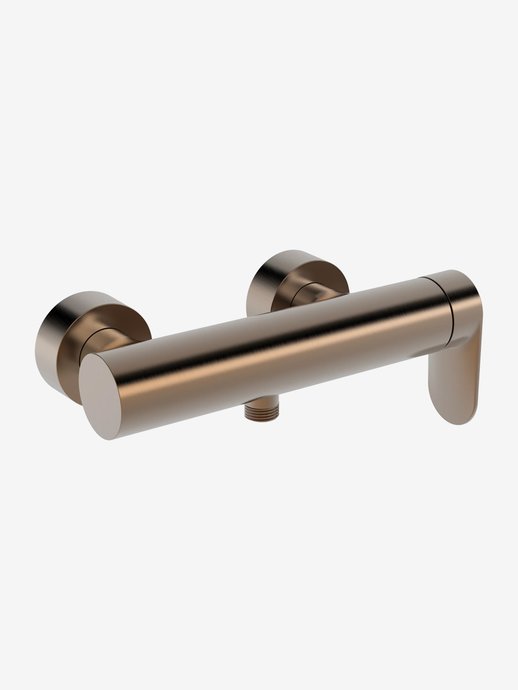
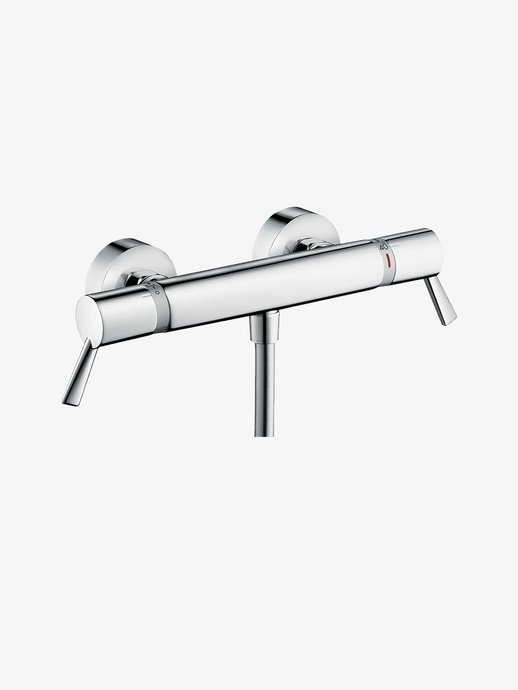
How many litres of water go down the drain while the shower heats up? Often several dozen, especially when the water heater is far from the bathroom. A thermostatic mixer solves this: it remembers the temperature you want and reaches it almost instantly every time.
There's also a feature that's often overlooked: the half flow stop. On many thermostatic models, the flow can be cut in half with a simple press, without changing the temperature. Handy for washing with soap or shampoo without letting water run for no reason.
What about digital taps?
Digital taps let you set the temperature and flow rate ahead of time, from a screen or an app. Some models save the preferences of each family member. It's not just a gadget: knowing exactly how much water you use for each shower changes behaviour.
Shower length: where's the real limit?
Five minutes is enough for a full wash, body and hair included. That's what every study on the subject shows. But in practice, how do you stick to it?
A common method: pick a song that's 3 to 4 minutes long and step out when it ends. More playful, a musical shower speaker includes a speaker and stops automatically after a set time. Others use a sand timer or a kitchen timer.
For families with teenagers, one simple rule often works better than any lecture: show the water use in litres on a visible display. Some smart shower heads change colour based on how much water has run: green at the start, orange at 30 litres, red at 50 litres. The effect is immediate, especially on younger users.
The shower stop, an underrated accessory
A shower stop fits between the hose and the shower head. It cuts the water with a simple press when you're not under it, without changing the temperature or flow rate you've set. Handy for cutting the water while washing with soap or leaving a hair mask on. Water savings per shower can reach 10 to 40% depending on how it's used.
Simple habits that make a difference
Beyond equipment, a few habits change things with no cost at all.
Turning off the water while washing with soap or shampoo is the most effective habit, and the easiest to keep. A five minute shower with two water breaks in the middle can use half as much as a shower where the water runs the whole time.
Not letting cold water run before it heats up is also avoidable waste. A thermostatic mixer or a simple instant flow tap solves this. For those who haven't changed their setup yet, catching that cold water in a bucket to water plants is a simple option.
It's also worth checking regularly for leaks around the hose or shower head. A steady drip can add up to several hundred litres lost a week.
Choosing the right equipment for your bathroom
The range of water saving taps and shower equipment has changed a lot. These aren't small plastic add-ons anymore, but well designed, sturdy products that fit into a polished bathroom.
A water saving shower head at 6 or 9 litres a minute starts at €20 to €30. An entry level thermostatic mixer costs around €100 to €200, but it pays for itself fairly quickly. Digital taps with a display for flow rate and temperature cost more, but they suit families who want to track their water use closely. What matters is buying certified equipment that clearly states the flow rate in litres per minute. For shower heads, a maximum flow rate of 7 litres a minute is the threshold used in most European standards to call a product water saving. Above 10 litres a minute, it's a standard model.
Cutting your water use without losing comfort
Saving water in the shower isn't about giving anything up. It's about the right equipment and a few adjusted habits. A water saving shower head at 6 litres a minute, a thermostatic mixer that avoids waste at start up, a shower stop to cut the water without losing your temperature setting: each of these plays its part.
The effect on the bill shows up quickly, and shower comfort doesn't change. To choose the right equipment for your setup and your budget, Facq's experts can guide you in showroom or remotely. The goal is a bathroom that uses less water without it showing in daily life.
Frequently asked questions
Q1. Quel est le débit idéal pour un pommeau économique ?
Un débit compris entre 6 et 9 litres par minute offre le meilleur compromis entre économie d'eau et confort de douche. En dessous de 6 litres, certains jets (effet pluie, massage) perdent en efficacité. Au-dessus de 10 litres par minute, on parle d'un pommeau standard, pas économique.Q2. La douche est-elle toujours plus économique que le bain ?
Pas systématiquement. Une douche de 5 minutes avec un pommeau classique consomme entre 60 et 75 litres, contre 120 à 200 litres pour un bain. Mais une douche de 15 minutes avec un pommeau standard peut dépasser le volume d'un bain. La durée et le débit sont les deux variables qui comptent, pas le type d'équipement.Q3. Combien peut-on économiser avec un pommeau économique ?
Les estimations d'Ecoconso indiquent une économie d'environ 75 € par an et par personne pour un foyer qui chauffe l'eau au gaz, et jusqu'à 146 € pour un chauffe-eau électrique. Un pommeau économique coûte entre 20 et 30 €, ce qui signifie un retour sur investissement en quelques semaines.Q4. Un mitigeur thermostatique consomme-t-il moins d'eau ?
Oui, principalement parce qu'il atteint la température souhaitée quasi instantanément. On ne laisse plus couler l'eau froide en attendant qu'elle chauffe, ce qui peut représenter plusieurs litres par douche. Certains modèles intègrent aussi une butée à mi-débit pour réduire facilement la consommation pendant qu'on se savonne.Q5. Qu'est-ce qu'un stop-douche et comment ça fonctionne ?
Le stop-douche est un petit accessoire qui s'installe entre le flexible et le pommeau. Il coupe l'arrivée d'eau d'une simple pression, sans modifier la température ni le débit réglés. On l'utilise pendant qu'on se savonne ou qu'on laisse reposer un soin. L'économie d'eau par douche peut atteindre 40 % selon les habitudes de chacun.