Dual-fuel heated towel rail: extra comfort for the in-between seasons

Dual-fuel heated towel rail: how does it work?
The principle fits in one sentence: one appliance, two heat sources. Understanding how they take turns helps you decide whether this type of model suits your home.
A hot-water radiator fitted with an electric heating element
A dual-fuel heated towel rail is first and foremost a radiator connected to your central heating, like the other radiators in your home. Water heated by the boiler or heat pump flows through its tubes and spreads heat through the room.
It is also fitted with an electric heating element, installed at the bottom of the appliance. When switched on, the element heats the water inside the radiator, independently of the rest of the system.
Two modes that take turns throughout the year
In the depths of winter, the central heating does the work: the towel rail heats the bathroom at the same pace as the rest of the house. When the heating is switched off or turned down, in spring, summer or early autumn, the element takes over.
You therefore keep dry towels and a comfortably warm room all year round, without firing up the boiler or heat pump for a single room.
How it differs from an electric or hot-water model
As our article on the heated towel rail, the perfect compromise in the bathroom explains, there are three families.
The hot-water model is connected to the central heating. It is economical to run, but only heats when the central heating is on.
The electric model is self-contained and works all year round, with a simple electrical connection.
The dual-fuel model combines both. It requires two connections and a slightly more complex installation, in exchange for real flexibility of use.
Why does it really come into its own between seasons?
The in-between seasons are when a standard heated towel rail shows its limits. That is precisely where the dual-fuel version makes the difference.
When the central heating is switched off or turned down
Between seasons, the days are mild but the mornings stay cool. Many households turn down or switch off their central heating at this time. A hot-water heated towel rail goes cold just as you step out of the shower.
With a dual-fuel model, the bathroom stays pleasant even with the heating off. You switch on the element for the time it takes to wash, then turn it off or let the timer take care of it.
Dry towels and a less humid room
A towel that stays damp all day quickly starts to smell musty. The heated towel rail dries it between uses, including in summer.
The heat also helps clear steam after a shower, alongside ventilation. The Service public de Wallonie (Walloon Public Service) brochure on saving energy in fact lists the bathroom among the wet rooms that need ventilating. To find out more, discover why you should install mechanical ventilation in your bathroom.
A useful extra with a low-temperature heat pump
Renovated homes are increasingly switching to a heat pump, which runs on cooler water than a conventional boiler. A heated towel rail connected to this circuit therefore heats more gently.
The element of a dual-fuel model then provides an occasional boost of heat, in the morning or evening, without changing the settings of the whole system. Your installer will check that the chosen radiator suits the temperature of your circuit.
Choosing the right dual-fuel heated towel rail
A dual-fuel heated towel rail is chosen on three criteria: compatibility with both power sources, size and controls. Style comes next, but it matters just as much in a room you see every day.
Check the installation type on the product page
On facq.be, each product page states the “heating installation type”. It is the first line to read.
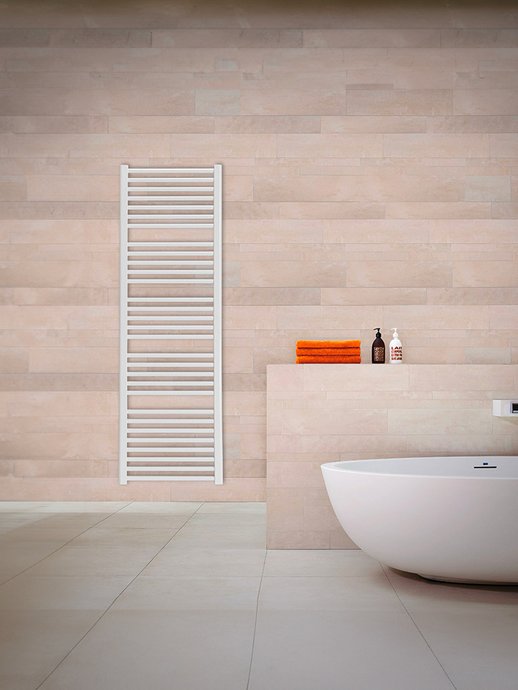
“Central heating” only: this is the case with the Zehnder Forma Air central heating, rated at 612 W and 49.6 x 119.8 cm. It connects only to the hot-water circuit.
“Central heating or electric”: the model comes in versions for both power sources. This is the case with the Zehnder Ribbon, the Zehnder Metropolitan, the Squasy and the Flores. For dual-fuel use, ask for confirmation that the chosen version accepts an electric heating element in addition to the central heating connection.
Dual-fuel stated: the description of the Zehnder Roda Air explicitly mentions a dual-fuel version with a fan heater.
Size it to the room and how you use it
The size depends on the floor area of the bathroom, its insulation and the number of towels to dry. A family will need more bars than a person living alone.
As an example, the Zehnder Roda Air product page lists heights from 901 to 1,771 mm for a width of 550 mm, and outputs from 429 to 809 W depending on the model. For dual-fuel use, also ask for the output of the electric heating element, which determines comfort outside the heating season. Our guide to fitting a heated towel rail without losing space covers compact and vertical formats in detail.
Choose the right controls
In electric mode, it is the element’s control that makes the difference to comfort. A thermostat avoids heating more than necessary, and a timer starts heating just before you wake up.
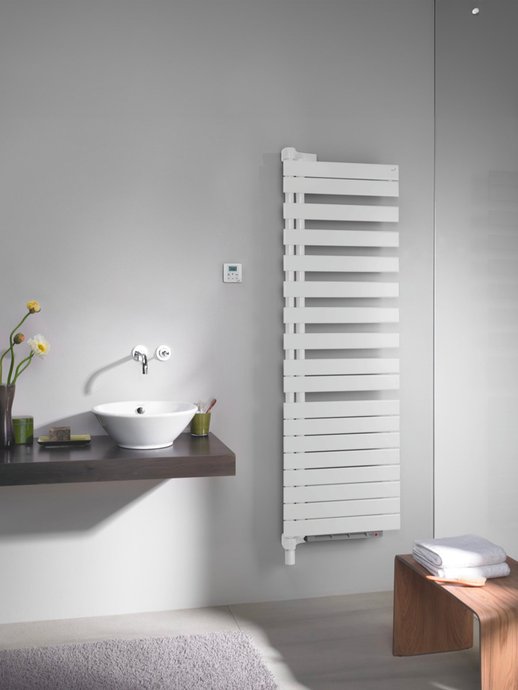
Some models add a fan heater to warm the room more quickly. The Zehnder Roda Air, for instance, includes a 1,000 W fan that provides back-up heat. Its asymmetric body swivels through 180°, making it easier to reach the towels and to clean.
Match the model to your bathroom’s style
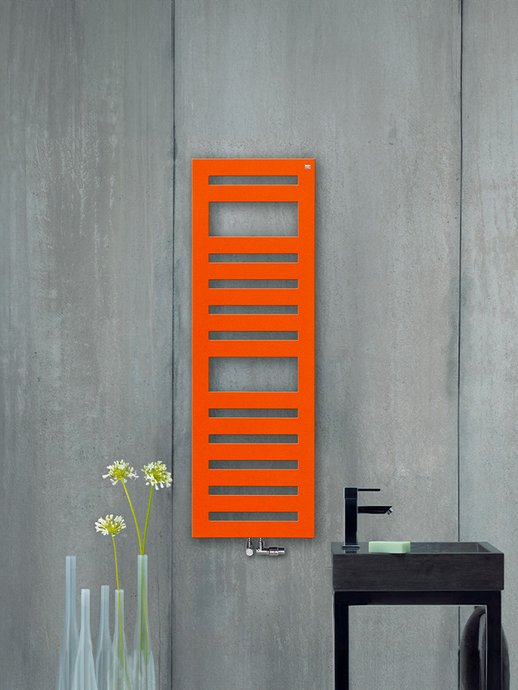
The choice of power source does not limit style. The Zehnder Ribbon takes an architectural approach with its diagonal flat tubes, large cut-outs for hanging several towels and invisible wall fixings.
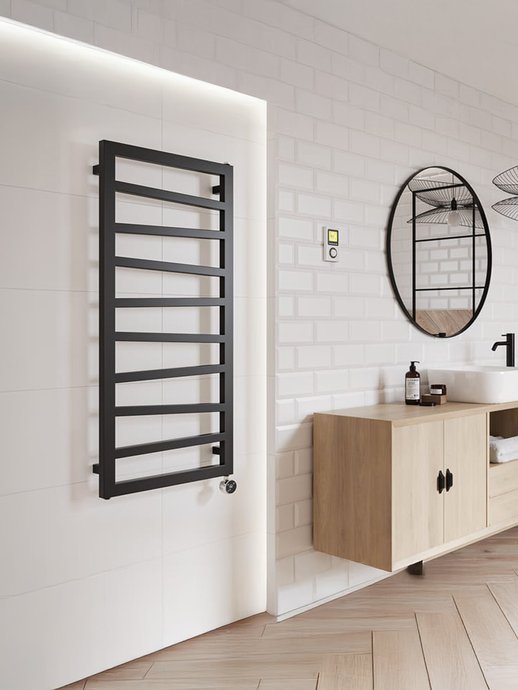
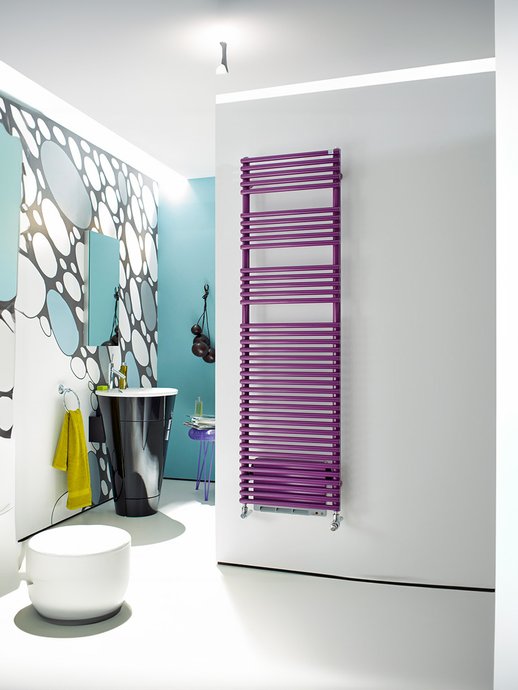
The Zehnder Metropolitan relies on a rectangular frame and flat tubes, with an ultra-slim design and large openings. The thin round tubes of the Flores suit more classic interiors, while the Squasy has a modern look. For colours and shapes, see our tips on choosing the design of a heated towel rail.
Installing and using your dual-fuel heated towel rail
A dual-fuel heated towel rail involves two systems: the central heating and the electrics. Its installation needs planning, ideally as part of a renovation.
Plan for two connections
On the heating side, the radiator connects to the hot-water circuit with two valves, like a standard radiator. Bear in mind the pipe centres, i.e. the distance between the two connections: the Zehnder Metropolitan product page, for example, gives pipe centres of 50 mm.
On the electrical side, you need a power supply nearby for the element. Replacing an existing radiator with a dual-fuel model is often possible, provided you check the pipe centres and plan for this electrical point.
Electrical safety: a room unlike any other
The bathroom brings water and electricity together. In Belgium, safety requirements for electrical installations are set by the Règlement général sur les installations électriques (RGIE, the General Regulations on Electrical Installations), the current version of which has applied since 1 June 2020, according to the SPF Emploi (Federal Public Service Employment).
The position of the appliance in relation to the shower or bath, the type of connection and the circuit protection are all covered by these rules. This connection is therefore a job for an electrician, not a DIY task.
Set both modes without wasting energy
The golden rule: do not run the element when the central heating is already heating the radiator. In winter, let the hot-water circuit do the work; between seasons, shut off the radiator on the central heating side and switch to electric mode.
Valve settings must follow the manufacturer’s instructions, in particular so that the water inside the radiator can expand when the element heats it. Ask your installer to show you the correct procedure. According to the Service public de Wallonie, 1 °C too much increases your bill by 7 to 8%: keep the temperature and heating time to what you actually need. For the rest of the house, our tips on preparing your heating for winter will help you get ready for the cold season.
A comfortable bathroom, whatever the season
The dual-fuel heated towel rail meets a very practical need: keeping the bathroom pleasant and towels dry when the central heating is off. It makes the most of your heating system in winter and of its electric element for the rest of the year.
To choose the right one, check the installation type on the product page, match the size to your room and opt for programmable controls. Come and compare models and finishes in our EXPOcenters, where our advisers will help you confirm the dual-fuel version suited to your system. For installation and the dual connection, the Install+ service puts you in touch with a partner installer.