How do you choose a towel warmer design that complements your décor?

Why does the design of a towel warmer deserve just as much attention as the rest of the room?
In many renovation projects, the towel warmer is the last item on the list of decisions, once the tiles, taps and vanity unit have already been chosen. This is often a mistake, as this appliance remains permanently visible, unlike other fixtures that can be concealed or moved more easily. A poorly matched model – one that is too traditional in a contemporary room or too bulky in a small space – can be enough to disrupt the harmony of an otherwise successful interior design scheme.
A piece of furniture that takes up an entire wall, not just a simple accessory
Unlike a shelf or a soap dish, the towel rail usually takes up a significant amount of wall space, sometimes spanning the entire height between the floor and the ceiling. This visual presence makes it almost a defining feature of the room, just like patterned tiles or an imposing vanity unit, which is why it warrants careful aesthetic consideration rather than being chosen solely on the basis of power output or price.
Types of towel warmers and their impact on the style of a room
Even before you consider the colour, the overall shape of the towel warmer already has a strong influence on the style it will lend to the room. Two main categories dominate the market, each with its own decorative character.
Round tubes, for a classic and timeless look
Round tubes remain the most common and versatile shape. Their understated silhouette and rounded contours blend easily into most bathroom styles, from the most classic to the most contemporary, without ever imposing a style that is too pronounced. They are a safe bet for anyone looking for a fixture that blends into the background rather than one that immediately catches the eye upon entering the room.
Flat slats, for a more contemporary look
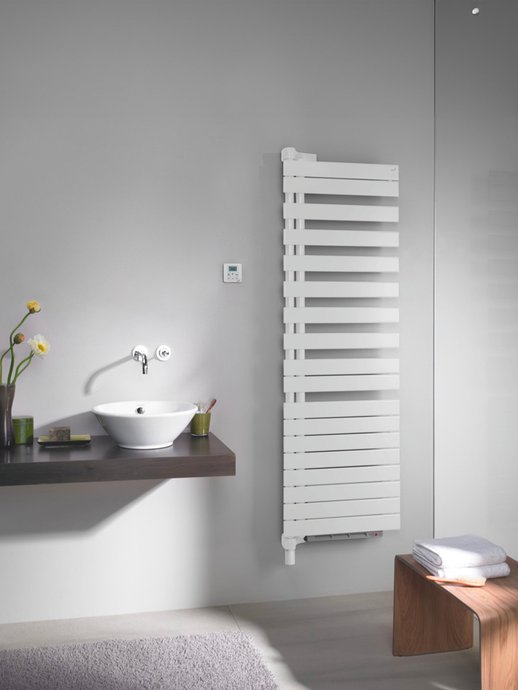
Flat slats – usually horizontal – create a more graphic and structured silhouette than round tubes. This design is particularly well-suited to minimalist or industrial-style bathrooms, or to more distinctive interiors where clean, straight lines already dominate the rest of the décor. Beyond their aesthetic appeal, flat slats also provide a larger surface area for towels, which is not merely a decorative detail but a real practical advantage in everyday life.
Sculptural designs, for a room that stands out
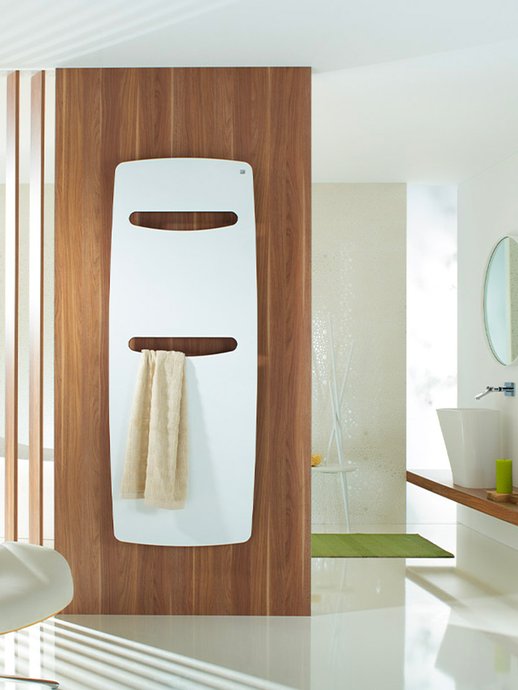
Some manufacturers offer towel warmers with much more free-form, sinuous or organic shapes, designed to serve as a genuine decorative feature rather than merely a heating appliance. This type of model is suitable for bathrooms where you wish to make a bold aesthetic statement, accepting that the unit will become a focal point in the room rather than an element that blends into the décor.
Choose the colour and finish to suit the atmosphere you’re aiming for
Once the general design has been chosen, the colour and finish of the towel warmer allow you to further refine how it blends into the existing décor. This is often what makes the difference between a unit that goes unnoticed and one that stands out.
White – the safest choice to ensure you get it right
White remains the most versatile colour and the easiest to coordinate, whatever the rest of the décor. It is particularly suitable for small bathrooms, where a bolder colour might accentuate the feeling of clutter, and for interiors where the décor is still taking shape, for those who wish to retain flexibility regarding future choices.
Matt black, for a bold, contemporary look
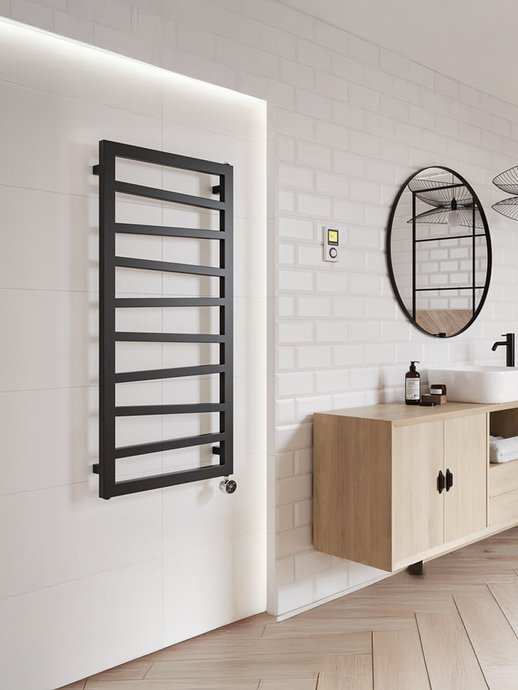
Matt black has become increasingly popular in recent years as an alternative to white for those seeking a bolder look. It pairs particularly well with taps in the same shade, creating a visual thread between the various water points in the room, and adds character without requiring any further changes to the existing décor.
More original colours and finishes
Beyond black and white, many manufacturers now offer dozens of colours, ranging from anthracite grey to pastel shades, as well as finishes with a natural stone or raw metal effect. These options allow for greater customisation, enabling you to choose a shade that echoes or complements a colour already present in the room, such as the tiling, the vanity unit or the walls.
How do you match the towel warmer to the rest of the taps and fittings?
One of the most effective ways to ensure that a towel rail blends naturally into the décor is to ensure it complements the other metal features in the room, rather than choosing it in isolation.
Match the finish of the taps and fittings
A towel rail in brushed brass, chrome or matt black really comes into its own when it matches the finish of the shower or washbasin mixer tap. This consistency creates a unifying metallic theme that visually brings the room together, even when the shapes and functions of the various elements differ greatly from one another.
Emphasising contrast rather than perfect harmony
It is also possible to deliberately opt for contrast rather than total harmony – for example, a gold-coloured brass towel rail in a room where the taps are matt black. This bolder choice works well when the room already features other gold accents, such as a mirror or accessories, so that the contrast appears intentional rather than accidental.
Choose a towel warmer to suit the style of your bathroom
Beyond the general rules, each decorative style naturally lends itself to certain types of towel warmers rather than others. Here are a few suggestions based on the most common interior styles.
For a Scandinavian-style or minimalist bathroom
A white or very light grey model, with slender round tubes, blends naturally into a Scandinavian interior where understated style and light prevail. It is best to avoid overly sculptural shapes or colours that are too bold, as these would clash with the simplicity sought in this type of setting.
For an industrial-style bathroom
A flat-blade towel rail in matt black or raw metal fits perfectly with the industrial design aesthetic, particularly when the room already features polished concrete, exposed pipework or metal furniture. The more graphic shape of the blades reinforces this rawer, more structured feel.
For a classic or timeless bathroom
A model with round chrome or white tubes remains the most sensible choice for a more classic interior design scheme, one that does not particularly seek to stand out but rather aims to maintain a certain aesthetic continuity over time, without the fear that the appliance will look dated in a few years’ time.
For a bathroom with a bold, distinctive style
For more daring projects, a sculptural design or one in more unusual colours can become a real centrepiece of the décor, just like a light fitting or an ornate mirror. This option requires you to plan the rest of the room to complement this bold choice, rather than adding it as an afterthought without considering its visual impact.
Thinking about integration without sacrificing available space
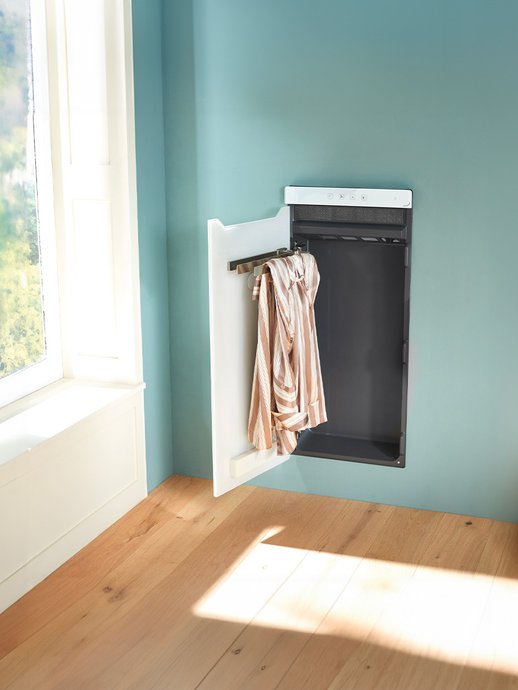
Choosing a stylish towel radiator should not come at the expense of practicality, particularly in bathrooms where space is limited. Installing a stylish towel radiator can be perfectly adapted to fit within the constraints of the layout, thanks to vertical, narrow or space-saving models that allow for unobstructed movement whilst adding a real decorative touch to the room.
Choose the right size before thinking about style
However attractive it may be, a towel warmer that is the wrong size for the available wall space will never look harmonious. Before being won over by a model’s design, it is best to check that its dimensions actually match the available space, leaving a little room all round so that the unit has some visual breathing space rather than looking crammed between two walls.
A choice that is made in line with the rest of the room, not afterwards
Choosing the right design for a towel warmer means, first and foremost, treating it as an integral part of the bathroom décor, rather than simply a technical fixture to be added once everything else has been decided. The shape, colour, finish and size must be chosen to complement the overall look you are aiming for, whether that is understated and discreet or more bold and original.
Bearing in mind the few pointers set out in this guide – from choosing the shape to ensuring it matches the taps and fittings – it becomes much easier to find a model that blends in naturally rather than looking as though it has been added as an afterthought. To see how these combinations look in real-life settings and find the model that best suits your project, the Facq team are on hand in our showroom to help you make your choice.
Frequently asked questions
Q1. Does the towel warmer always have to match the taps?
It isn’t a must, but it’s the simplest way to ensure the piece blends in well without having to think too much about it. If you’d rather play with contrasts, just make sure the contrast looks deliberate by repeating it elsewhere in the room on other accessories, rather than leaving it as an isolated choice that might seem like a mistake rather than a deliberate design choice.Q2. What type of towel warmer should you choose for a small bathroom?
Vertical models with slim tubes are often the best choice for small spaces, as they take up less wall space whilst still providing a good heating surface. Flatter, wider slats generally require more space so that they do not look out of proportion with the rest of the room.Q3. Does matt black go out of fashion as quickly as other trendy colours?
Matt black has established itself as a fairly enduring choice rather than just a passing fad, particularly because it blends easily with many different interior design styles. It is, however, more striking than white, which remains the most timeless colour if you are looking for a choice that will stand the test of time without looking dated.Q4. Is it possible to replace just the towel radiator without having to renovate the whole bathroom?
Yes, it’s entirely possible, and it’s actually one of the simplest ways to modernise an existing bathroom without undertaking major building work. All you need to do is check that the connections – for electricity and hot water – are compatible with the existing installation, and choose a new model whose dimensions fit the available wall space.Q5. How can I tell if a sculptural towel radiator will suit my bathroom?
This type of design works best in rooms that are otherwise fairly understated, where it can become the main focal point without competing with other equally striking features. If your bathroom already features several bold decorative elements, such as patterned tiles or a statement bath, it is best to opt for a more understated design so as not to overwhelm the overall look.