Dual-flow ventilation: real savings in Belgium?

The essentials
1. A dual-flow ventilation system, or ‘C’ system, recovers 81 to 89 per cent of the heat from the extracted air, depending on the flow rate, which reduces heating bills by €300 to €500 per year in a properly insulated house. This is a gross figure, not a net figure.
2. Two fans run continuously, compared with just one in a single-flow system. This additional electricity consumption, plus the cost of replacing the filters once or twice a year, reduces the actual net saving to a more modest range, often between €50 and €250 per year depending on the model and its control system.
3. A correct calculation of return on investment compares the additional cost relative to a System C, not the full price of the dual-flow system: ventilation is mandatory in Belgium in any case. The actual payback period is usually between 10 and 20 years, unless the configuration is particularly favourable.
The figure we keep repeating, and the one we forget
The heat recovery efficiency figure shown on a technical data sheet is never incorrect. An efficient heat exchanger does indeed recover 81 to 89 per cent of the heat from the exhaust air; the figure varies slightly depending on the flow rate at the time of measurement. However, this percentage describes what happens inside the heat exchanger, not what actually appears on your annual bill.
In between, three factors eat into the savings: the electricity used by the two fans running continuously, the cost of replacing the filters, and the actual airtightness of the house. None of these are hidden, but neither do they appear in the figure you’re shown first. Let’s go through the calculation again in order.
The real heating savings offered by dual-flow ventilation
In a properly insulated house, the heat exchanger warms the incoming fresh air by several degrees before it reaches your rooms. When it is 2 °C outside, the air supplied is around 17 to 18 °C rather than at outside temperature. Over a typical Belgian heating season, this heat recovery represents a saving of €300 to €500 per year for an average house, which is around 15 per cent of the heating bill.
It is a genuine benefit, and there is no denying it. The question is not whether it exists, but how much of it remains once the system’s operating costs have been deducted.
A smart investment: the controlled performance of the two fans
The system’s ingenuity lies entirely in its energy management. Thanks to ‘System D+’ technology, the ventilation system dynamically adjusts its operation in real time. Smart sensors for CO₂, humidity and volatile organic compounds (VOCs) continuously monitor your indoor environment: the system fine-tunes its airflow precisely to your actual needs and only draws on its maximum power when necessary (for example, whilst you’re having a shower). The result: average energy consumption remains remarkably low and is always kept under control.
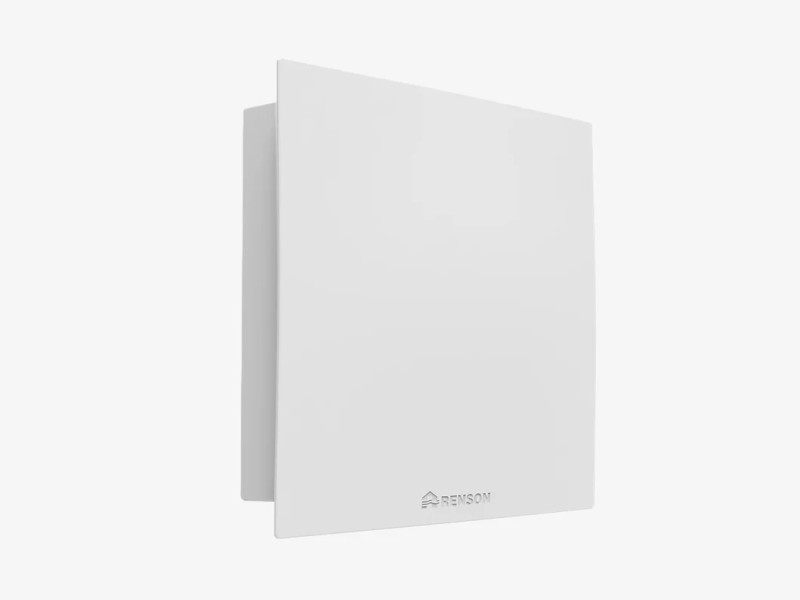
Based on a realistic average of 50 to 100 W over the course of a year, electricity consumption amounts to approximately €140 to €280 per year. This energy input is not merely an expense, but a genuine investment in your health and the preservation of the building: it extracts heat from the exhaust air to warm the fresh air, thereby securing the bulk of your heating savings whilst providing you with unrivalled indoor air quality.
Poste | Single-flow (System C) | Dual-flow (System D) |
| Estimated average power | 15–30 W | 50–100 W (with on-demand control) |
| Estimated annual electricity cost | 50-120 € | 140-280 € |
| Filter maintenance | Grille cleaning, almost free of charge | 2 sets of filters, €60–120 per year |
| Gross savings on heating | None | €300-500 per day |
| Estimated net saving | — | €50-250 per annum |
Calculating return on investment correctly
A humidity-controlled System C costs between €1,500 and €3,500 to install. A static System D costs between €4,000 and €9,000. The actual additional cost to be recouped is therefore around €2,500 to €5,500, compared with the net saving of €50 to €250 per year calculated above. The resulting payback period is usually between 10 and 20 years, with significant variations depending on the configuration.
This payback period is significantly shorter in certain specific situations: a new, highly airtight house; direct electric heating rather than gas (as the electricity saved is then worth more than the gas saved); a finely regulated D+ unit that limits electricity consumption; and long-term occupancy, which allows time for the investment to pay for itself. Conversely, it takes longer – or may never be recouped over the appliance’s lifetime – in the case of a partial renovation of an older house that is still not very well insulated and is heated by gas at a moderate price.
Script | Additional cost: D vs C | Estimated net saving | Estimated return time |
| Brand new, very secluded, electric heating, energy efficiency class D+ | 2 500-3 500 € | €200-350 per night | Ages 8–15 |
| Extensive refurbishment with good insulation, gas heating | 3 000-4 500 € | 100-200 €/an | 15–25 years old |
| Partially renovated, average insulation, gas heating | 3 500-5 500 € | €50-100 per person | 25 years and over, sometimes never |
So, myth or reality?
Both, depending on the project. The gross heating saving (€300 to €500 per year) is real and has been measured. What is more of a myth, however, is the idea that this automatically translates into an equivalent net saving on the bill, or that the investment pays for itself quickly in all scenarios. In a new, airtight house with a well-regulated heating system, the calculation holds up very well. In a partial renovation of a building that still has air leaks, the financial case weakens significantly, even though the benefits in terms of comfort and air quality remain intact.
This is precisely what sets this choice apart from a simple price comparison. Our guide System C or System D ventilation: which one should I choose for my home in Belgium? provides an in-depth look at both systems if you’re still undecided between System C and System D for your project.
What actually improves the calculation
Three factors carry more weight than the choice of brand itself. Firstly, demand-controlled ventilation: a unit that adjusts its airflow based on measured CO₂ and humidity levels, such as the Renson Endura Delta, consumes significantly less energy than a constant-flow unit, without compromising air quality. Secondly, the building’s airtightness, which is essential if the stated efficiency is to match the actual efficiency. Finally, correct sizing: a unit that is oversized for the house consumes more electricity than a model correctly calculated based on the actual airflow requirements of the rooms.
What Facq offers
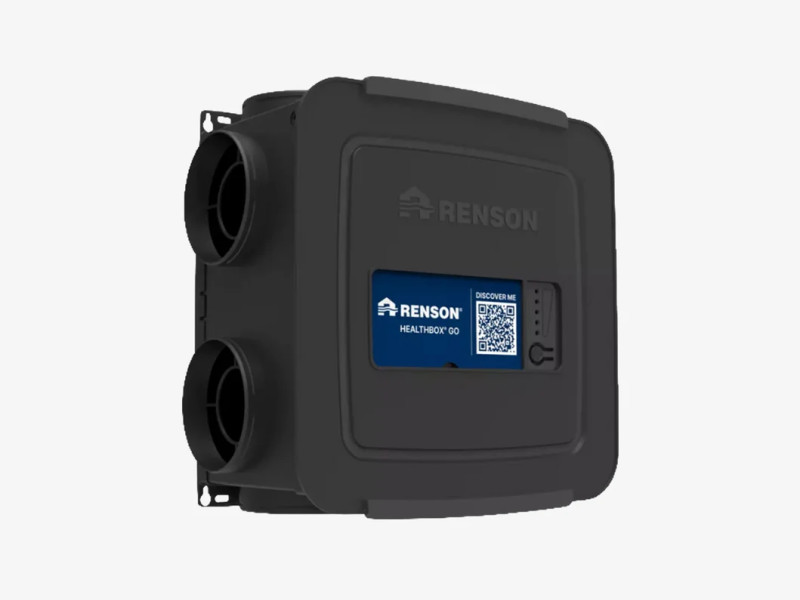
Facq stocks several brands of dual-flow units in its Maison Verte range. Renson offers the Endura Delta, a D+ system controlled by CO₂ and humidity sensors and VOC sensors, with a measured thermal efficiency of 81 to 89 per cent depending on the flow rate, and an automatic bypass that shuts off the heat exchanger in summer to allow fresh air to enter without heating it unnecessarily. Vasco also offers built-in dual-flow units, whilst Soler & Palau and Atlantic round off the range for projects on a tighter budget. A Facq adviser at one of the 17 EXPOcentres will work with you to assess your home’s likely airtightness and the existing heating system before recommending one system over another: it is these two factors, rather than the brand, that determine the actual calculation.
This choice of ventilation system should not be made in isolation. It forms part of a broader consideration of a home’s insulation, heating and energy efficiency, which we set out in detail in our guide How to make your home more environmentally friendly and energy efficient?
Frequently asked questions
Q1. Does dual-flow ventilation really save money in Belgium?
Yes, but the actual net saving (€300 to €500 in heating costs, minus the electricity used by the two fans and the cost of filter maintenance) is usually between €50 and €250 per year – not as high as the gross figure often quoted.Q2. Why aren’t the advertised efficiency figures of 85–95 per cent reflected in my savings?
This percentage measures the performance of the heat exchanger itself, not the system’s overall efficiency. The electricity consumed by the fans, filter maintenance and, above all, uncontrolled air leaks in the building reduce the gap between the theoretical efficiency and the actual savings shown on the bill.Q3. How long does it take to recoup the cost of a dual-flow ventilation system?
When comparing the actual additional cost relative to a Class C system (€2,500 to €5,500), the payback period is usually between 10 and 20 years, with shorter payback periods (8–15 years) in a new, highly airtight property heated by electricity, and longer or even non-existent payback periods in a partial renovation of a building that is still not very airtight.Q4. Does airtightness really make a difference to the outcome?
Yes, it is the most significant factor after the heating system. Without good airtightness, some of the air bypasses the heat exchanger through leaks in the building, which significantly reduces the actual efficiency compared with the efficiency measured in the laboratory.Q5. Does a CO₂-controlled dual-flow ventilation system really use less energy?
Yes. A D+ unit such as the Renson Endura Delta adjusts its airflow based on air quality measured in real time, rather than running continuously at full capacity. This reduces average electricity consumption without compromising air quality, one of the most effective ways to improve the actual economic performance.Q6. Is it better to install a dual-flow system during a partial refurbishment or to wait for a more extensive refurbishment?
In a partial refurbishment, where the building’s airtightness is not being addressed, a humidity-controlled Class C system often offers better value for money. A dual-flow system really comes into its own when the property’s insulation and airtightness are addressed at the same time, which allows the theoretical efficiency to come closer to the actual efficiency.