Wall-mounted furniture: the space-saving solution to adopt in 2026
Why choose wall-mounted bathroom furniture?
The open space beneath the unit is a real visual asset
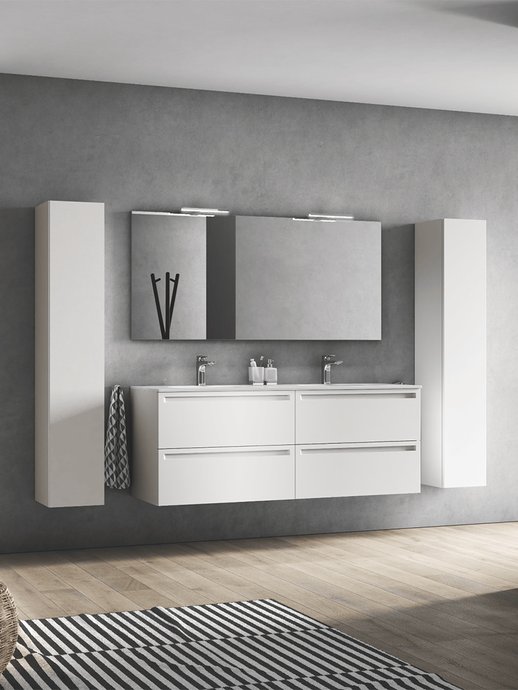
Wall-mounted bathroom furniture frees up floor space. It’s as simple as that. The space created beneath the unit creates a continuous floor line that makes the room appear larger. In small bathrooms (under 5 m²), this effect is immediate. The eye glides unhindered; the room feels more spacious. Whereas a floor-standing unit cuts off the view and weighs down the overall look, a wall-mounted bathroom unit noticeably lightens the space at first glance.
Making everyday cleaning easier
Raising your furniture off the floor also makes cleaning easier. No more having to work around the legs or slide a mop under floor-level furniture: a quick wipe underneath is all it takes. Better air circulation under the furniture reduces moisture build-up on the floor, which helps prevent mould from developing over time. Over years of use, this is a real time-saver, not just a minor detail.
The ideal height: between 85 and 92 cm
The European standard as a benchmark
When installing a wall-mounted unit, you need to choose the correct installation height. A height of between 85 and 92 cm from the floor, measured to the top of the vanity top, complies with the European standard for optimal comfort. A height of 92 cm from the floor is often chosen for taller people. For a standard vanity unit, also consider the depth: 45 to 50 cm is suitable for the vast majority of layouts without obstructing movement.
A single-bowl washbasin or a double-bowl unit?
A single-bowl vanity unit is suitable for bathrooms less than 120 cm wide. For wider spaces, a double-bowl model is a viable option, provided you check that the distance from the floor to the drain plug matches the existing drainage system. In terms of width, standard sizes range from 60 to 180 cm depending on the range. The superior storage capacity of larger units speaks for itself for families, and a 140 cm wall-mounted unit takes up less visual space than a freestanding model of the same size.
2026 trends: colours and materials
Dark wood and rich colours are all the rage
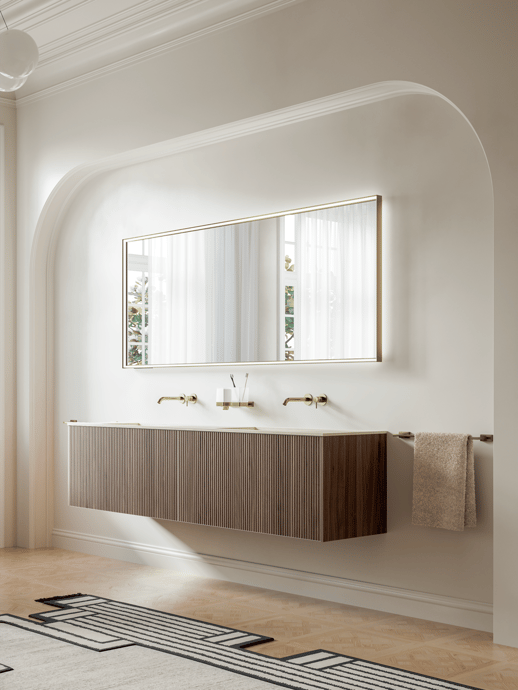
By 2026, wooden furniture will no longer rely on the versatile light oak look. Colours are getting darker: walnut, anthracite-stained wood, and velvet finishes. On a wall-mounted unit, this effect is particularly striking: the wood seems to float in the space, structuring the room without overwhelming it. This is precisely the approach taken by the Burgbad Free Collection : a wall-mounted vanity unit in a deep velvet walnut finish, with very clean horizontal lines and no visible handles. The result in a small bathroom is striking: the floor remains fully visible, and the colour anchors the room without weighing it down. Wooden units simply require proper ventilation and regular maintenance to ensure they last.
Deep green, midnight blue, graphite black
When it comes to colours, white and light grey are losing ground. Deep green, midnight blue and graphite black are making their mark on lacquered bathroom furniture. Cleaning lacquered furniture in these shades is simple: a damp microfibre cloth is all you need to remove dust and smudges. These colours add character without weighing down the room, especially when the rest of the bathroom is kept in neutral tones: beige, stone, off-white. The contrast creates depth, and a wall-mounted unit in these shades plays this role to the full.
The 2026 designs: sleek and soft
Clean lines, rounded corners
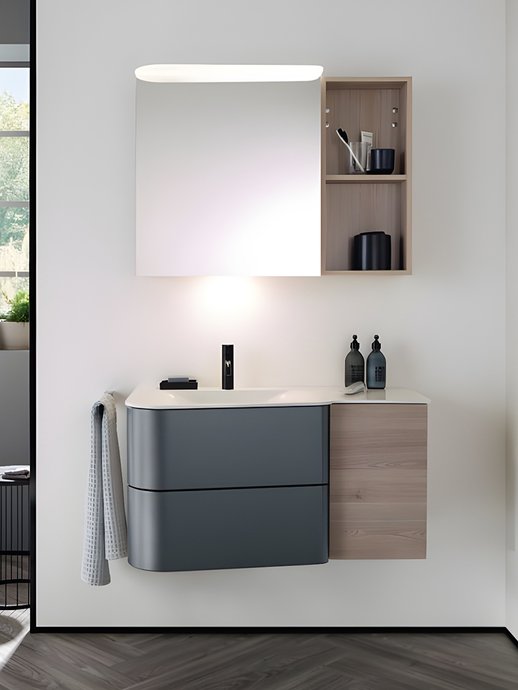
The modern bathroom of 2026 doesn’t choose between sharp lines and soft curves: it combines the two. The fronts of wall-mounted units feature clean horizontal lines, with no visible handles and push-to-open mechanisms. But the corners are rounded. This is the essence of the Japandi style (a blend of Japanese and Scandinavian) that directly shapes these forms: understated, functional, yet never cold. The Infinie range by Sanijura perfectly illustrates this duality: a thick HPL worktop with highly architectural lines, combined with basins featuring either sharp or softer angles, depending on preference.
Slim, elongated formats are gaining ground
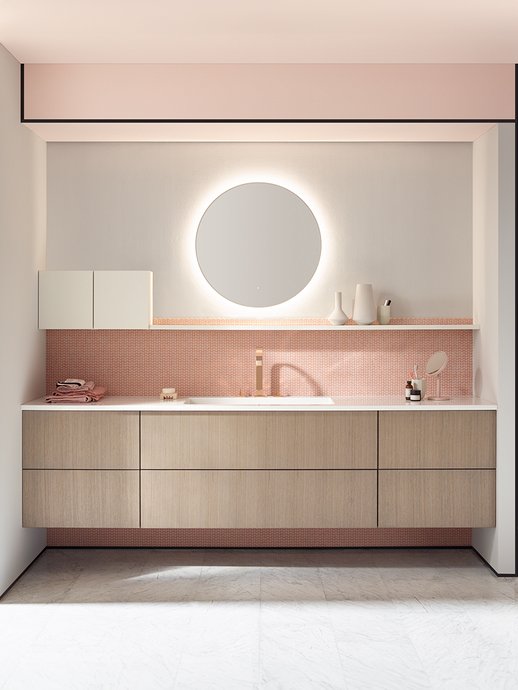
Wall-mounted units with a distinctly horizontal profile (maximum width combined with a low height) are one of the key trends for 2026. This elongated design enhances the sense of width in small bathrooms and allows for more drawers to be incorporated by spreading them out along the length. A 120 cm unit with side-by-side drawers provides ample storage space whilst maintaining a discreet profile — the exact opposite of freestanding units which, even when narrow, block the view of the floor.
The wall-mounted vanity unit as a decorative feature
An architectural feature in its own right
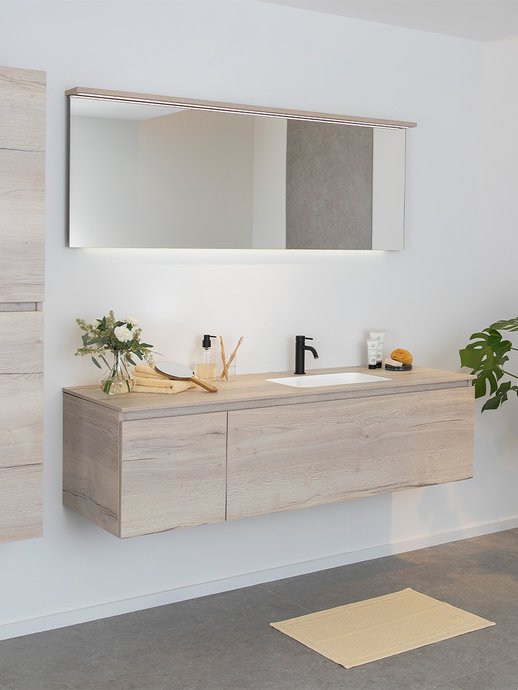
To add character to a bathroom, wall-mounted units can become a real focal point of the décor. Their floating effect visually lightens the room and helps to create a more modern, minimalist atmosphere. Combined with a large mirror, LED lighting or textured tiles, they immediately lend a more architectural dimension to the space. To accentuate this decorative effect, opt for wood, matt or stone finishes that create contrast with the walls and floor. Collections such as the Illusion Lumen furniture range allow you to play on this contemporary and elegant style in the bathroom.
Taps and fittings as stylish accessories
Wall-mounted units free up countertop space and showcase the taps. In 2026, matt finishes are all the rage: matt black, brushed gold and satin stainless steel. A taupe-coloured wall-mounted unit paired with brushed brass taps and a matt white ceramic basin is one of the most sought-after combinations. The mixer tap at the water supply becomes a key design feature — not a functional addition to be hidden away. Check for leaks after installation and ensure that the height of the taps aligns with the height of the chosen basin.
Materials: durability and aesthetics
Lacquered MDF, HPL, solid wood
The choice of material for a wall-mounted bathroom cabinet depends on your budget and how you intend to use it. Lacquered MDF remains the most affordable option and offers a subtle colour finish that is hard to match. Solid wood or veneer is a higher-end option and will last 15 to 20 years with normal care. HPL (high-pressure laminate) is gaining ground: it is highly durable, easy to maintain, and capable of reproducing wood, stone or concrete effects with great precision. In any case, check that the back panel is treated against moisture: this is where water seeps in first.
Polished concrete and stone for the vanity top
Whilst the body of the wall-mounted unit is often made of wood or HPL, the vanity top plays a key decorative role. By 2026, polished concrete and composite stone – including synthetic marble with either straight or rounded edges depending on the range – will have become the standard. Durable and easy to maintain, they offer a texture that traditional ceramic cannot replicate. A silicone seal between the wall and the unit remains essential to prevent water ingress over time.
Decorating ideas for stylish hanging displays
Playing with contrasts in a small bathroom
In small, stylish bathrooms, wall-mounted units are ideal for creating a sense of contrast. A black lacquered vanity unit mounted 90 cm above the floor, large-format white tiles, and brushed gold taps: the result is striking despite the limited space. The open space beneath the unit enhances the sense of space, whilst the unit’s colour anchors the room. For those who prefer a softer ambience, light oak with an LED backlit mirror strikes exactly the right balance: the warmth of the wood, diffused light, and a completely uncluttered floor.
Incorporate storage and openings for a cohesive look
A well-designed wall-mounted bathroom unit incorporates storage without leaving it on display. Silent-running drawers, handle-free fronts and open side shelves for a few selected accessories all combine to create a tidy space without looking cluttered. For family bathrooms, a simple vanity unit with three wide drawers remains the most practical solution: one drawer for each user.
Wall-mounted furniture: a blend of comfort and modernity
Wall-mounted units are now establishing themselves as a solution that is both stylish and practical in the bathroom. As well as making the space feel more open, they make cleaning easier, improve circulation and help create a more contemporary feel. From materials and colours to sizes, taps and storage solutions, there are countless possibilities for designing a harmonious room tailored to your daily life. Whether in a small shower room or a large family bathroom, wall-mounted units offer the perfect balance between design, functionality and ease of use.
Frequently asked questions
Q1. Can a wall-mounted unit be fitted to plasterboard?
Yes, provided you reinforce the back of the standard plasterboard with a sheet of plywood or a metal framework. You must then choose wall plugs suitable for hollow walls and ensure that each fixing point can support the total weight — the unit, the washbasin, the water and the contents of the drawers. If in doubt, a plasterer or a plumber can install the reinforcement beforehand.Q2. What is the recommended height for installing wall-mounted units?
A height of between 85 and 92 cm from the floor — measured at the top of the vanity unit — complies with European standards and ensures optimal comfort for most users. A height of 92 cm from the floor is more suitable for taller people. Below 85 cm, the unit may appear low and make standing uncomfortable over time.Q3. What materials should you choose for a moisture-resistant wall unit?
Water-resistant lacquered MDF, treated solid wood, HPL and thermoformed resin panels are the most suitable materials for the bathroom. Avoid standard MDF without a water-resistant finish, as it swells quickly when exposed to water. Whatever the material, a silicone seal between the wall and the cabinet ensures a long-lasting watertight seal.Q4. Wall-mounted or freestanding units: which is best for a small bathroom?
For small bathrooms, wall-mounted units are far more suitable than floor-standing units. The open space beneath the unit makes the room appear larger, the floor line remains unbroken, and cleaning is made easier. A simple wall-mounted vanity unit, 60 to 80 cm wide, is often the best option for this type of room. Floor-standing units have the advantage of being easier to install, but they make the space feel noticeably more cluttered.Q5. How do you care for a lacquered or wooden wall unit?
To clean lacquered furniture, a slightly damp microfibre cloth is all you need — avoid abrasive products that scratch the surface. Wooden furniture requires a product suitable for wooden surfaces and good ventilation in the room to prevent excess moisture. In both cases, regular dusting and cleaning away limescale marks will help keep your furniture in good condition for many years.