Combining solid wood and lacquer: the guide to material pairings in 2026
Solid wood furniture is enjoying growing success in creating warm, welcoming spaces. But how can you preserve this authenticity while adding a refined touch? We guide you through this successful pairing with lacquered surfaces, an expertise developed over more than 30 years.
This combination offers you the best of both worlds. Wood-based fittings instantly create an enveloping atmosphere in your interior, while lacquered furniture guarantees longevity and contemporary elegance. Together, these materials create personalised atmospheres that harmonise with all styles of configuration.
We guide you through this guide to mastering this combination, defining the ideal proportions and following the 2026 trends that will transform your bathroom.
Solid wood and lacquer: understanding each material
Solid wood: warmth and authenticity
Solid wood is defined as a raw, natural material, extracted directly from the trunk of a tree without industrial processing. Unlike plywood or MDF, it retains its original structure with its grain, knots and natural colour variations. This authenticity gives each piece a unique character that tells the story of the tree from which it comes.
Wood has a positive influence on the atmosphere of your bathroom. This living material absorbs ambient humidity and releases it gradually, thus regulating the climate of the room. Its grain and texture create a timeless look that harmonises with many styles: Scandinavian, minimalist or contemporary.
The different species offer a varied palette with distinct properties. Oak is remarkably resistant to moisture, while exotic woods such as teak contain natural protective oils. Each species develops its own colours and visual characteristics.
Lacquer: modernity and durability
Lacquer results from a precise technical process: several layers of paint or varnish are applied to a surface to create a smooth, uniform finish. This process generates a homogeneous surface free of brush marks or roughness, guaranteeing a perfectly smooth result. Modern hybrid lacquer combines the advantages of alkyd and PU acrylic resins, ensuring rapid drying and robust surfaces.
The performance of these items of furniture is based on their exceptional durability. The surface forms a protective barrier that reinforces scratch resistance, moisture resistance and stain resistance. Its high resin concentration allows it to withstand everyday impacts and friction. It remains washable regardless of its finish. The aesthetic options include gloss, satin and matt finishes, modulating light reflection to achieve the desired effect.
Why do these two materials complement each other?
This pairing creates a remarkable balance between function and decoration. Wood brings its natural, warm dimension, while lacquer adds modern protection and an impeccable finish. Wood offers authenticity and the ability to age elegantly, while lacquer ensures durability and makes everyday maintenance easier. This complementarity makes it possible to design furniture that combines the best of both worlds without compromising on performance or aesthetics.
The advantages of combining solid wood and lacquer in the bathroom
A balance between natural warmth and contemporary elegance
Combining wood and lacquered surfaces in your bathroom creates a striking visual contrast that reconciles authenticity and modernity. Wood immediately creates a welcoming atmosphere conducive to relaxation. This living material softens geometric lines and provides that sought-after sense of comfort.
Lacquer brings its contemporary dimension through its perfectly smooth, uniform surface. It intensifies colours and enriches textures, giving furniture that sophisticated look that makes all the difference. This harmonious pairing adapts to all interior styles: Scandinavian, natural, contemporary or minimalist.
Durability and moisture resistance
Lacquered furniture provides an effective protective barrier against moisture, scratches and everyday wear. This waterproof layer limits the penetration of water and corrosive substances.
Some woods used in bathroom furniture offer good moisture resistance when they benefit from appropriate treatments. Careful finishes and protective varnishes help to durably preserve the appearance and structure of the material, even in an environment exposed to water.
To guarantee the longevity of your fittings, effective ventilation remains essential. A well-ventilated bathroom limits condensation and protects surfaces, ensuring reliable and decorative use over time.
Aesthetic flexibility for all styles
This wood-lacquer combination gives you considerable creative freedom to personalise your space. Wood harmonises naturally with other materials such as stone, stoneware or ceramic. This versatility makes it possible to combine nature and relaxation while creating atmospheres perfectly adapted to your project.
Enhancing space and light
Light colours reflect up to 80% of received light, compared with only 10 to 15% for dark shades. The optical reflections of a lacquered surface attract the eye and enhance volumes. Wood diffuses light gently thanks to its grain and organic surface, creating that visual warmth that is particularly appreciated in a bathroom.
How to successfully combine solid wood and lacquer
Choosing the right proportions between the two materials
First, identify the dominant element of your space. If the floor or a large piece of furniture imposes wood as the base, use lacquer as minimalist accents on facades or certain details. Avoid concentrating a single material in one area: distribute the masses throughout the room to create a harmonious visual balance.
Repeat each material at least twice in the space. This repetition creates a coherence that structures your bathroom without overcrowding it.
Harmonising shades: light and dark woods
Dark woods such as smoked oak and walnut dominate the new collections. Contrary to popular belief, these shades structure volumes and create elegant focal points.
Compose a light-medium-dark triad rather than two similar shades. Pay close attention to undertones: warm, cool or neutral. Pair dark wood with light textiles or matt ceramics to avoid an overly heavy look.
Defining areas of application: facades, surfaces, structures
Protect solid wood facades with a suitable varnish that guarantees their longevity. Lacquered facades offer you an extensive palette of colours and finishes.
This flexibility allows you to mix wooden structures with lacquered facades, combining authenticity and modernity according to your preferences.
Selecting finishes: matt, satin or gloss
The matt effect absorbs light and conceals minor imperfections. The satin finish reflects light better while offering greater resistance to moisture. The gloss finish creates a mirror effect that visually enlarges spaces.
Opt for satin or gloss surfaces for your bathroom: they are easy to clean and withstand humid environments.
Pairing with other materials: metal, glass, stone
Metal tempers the sometimes cold appearance of lacquer while wood energises the modern aesthetic. This combination balances your décor.
Mix wood and stone to break up monotony and create rhythm. Stay consistent in your colour palette to define spaces with elegance.
Inspirations and 2026 trends for wood and lacquer bathroom furniture
Lacquered furniture with solid wood accents
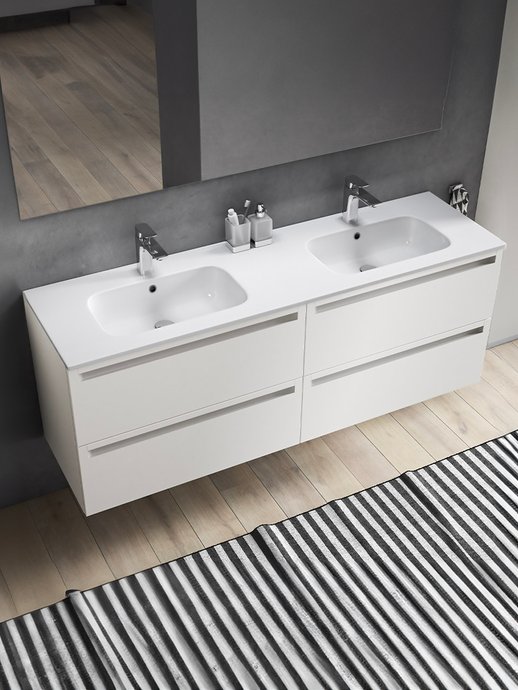
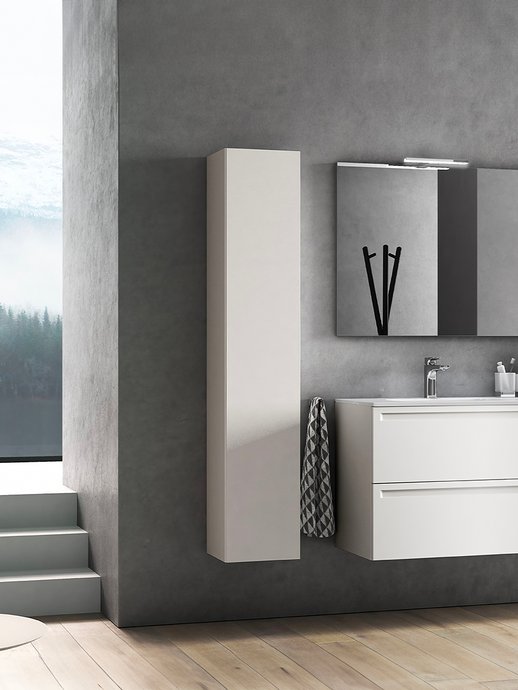
Current collections showcase lacquered bases combined with wood elements, for a subtle balance between modernity and authenticity. Smooth facades, with matt or satin finishes, structure the furniture while highlighting wooden details on surfaces, niches or frames.
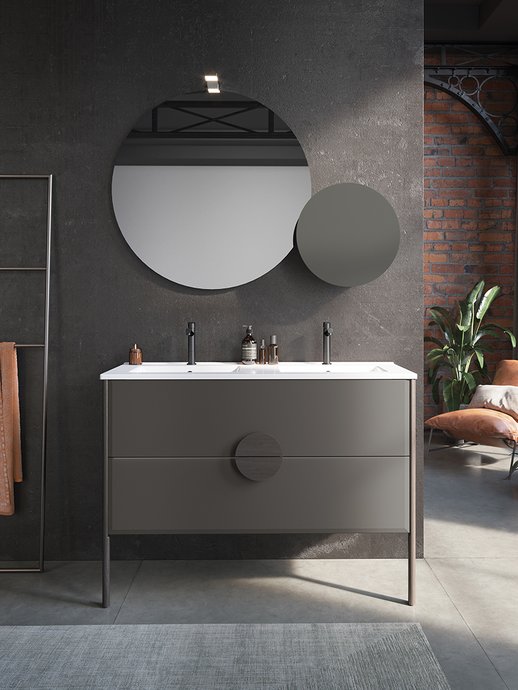
The colour palette extends from timeless shades such as white, grey or black, through to calmer hues such as beige, sand or green, making it possible to create harmonious atmospheres suited to each bathroom project.
Solid wood structures with lacquered facades
Bathroom furniture often combines a solid wood structure with lacquered facades, offering both robustness and ease of maintenance. Smooth finishes effectively protect surfaces against moisture while adding a contemporary, luminous touch.
Depending on the collection, natural or deeper shades can create elegant contrasts, for a result that is both organic and structured, perfectly suited to contemporary bathrooms.
Trending colour combinations
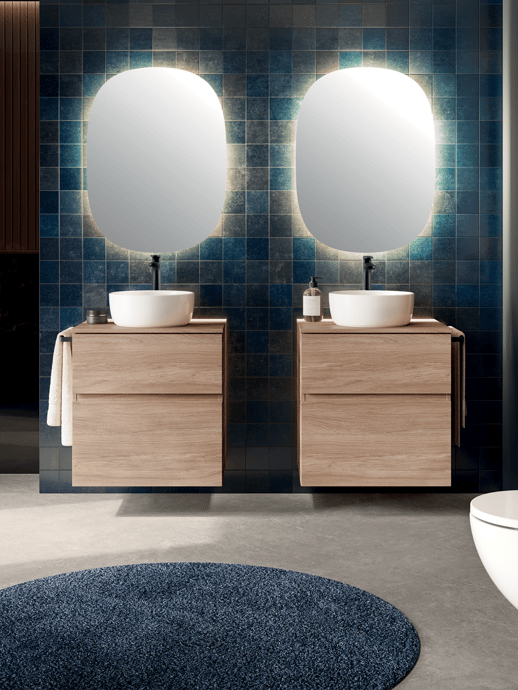
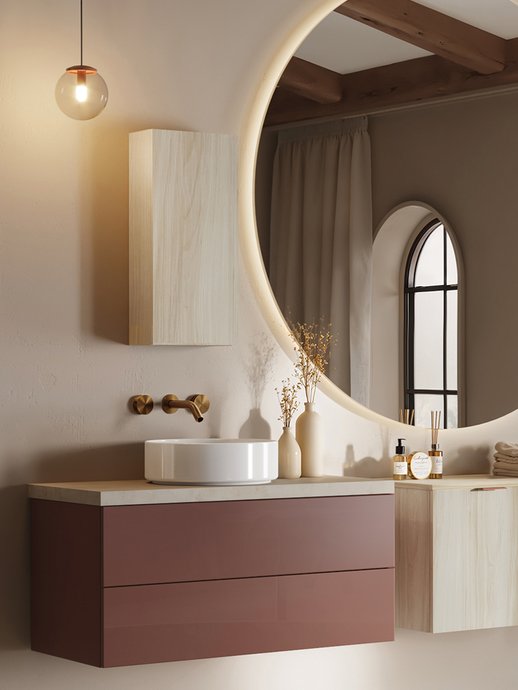
In 2026, the preference is for organic, enveloping shades. Light woods harmonise with sandy beiges, mineral greys organise the space, and matt black brings out the character of natural furniture. Nature-inspired colours include blues, nuanced greens, terracotta and burgundy, counterbalanced by luminous or golden shades. Matt finishes are establishing themselves for their refinement.
Examples of collections combining wood and lacquer
Bathroom furniture collections offer a wide variety of wood finishes, often combined with mineral materials such as ceramic or stone. These combinations create a harmonious balance between a natural feel and contemporary lines.
Depending on the style, wooden shades work equally well in refined atmospheres and more sophisticated settings, for a result that is both aesthetic and durable.
Achieving harmony between solid wood and lacquer
The combination of solid wood and lacquer is now the ideal solution for designing a bathroom that is both authentic and high-performing. Well-balanced proportions, harmonious shades and appropriate finishes guarantee a durable and elegant result.
This combination gives you total creative freedom without compromising on moisture resistance. Embrace the 2026 trends to personalise your space according to your tastes, and transform your environment into a true modern and natural sanctuary of well-being.
Frequently asked questions
Q1. Which wood species are trending for bathroom furniture in 2026?
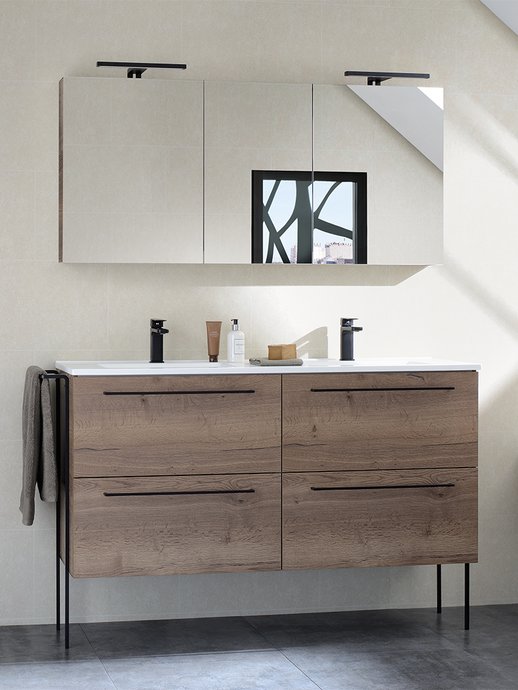
Deep-toned wood finishes are enjoying real popularity in 2026. Dark, textured shades are establishing themselves in contemporary collections, adding character while visually structuring the space. Combined with clean lines and materials such as ceramic or glass, these finishes create elegant, up-to-date atmospheres that are perfectly suited to modern interiors.Q2. Which lacquer colours work best with solid wood?
It pairs perfectly with a wide range of lacquered colours. Classic shades such as white, sandy beige and mineral grey create a soft atmosphere. For more character, blue, clay green, terracotta or matt black offer elegant contrasts, particularly with lighter models.Q3. Which lacquer finish should you choose for a bathroom?
For a bathroom, opt for satin or gloss finishes. They reflect light better, are more resistant to moisture and easy to clean. The matt finish, while elegant, is less suited to humid environments as it absorbs light and requires more maintenance.Q4. How do you protect solid wood in a damp bathroom?
Protection relies above all on appropriate surfaces, such as varnishes or lacquers, which create an effective barrier against moisture and water splashes. Furniture designed for these spaces generally benefits from specific treatments that ensure its durability over time. Good ventilation of the room remains essential: it limits condensation and preserves the integrity of the materials. A well-ventilated space thus helps to maintain the appearance and performance of the furniture over the long term.Q5. What are the ideal proportions between wood and lacquer in bathroom furniture?
The balance depends on defining a dominant material and distributing the other harmoniously. Repeat each material at least twice in the room to create visual coherence. Avoid concentrating a single material in one area and distribute the masses to structure the space without overcrowding it.