Mix & match: bringing old and modern together in the bathroom
Why mixing the two styles works so well
Modern brings function: smart storage, clean lines, high-performing fittings, easy upkeep. That's what makes a bathroom pleasant to use every day, without dealing with dated drawbacks. Old brings character: a room that tells a story, that doesn't look like every other one, that has history or at least suggests it. Together, they complement each other rather than compete, and that's exactly why this kind of layout lasts, unlike trends that come and go faster.
This mix also lets you keep some existing features during a renovation, which matters when planning a budget. An old wood floor still in good shape, a period window with its original mouldings: rather than stripping everything back to a neutral, standard base, you can build around these features with modern fittings that highlight them instead of hiding them. The result often costs less than a full renovation where everything gets replaced, and the room gains personality, which is hard to achieve with an entirely new, standard layout.
Material pairings that work
Certain material combinations naturally bridge the two eras, without needing much thought on how to make them work together. They come up in most successful projects, because they play on contrast without clashing: each material keeps its own identity, but the whole feels put together rather than thrown together.
Wood and concrete
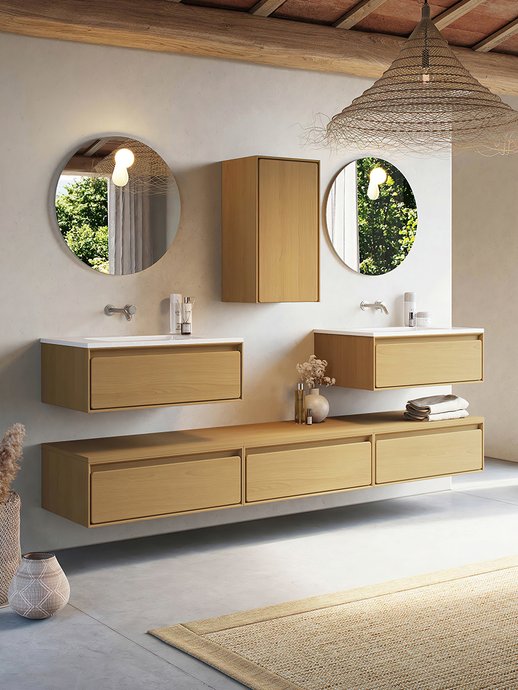
Wood and concrete make a particularly popular pairing in bathrooms that mix old and modern. Wood brings warmth, authenticity, and character, while concrete stands out for its contemporary, clean look. Together, they create a natural balance between comfort and modernity.
This combination can take different forms: a wooden vanity paired with a polished concrete floor, or a concrete basin set into more traditional furniture. Each material balances the other out. Wood softens the sometimes stark look of concrete, while concrete adds a current touch that keeps things from looking too rustic.
Brass and clean lines
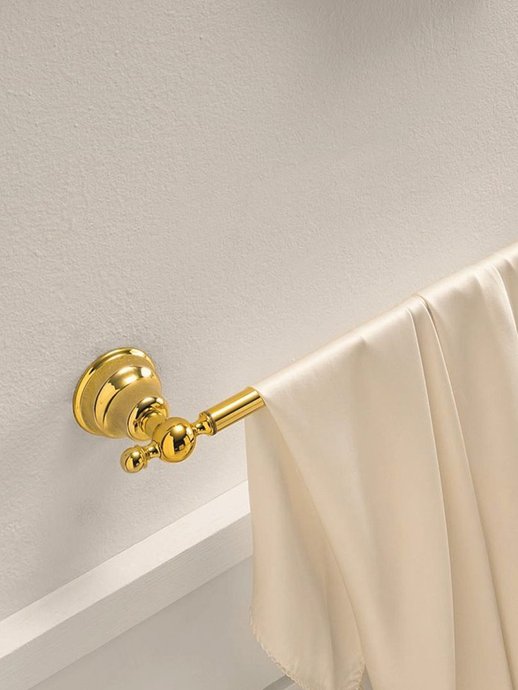
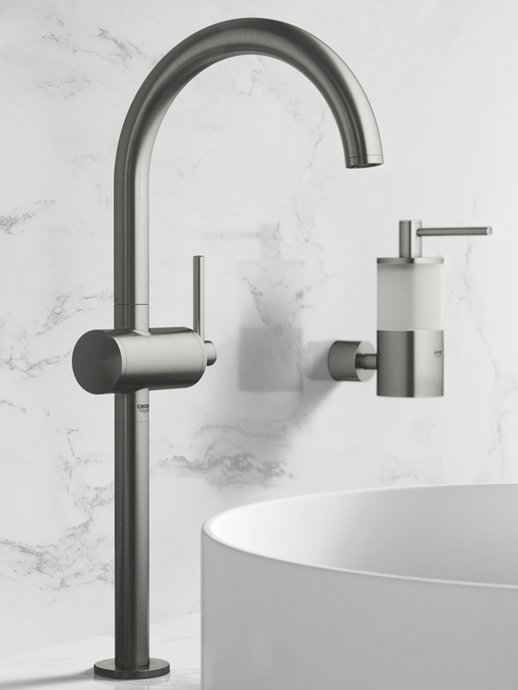
Brushed brass taps are probably the most effective way to add an old-world touch without giving up modern comfort, and they're also one of the most affordable options, since it's just a finish change on fittings that are otherwise very current. A brass mixer tap on a minimalist countertop basin, brass handles on a straight-lined wall-hung vanity, or a brass shower head in a fully glazed cabin.
How to split old and modern across the room
Rather than mixing both styles everywhere in the room, which can quickly become hard to balance visually, it's often more effective to split them by zone or by function. This approach helps keep things cohesive, because each part of the room has its own clear role, and the eye doesn't have to try to reconcile different styles in the same spot.
The centrepiece fixture
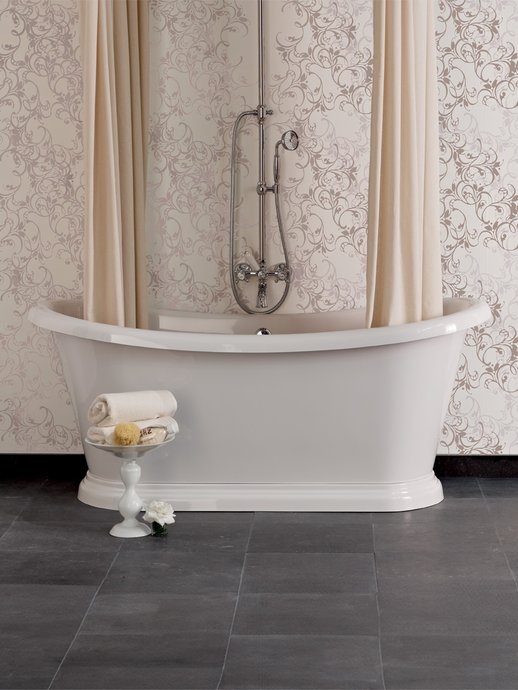
A freestanding bathtub naturally draws the eye and instantly adds character to the bathroom. Placed in the middle of the room or set against a clear wall, it becomes a real decorative feature. That said, it doesn't force a fully retro layout.
It pairs perfectly with more contemporary fittings like a walk-in shower, a wall-hung vanity, or discreet, modern lighting. This contrast between the elegance of the old and the simplicity of the contemporary creates a balanced room, full of personality and genuinely timeless.
The heated towel rail, between heating and decoration
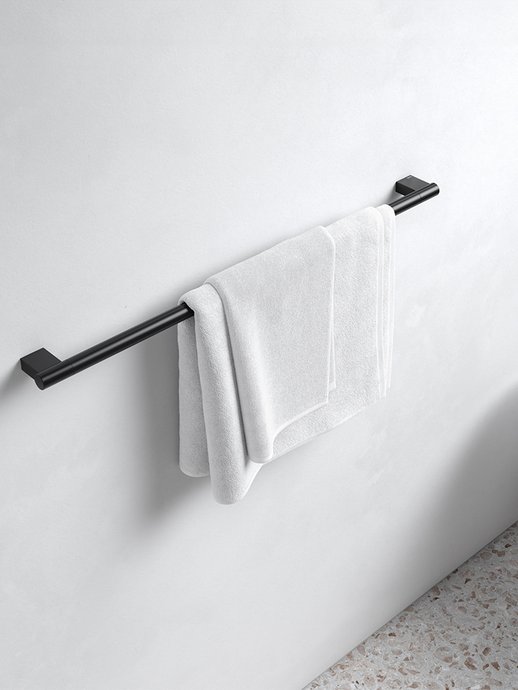
The heated towel rail is one of the fittings where the old-modern contrast passes the most easily unnoticed, and that's exactly what makes it so useful. A horizontal-bar model in a brushed brass or aged copper finish echoes old cast-iron radiators while keeping fully modern heating performance and thermal control. For a more contemporary feel, the same role can be played by a matte black vertical model, matched with taps of the same shade.
The pieces that bring the contemporary touch
On the other hand, some fittings keep the room grounded in the present, even surrounded by strongly period features. They play a necessary balancing role: without them, the room would risk tipping fully into retro, losing the comfort and function that are exactly why you'd mix the two styles rather than pick one.
The walk-in shower
With no threshold, and a thin or fully frameless glass panel, the walk-in shower remains one of the most modern fittings you can install in a bathroom, both in its design and in the everyday comfort it offers. It fits surprisingly well next to an old-style bathtub, as long as there's a clear separation between the two zones, for example through a glass partition that lets light through without breaking the openness of the space, or a change in flooring that clearly marks the boundary between the two areas without needing a physical wall.
The wall-hung vanity
A wall-hung vanity, with no visible legs or direct contact with the floor, clears up floor space and brings a genuinely contemporary sense of lightness, on top of making the room easier to clean since there are no hard-to-reach corners underneath. It contrasts well with heavier, more visually grounded features like a freestanding bathtub or a wall tiled in a bold pattern, creating a play between heavy and light that livens up the whole room.
Wall-hung toilets and concealed cisterns
Discreet and practical, wall-hung toilets with a cistern built into the wall free up floor space and make cleaning the room much easier, a very real everyday benefit that older models couldn't offer. They easily go unnoticed in a room otherwise marked by period features, precisely because they don't draw attention to themselves, which makes them a great choice for keeping functional modernity without breaking the overall mood or pulling focus from the pieces that actually carry the room's character.
Three real layout examples
To see how all this comes together in practice, here are three different ways to put together a bathroom that mixes both styles, depending on the room's layout, available space, and planned budget. These three scenarios aren't fixed, but they give a good sense of the logic to follow depending on your own situation.
The small bathroom with one strong feature
In a small space, it's better to put the budget and attention on a single striking old-style feature rather than spreading the effort across several details that cancel each other out in a small volume. Patterned tiles as a splashback behind the basin, laid to about a metre high, paired with a white wall-hung vanity with straight lines and matte black taps, gives the room character without cluttering it visually. This is the most budget-friendly approach, since it limits the work to one surface and keeps the rest of the layout simple and standard.
The family bathroom with separate zones
For families who need both a bathtub for the kids and a quick shower for adults in a hurry, splitting the two zones lets you divide the styles without compromising on either use. The bathtub, more old-style in its design with curved legs and brass taps, sits in a quiet corner of the room, sometimes under a window that brings in natural light and reinforces the cocooning feel of this relaxation space. The walk-in shower, fitted with a modern thermostatic mixer and an anti-limescale system if the tap water is hard in the area, occupies the other zone, designed for everyday efficiency.
The full renovation with a bigger budget
With more resources available, it becomes possible to play with several contrasts at once, as long as everything stays genuinely coherent: solid wood furniture paired with a concrete basin, brushed brass taps used across every water point in the room, a retro gold-framed mirror positioned just above built-in LED lighting that handles function, and a sculptural island bathtub that deliberately creates a strong contrast with a very clean, minimalist shower at the other end of the room. This kind of project, more ambitious in its design choices, needs more planning upfront.
Frequently asked questions
Q1. Can you mix old and modern styles without major work?
Yes, to a certain extent, and it's actually the most accessible way to start. Changing a mirror, a light fixture, taps, or the room's accessories is enough to shift the mood without touching the plumbing or existing tiles, which keeps the cost and length of the work down considerably.Q2. What tap colour should you choose for this mix of styles?
Brushed brass and matte black are the two most used finishes to bridge old and modern, and they dominate most projects of this kind. Brass leans more toward the old-world era with its warm, golden tone, while matte black leans more toward the contemporary and industrial look.Q3. How do you avoid the room looking cluttered?
The safest rule is to limit the number of strong features in the room and stick to three dominant colours maximum across the whole layout. A single striking old-style feature, whether it's a bathtub, patterned tiles, or an ornate framed mirror, is usually enough to create the effect you're after and give the room character.Q4. Do wood and concrete really work well together in a bathroom?
Yes, it's one of the most reliable and easiest pairings to get right, even for someone not used to mixing materials. Wood brings warmth and softens the natural sternness of concrete, while concrete stops wood from looking too rustic or too busy visually. This combination works just as well on furniture, like a vanity unit, as it does on surfaces.Q5. Do you need an interior designer to pull off this kind of project?
Not necessarily for a one-off change like a mirror, a light fixture, or accessories, which can be chosen and installed without any special help. For a fuller renovation involving several material and style contrasts at once, a professional's input helps make sure the choices work together and that the balance between zones holds across the whole room.