Which finish should you choose for a kitchen mixer tap: chrome, stainless steel or matt black?

Your choice of finish transforms the look of your kitchen whilst ensuring your day-to-day comfort. Chrome offers a timeless shine and is easy to maintain, stainless steel guarantees rock-solid durability, whilst matt black adds that contemporary touch that makes all the difference.
Each of these three aspects caters to specific needs depending on your lifestyle and priorities. Black taps will appeal to fans of modern design, whilst stainless steel models from brands such as Hansgrohe or Grohe will be ideal for cooks. We’re here to help you make this decision by analysing the key factors: durability, ease of maintenance and suitability for your daily use.
Choose the finish to suit your needs
Daily or occasional use: which finish should you choose?
Your lifestyle determines the best choice. A large family that cooks every day needs a material that can withstand repeated use. Reinforced mechanisms are essential when several people use it every day.
Solid stainless steel is the obvious choice for these demanding applications thanks to its natural strength. A black kitchen tap requires more care and is better suited to moderate use.
Kitchen styles: modern, rustic or industrial
Choose your fittings to suit the look you’re going for. Matt black or brushed stainless steel blend perfectly with contemporary appliances. Kitchens with a rustic charm are best suited to classic finishes with a nostalgic feel. For an industrial style, brushed steel or blackened cast iron are the perfect complement to raw materials.
Mixer tap with hand shower: available finishes
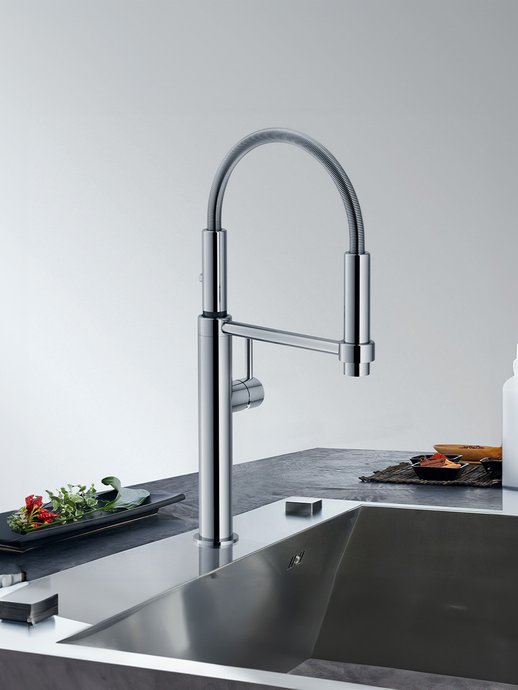
A mixer tap with a pull-out spray allows you to extend your reach by up to 76 cm. All the finishes mentioned are available on these practical models.
Pros and cons of each finish
Chrome: long-lasting shine but visible marks
Chromium’s strength is impressive, with a hardness ranging from 400 to 1200 HV depending on its composition. Its natural protective film maintains that brilliant shine you love, thanks to its ability to passivate. No other metal offers such a low coefficient of friction, ensuring exceptional wear resistance.
But let’s be honest: this glossy surface mercilessly reveals every water mark and fingerprint. You’ll need to wipe it down regularly to keep it looking its best. Fortunately, a simple microfibre cloth will do the trick, and white vinegar is effective at removing limescale.
Stainless steel: durability and hygiene for everyday use
Stainless steel is renowned for its hygienic and non-porous properties. Models made from solid stainless steel are resistant to corrosion, heat and your usual cleaning products. Unlike polished stainless steel, the brushed finish cleverly conceals fingerprints and scratches.
This smooth surface is easy to clean and never rusts.
Matt black: modern elegance, but high-maintenance
A black kitchen mixer tap instantly transforms the atmosphere of your kitchen. However, this modern sophistication comes at a price: it requires maintenance at least twice a week. Water marks and limescale build up quickly, particularly with hard water.
The finish remains vulnerable to knocks and scuffs, and the paint chips more easily than you might like. You should absolutely avoid products containing acid or chlorine, as these weaken the paint. Opt for lukewarm plain water or white vinegar instead.
What is the balance between aesthetics and practicality?
Two factors determine the best choice for you: how often you use the taps and the hardness of your water. A family kitchen with hard water? Chrome is the obvious choice. A set of black taps with a hand shower is ideal for spaces where regular cleaning is manageable.
Maintenance and durability
Daily cleaning: suitable methods and products
Daily maintenance is straightforward for most finishes. A soft, damp cloth with a drop of washing-up liquid is all you need for regular cleaning. Chrome and stainless steel can be cleaned with a citric acid-based detergent to remove limescale.
A black kitchen mixer tap requires extra care: clean it only with lukewarm water or diluted white vinegar. You must avoid products containing bleach, hydrochloric acid or acetic acid, as these will damage all the protective layers.
Resistance to limescale depending on the finish
The type of water you use has a direct impact on the lifespan of your taps. Hard water puts greater strain on the system and accelerates wear and tear.
Certain innovations make maintenance easier and help to remove limescale, such as installing a water softener in your home. These practical solutions avoid the need for tedious dismantling.
Matt black remains the most susceptible to limescale, which builds up quickly and is highly visible. This finish therefore requires constant care in areas where the water is particularly hard.
Susceptibility to scratches and wear
Each surface reacts differently to everyday wear and tear. Stainless steel offers high resistance to mechanical damage, making it the ideal choice for heavy-duty use.
The PVD finish also excels in damage resistance, offering outstanding protection. However, a black mixer tap remains susceptible to impact, with the paint chipping more easily.
Guaranteed durability
Investing in a well-known brand ensures that your installation will last for years to come. With proper maintenance, the taps will remain in working order for over 20 years.
Choosing high-quality taps directly contributes to the longevity of your plumbing system. If properly maintained, a mixer tap can remain fully functional for many years without any loss of performance.
This durability is generally backed by manufacturer’s warranties covering several years, as well as good availability of spare parts. This reassuring framework reduces the risk of premature obsolescence and simplifies any maintenance or repair work that may be required.
Handy comparison table
We have put together this summary table to help you quickly identify the finish that best suits your needs.
| Criterion | Chrome | Stainless steel | Black matt |
| Wear resistance | Excellent durability | Very sturdy, does not wear out (solid material) | Excellent resistance to damage (PVD) |
| Resistance to limescale | Passivation protective film | Good durability; entry-level models are more sensitive | Low, rapid and highly visible deposits |
| Scratch resistance | Good wear resistance | A brushed finish hides scratches better than a polished finish | Prone to damage, the paint chips easily |
| Visible marks | Water marks and fingerprints are very visible on shiny surfaces | A brushed finish hides marks better than a polished finish | Water marks and limescale are highly visible, depending on the water hardness |
| Maintenance frequency | Frequent wiping is required | Regular cleaning | At least twice a week |
| Cleaning method | Microfibre cloth, white vinegar for limescale | Soft cloth + washing-up liquid, citric acid detergent | Only lukewarm plain water or diluted white vinegar |
| Products to avoid | Bleach, hydrochloric acid, acetic acid | Bleach, hydrochloric acid, acetic acid | Products containing acid or chlorine (which can damage paintwork) |
| Suitable style | Classic, traditional charm | Modern, industrial (brushed), professional | Modern, contemporary, sophisticated |
| Key benefits | Long-lasting shine, wear resistance, easy maintenance | Durable, hygienic, rust-proof, corrosion-resistant and heat-resistant | Modern elegance, dramatic effect, sophisticated design |
| Main drawbacks | Water marks and fingerprints are very visible | Entry-level models that are susceptible to limescale and micro-scratches | High-maintenance, prone to damage, highly visible marks |
This table allows you to objectively compare each design based on your priorities. Use it as a guide to help you make your final choice based on your lifestyle.
So, in the end: which finish should you choose?
Your kitchen mixer tap must, above all, meet your day-to-day needs. If you cook frequently and are looking for peace of mind, solid stainless steel will provide you with uncompromising durability. For a family kitchen where hard water poses challenges, chrome remains your most reliable ally. Matt black, on the other hand, truly transforms the atmosphere of your kitchen. This elegance requires regular maintenance, but it makes all the difference.
Harmony with your kitchen style will naturally complement this approach.
Frequently asked questions
Q1. What is the difference between a chrome-plated mixer tap and a stainless steel one?
Chrome is a coating applied to a brass or steel base, whereas stainless steel is a solid material composed of iron, chromium and nickel. Chrome offers a shiny finish but shows marks easily, whereas solid stainless steel is more robust, naturally hygienic and does not wear out over time.Q2. Which type of finish requires the least day-to-day maintenance?
Chrome and stainless steel are the easiest to maintain. A simple microfibre cloth is all you need for chrome, and brushed stainless steel is better at hiding fingerprints and scratches. Matt black requires maintenance at least twice a week, as water marks and limescale are very visible on it.Q3. Does a matt black mixer tap stand the test of time?
Matt black offers excellent durability thanks to PVD technology, which is three times more durable than traditional chrome. However, it remains susceptible to impact and the finish may chip more easily. It is best suited to moderate use and should not be exposed to acid- or chlorine-based products.Q4. Which finish should you choose for very hard water?
For hard, limescale-prone water, chrome remains the most practical choice. It resists limescale well thanks to its protective coating and is easy to clean with white vinegar. Stainless steel is also a good option, whereas matt black quickly shows limescale deposits and requires more frequent maintenance.Q5. Which tap finish should you choose for a modern kitchen?
For a modern kitchen, matt black and brushed stainless steel are particularly well-suited. Matt black creates a striking contrast and a bold, contemporary style, whilst brushed stainless steel offers a more understated, professional look that blends easily with kitchen appliances. The choice will depend mainly on how much effort you’re willing to put into maintenance and the atmosphere you wish to create.