The 70 cm rule: why the space in front of your furniture is crucial for your safety?

Your bathroom hides an invisible hazard that threatens your daily safety. A simple lack of available space in front of your furniture can cause dangerous falls on wet floors. The 70 cm clearance rule is your best accident prevention measure.
This minimum clearance in front of your sanitary installations transforms your bathroom into a safe and functional space. Whether it is a storage unit or a wall-mounted unit, all follow this fundamental rule.
We explain why this rule provides additional protection and how to apply it even in the most confined spaces.
What is the 70 cm rule in the bathroom?
This distance constitutes the minimum zone in front of a piece of furniture for safe use. It allows the full opening of doors and drawers without obstruction in your room.
Origin and regulatory framework of this clearance
This standard governs the technical aspects of sanitary installations, particularly accessibility and risk prevention. These standards stem from ergonomic studies aimed at preventing domestic accidents.
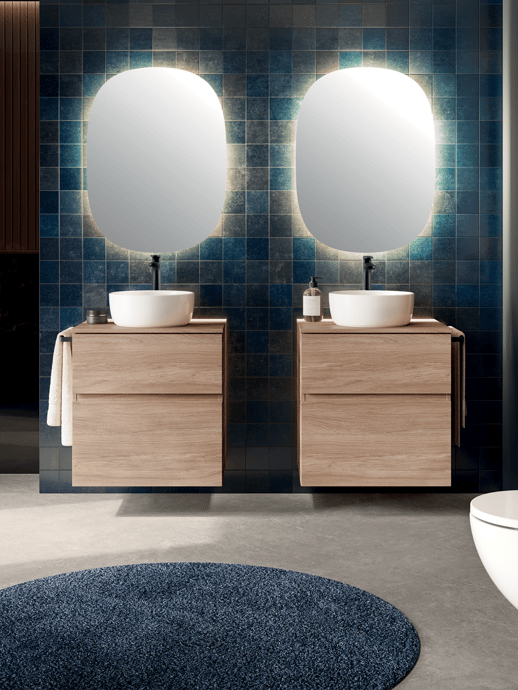
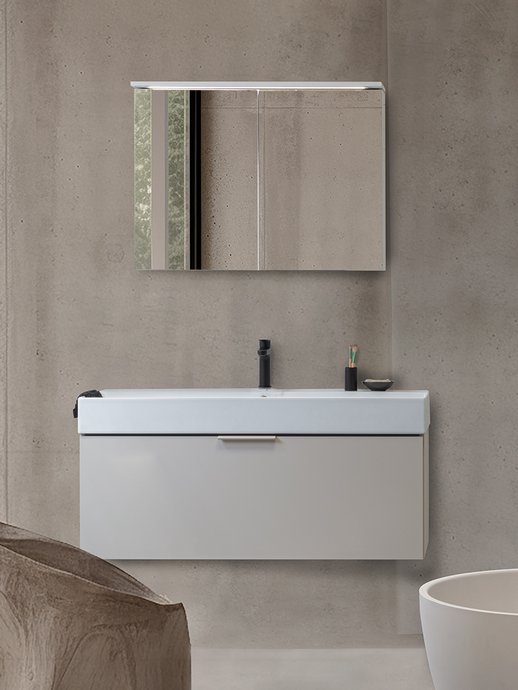
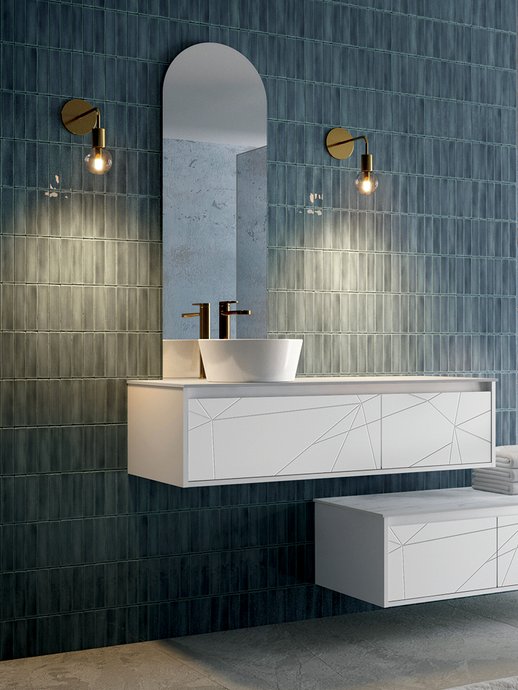
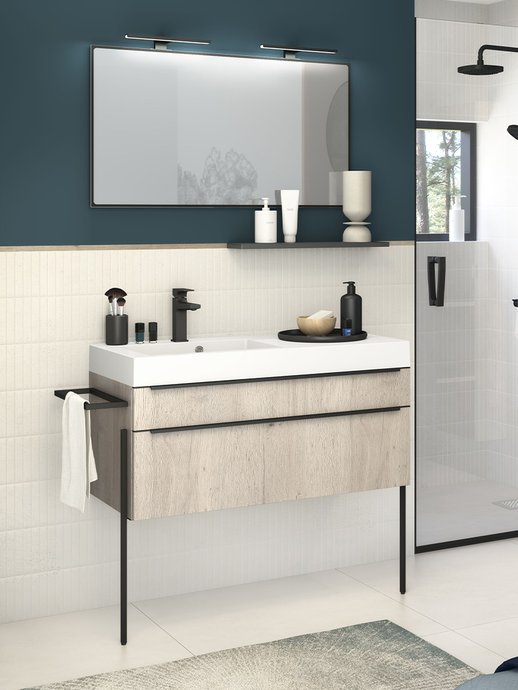
A wall-mounted unit is fixed between 85 and 90 cm from the floor. The clearance in front of it ensures a natural position during everyday use. This combination of height and distance eliminates back and neck strain during your personal hygiene routine.
The spaces concerned by this rule
Each installation in your bathroom requires specific clearances:
The vanity unit and washbasin require this free space, as does the shower. Storage units need a minimum of 50 cm to allow circulation. In front of the toilet, allow at least 70 cm to make use easier in a seated position.
Your small compact unit also benefits from this rule for opening doors without obstructing movement. The bathtub requires only 50 to 55 cm minimum to exit comfortably.
The difference between clearance space and circulation space
The clearance corresponds to the area required in front of a fitting for direct use. Circulation refers to the width of the passage between the different elements in your room.
Moving around with two people between your furniture requires a width of 105 cm. The main walkway in your bathroom requires up to 90 cm. These two distinct concepts ensure access to equipment on one hand, and freedom of movement on the other.
Why respect the 70 cm clearance in front of your furniture?
This measurement is not a constraint but an investment that addresses four fundamental needs, which we detail below.
Preventing falls and domestic accidents
The statistics speak for themselves: the bathroom remains one of the most accident-prone rooms in the home. Insufficient space in front of your fittings multiplies the risk of collisions in areas that are already slippery by nature.
Respecting the standard height for furniture standard height for furniture prevents back and neck strain. A constrained position forces you into dangerous contortions during your daily routine. Sufficient clearance also allows you to react quickly in the event of a slip without hitting the corners of the furniture.
Facilitating the full opening of doors and drawers
Nothing is more frustrating than a drawer that only opens halfway. A minimum clearance of 60 cm in front of a unit allows them to be fully operated. The deep drawers of a small compact unit even require more space when fully extended.
This clearance ensures full access to all storage without contortion. It also prevents swing doors from hitting other equipment or people in the room.
Ensuring accessibility for people with reduced mobility
Accessibility standards set out precise requirements. The unit must be positioned at a maximum height of 80 cm from the floor with a space beneath the washbasin offering 70 cm of height, 30 cm of depth and 60 cm of width for wheelchair access.
A manoeuvring area of 1.50 m in diameter allows for U-turns. A free lateral clearance of at least 80 cm facilitates transfers from the wheelchair. Support rails are fixed between 70 and 80 cm from the floor to provide stable support.
Optimising everyday comfort
A wall-mounted bathroom unit installed with an appropriate clearance allows you to adopt a natural position. No more morning aches caused by an uncomfortable posture in front of your washbasin.
The clearance even allows two people to simultaneously use adjacent fittings without getting in each other's way. A significant advantage in households where mornings are often a race against the clock.
How to apply the 70 cm rule for each type of furniture?
Each fitting has its own clearance requirements. Discover how to measure and apply this rule according to your installations.
In front of the vanity unit and washbasin
Measure 70 cm from the outer edge of your washbasin surface to the nearest obstacle. This distance allows you to adopt a straight and natural position without leaning against a wall or other piece of furniture. Your daily hygiene routine thus remains comfortable and safe.
In front of the storage unit
Your drawers and doors require this free space to open fully. A small unit fitted with deep drawers uses this full distance when they are extended. Swing doors need this arc of movement to avoid any obstruction during use.
In front of the toilet
The toilet requires a regulatory minimum of 534 mm (approximately 53 cm) in front of the unit. Allow yourself this extra comfort in a seated position. This area must remain free of any furniture to facilitate your movements and access.
In front of the shower and bathtub
Allow this clearance in front of the access to your shower. The bathtub requires 1 m of clear space in front of it. A minimum of 50 cm allows you to exit, but seriously limits your comfort. Double this distance if several people use the room simultaneously.
The special case of the wall-mounted unit
The wall-mounted model simplifies your calculations. Its wall fixing frees up the floor and makes cleaning easier. Measure from the lower edge of the unit to the opposite obstacle. This configuration creates smooth circulation beneath it.
What to do if your bathroom is too small to respect the 70 cm rule?
Limited dimensions do not spell the end of your project. Clever solutions allow you to design your space intelligently while preserving essential safety.
Choosing a suitable small bathroom unit
Mini washbasins with a depth of 20 to 25 cm free up precious space in front of the fitting. These compact models optimise every available centimetre without sacrificing functionality. Integrated washbasins maximise the efficiency of your layout.
Practical tip: a well-thought-out placement more than compensates for the smaller size of your fittings.
Opting for sliding doors rather than swing doors
Swing doors take up precious space when opening. Sliding or folding doors take up no additional volume. This solution is perfectly suited to shower enclosures and storage units. You instantly gain the centimetres needed to move around safely.
Prioritising shallow furniture
A shallow depth reduces bulk without compromising storage. These wall-mounted models visually free up the space while making daily maintenance easier. This configuration creates an impression of lightness that visually enlarges your room.
Reorganising the room layout
Completely rethinking the layout often reveals unexpected opportunities. Moving the washbasin to a corner or repositioning the toilet frees up the missing centimetres needed to respect the safety clearances. Each clever modification brings you closer to a space that is both compact and safe.
70 cm measured, safety assured
Wall-mounted, small or storage unit – every installation gains in safety thanks to this minimum clearance. A reduced space is not an obstacle. Shallow furniture, sliding doors, redesigned layout: we have identified the solutions that work. Applying this simple rule improves your daily comfort in the long term. Every centimeter counts to create a bathroom where you move around with complete peace of mind.
Frequently asked questions
Q1. What is the recommended minimum distance in front of a bathroom unit?
The recommended minimum distance is 70 cm. This measurement allows doors and drawers to be fully opened, enables a natural position during use, and allows you to move around safely in the space.Q2. Why is the 70 cm rule important for safety?
This rule prevents falls and domestic accidents by providing sufficient clearance to move without risk of collision. It also prevents unbalanced postures on wet and slippery surfaces, which are particularly dangerous in a bathroom.Q3. Does the 70 cm rule apply to all bathroom fittings?
No, the requirements vary depending on the fitting. Washbasins and showers require 70 cm, while storage units can make do with 50 cm. Bathtubs ideally require 1 metre, although 50 cm minimum allows you to exit.Q4. How can I design a small bathroom that cannot accommodate the 70 cm clearance?
Several solutions exist: choose shallow furniture (20-25 cm), install sliding doors instead of swing doors, opt for wall-mounted installations that free up the floor, or completely redesign the room layout to optimise the available space.Q5. What are the specific requirements for accessibility for people with reduced mobility?
Fittings must be positioned at a maximum height of 80 cm from the floor with an under-washbasin space of 70 cm in height. A manoeuvring space of 1.50 m in diameter is required for U-turns in a wheelchair, along with a minimum free lateral space of 80 cm.