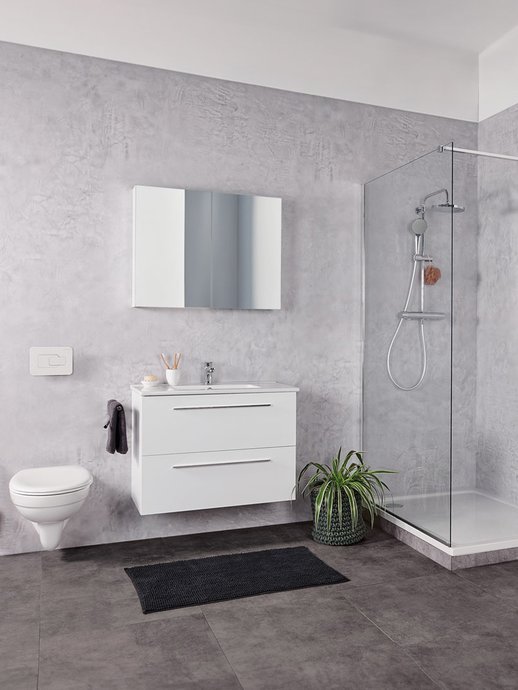
Shower or bath in a small bathroom: which should you choose?

The limited space of a compact layout forces you to make a choice: shower or bath? This decision determines your daily comfort, your water bills and the organisation of your space. When your surface area is less than 5 m², every centimetre counts.
We help you make the right choice by analysing the dimensions required for each solution, as well as combined alternatives such as the bath-shower that maximise your available space.
What is the minimum surface area for a shower or a bath?
Dimensions required for a small shower
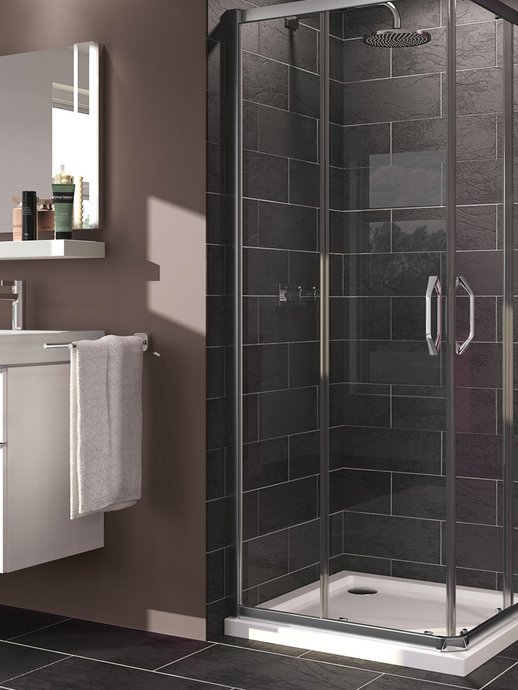
A functional cabin starts at 80 x 80 cm, a size that guarantees comfortable use. 90 x 90 cm offers extra ease of movement. Opt for 100 x 120 cm or 120 x 120 cm formats if your layout permits: the comfort of use improves noticeably.
The walk-in shower is particularly well suited to small spaces. Its level-access installation removes visual obstacles and increases the perception of space. Corner trays make good use of corners, a clever solution for square bathrooms.
Space required for a small bath
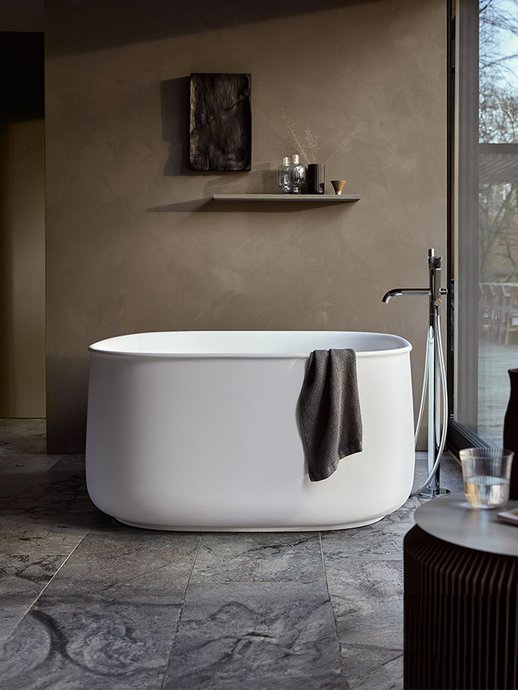
Compact baths generally start from 140 cm in length, a size suited to the most constrained configurations. Standard sizes range from 170 to 180 cm long by 70 to 80 cm wide, offering a good compromise between comfort and footprint.
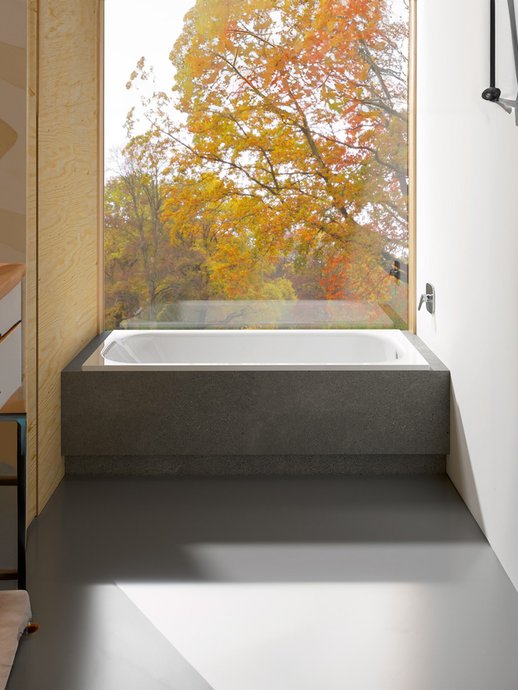
In a small bathroom, built-in or wall-mounted models are to be preferred: they rethink the layout while maintaining a clean aesthetic. Some options allow you to enjoy a genuine bathing space without compromising on circulation or the functionality of the room.
Solutions for bathrooms under 3 m²
A 3 m² space comfortably accommodates an 80 x 120 cm walk-in shower alongside an 80 cm wide washbasin. This is generally the optimal solution for maintaining smooth circulation in these constrained configurations.
Optimising circulation space
Allow a clear passage of 60 cm in front of each bathroom fitting. 50 to 55 cm is sufficient to get out of a bath comfortably. In front of a shower, allow 70 cm of clearance for unrestricted daily access. These minimum distances preserve ergonomics without creating congestion.
Your day-to-day needs: how will you use your bathroom?
Families with young children
A bath is essential for families with young children. It creates a safe space where toddlers can wash and play at the same time, turning bath time into a shared pleasure. For parents, it offers a freedom of movement that is impossible to achieve in a narrow shower cubicle. Add a curtain and your bath becomes versatile, serving equally well for the children's bath or your morning shower.
Elderly people or those with reduced mobility
A shower is the safest choice for elderly people or those with reduced mobility. A well-designed layout incorporates all the safety features: non-slip extra-flat tray, solid grab bars, fold-down seat and thermostatic mixer that keeps the temperature constant. The walk-in shower eliminates obstacles entirely: no more threshold to step over, no more risk of falling.
Young professionals and students
The shower is the preferred choice for younger generations. Practical, quick and unobtrusive, it perfectly matches dynamic lifestyles. Young professionals particularly appreciate its economic and ecological advantages: controlled water consumption and reduced bills. A better option, in line with current expectations in terms of comfort and sustainability.
Frequency of use: efficiency or relaxation
Seven to ten minutes is enough for a complete wash. This speed becomes a valuable asset in the morning, when every minute counts before heading off to work. A bath meets a different need: that of relaxation, immersed in warm water after a difficult day. Spa bath models take the experience even further with their massage jets that transform your bathroom into a true wellness centre.
Water consumption and cost: shower vs bath
Comparing water consumption
Filling a bath requires between 120 and 200 litres of water depending on the model and fill level. A 5-minute shower uses between 60 and 75 litres with a standard showerhead. The time spent in the water determines your real savings.
The flow rate of a standard showerhead ranges from 10 to 12 litres per minute. Your shower remains economical only if it does not exceed 15 minutes. Beyond that, you consume as much as with a full bath.
Solutions for reducing consumption
A low-flow showerhead can limit the water flow to around 5 to 6 litres per minute while maintaining a comfortable jet. This solution is fully in line with an approach to optimising water use, without compromising on day-to-day comfort.
Simple habits effectively complement this equipment: turning off the water during soaping or shampooing helps to significantly reduce water use. Installing a thermostatic mixer ensures a stable temperature from the moment you turn on the tap, avoiding prolonged adjustments and improving the comfort of use.
Hybrid solutions for small bathrooms
The bath-shower: two in one
The bath-shower combination combines a flat-bottomed bath and a shower cabin in a single unit. This solution requires a minimum space of 170 cm in length by 70 cm in width.
Adding a glass shower screen helps to secure use and prevent water splashing, while maintaining a sense of space and light. Versatile, this configuration meets both everyday needs and moments of relaxation, without multiplying installations.
The 2-in-1 bath with screen
Models with an integrated door eliminate the need to step over the side. The mechanical locking system guarantees safety by preventing opening when the drain is closed, with no electrical installation required. The fixed transparent glass screen, generally of impressive thickness, preserves the light and reinforces the sense of space, while providing effective protection against splashing when used in shower mode.
Installing a shower and bath side by side
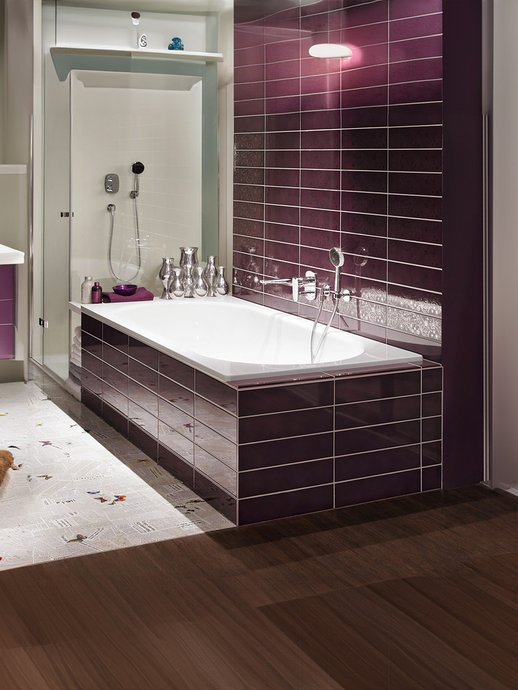
A 4 m² bathroom can accommodate a bath along one wall and a walk-in shower on the opposite side. A glass partition separates the two spaces while maintaining transparency.
Replacing an existing bath with a shower
Cabins specifically designed for replacement make connection easier and can be installed in 48 hours. The shower with tray is the simplest option, requiring no structural work.
Comparison table: shower vs bath
Here is an overview of the essential criteria to help you choose between a shower and a bath in your small bathroom.
| Criterion | Shower | Bath |
| Minimum dimensions | 80 x 80 cm (functional) 90 x 90 cm (comfortable) | 140 cm minimum (compact) 170-180 cm x 70-80 cm (standard) |
| Water consumption | 20-60 litres (daily use) 60-75 litres (5 minutes) 120-150 litres (10 minutes) | 120-200 litres per bath |
| Circulation space | 70 cm in front of the fitting | 50-55 cm is sufficient |
| Minimum surface area | Suitable for spaces from 3 m² | Requires more than 3 m² (except compact models) |
| Duration of use | 5-10 minutes Average: 6 minutes | Extended relaxation time |
| Suitable for | - Elderly people - Young professionals - Quick daily use | - Families with children - Moments of relaxation - Hydrotherapy |
| Compact solutions | - Walk-in shower - Corner trays - 80 x 120 cm format | - Spa bath - Compact versions (140 cm) |
| Possible savings | Thermostatic mixer: 40-50% reduction possible | Limited (fixed volume) |
| Break-even point | Economical if less than 15 minutes | Fixed consumption |
| Multifunctional solutions | 2-in-1 bath-shower Integrated shower screen | Bath with curtain Models with door, built-in, against a wall |
| Safety | Level access Non-slip PRM equipment | Safe space for children Ease of use for parents |
| Installation | Quick replacement in 48 hours | More complex installation |
The key points on shower vs bath
Your lifestyle determines the ideal choice between a shower and a bath. Each solution meets specific needs. Choose a shower to manage footprint, reduce your water consumption and facilitate access for people with reduced mobility. Opt for a bathing area if you have young children or if you prioritise moments of relaxation after a busy day. 2-in-1 hybrid installations are an excellent compromise when you have sufficient space and refuse to give up either option.
Visit your nearest Facq EXPOcenter to discover the solutions suited to your bathroom.
Frequently asked questions
Q1. What is the minimum size for installing a shower in a small bathroom?
The minimum required size is 80 x 80 cm, although 90 x 90 cm is recommended for greater comfort. For optimal use, opt for 100 x 120 cm or 120 x 120 cm formats if your layout permits.Q2. How much water does a shower use compared to a bath?
A 5-minute shower uses between 60 and 75 litres of water, whereas a bath requires between 120 and 200 litres to fill. However, a 10-minute shower can reach 120 to 150 litres, equivalent to the consumption of a bath.Q3. What solution is best suited to elderly people or those with reduced mobility?
A shower is the safest option, particularly a walk-in shower with level access. It should be fitted with a non-slip tray, grab bars, a fold-down seat and a thermostatic mixer to prevent the risk of falls and scalding.Q4. Can a shower and a bath both be installed in a limited space?
Yes, several solutions exist: the 2-in-1 bath-shower requiring a minimum space of 170 x 70 cm, or side-by-side installation in a bathroom of at least 4 m². Baths with an integrated shower screen are also a practical alternative.Q5. How can I reduce consumption when using the shower?
Installing an economy showerhead that limits the flow to 5-6 litres per minute can reduce consumption by 40 to 50%. Turning off the water during soaping and using a thermostatic mixer are also effective ways of saving water and energy.