Heat pumps and older homes: are they compatible or not?

The essentials
1. A heat pump is suitable for an older house provided three conditions are met: first, ensure the house is well insulated; second, accept a lower heating water temperature (ideally 45 to 55 °C); and third, ensure the system is correctly sized. It is not the age of the house that matters, but the temperature your radiators need to heat the home.
2. There’s a free test to find out if it’s feasible in your home: turn your current boiler down to 50–55 °C in cold weather and see if you’re still warm. If you’re comfortable, a heat pump will do the job. If not, you’ll need to insulate your home, replace a few radiators, or opt for a hybrid heat pump.
3. The 2026 framework promotes the CAP: 6% VAT on all heat pumps until 2030, regional grants of up to €3,600 in Wallonia, and VAT restored to 21% on fossil-fuel boilers. Please note that in Brussels, the Renolution heating grants have been suspended.
What really matters is the water temperature, not the year of construction
It is often thought that the problem lies in the age of the building. The real problem is the temperature at which your radiators need to operate to heat the rooms.
An air-to-water heat pump extracts heat from the outside air and transfers it to the water circuit. Its efficiency depends on the temperature difference between the outside air and the water it is required to produce. The more hot water you demand, the harder the compressor has to work and the higher your bill will be.
Here are the thresholds that matter:
Transmitter | Flow temperature | Air-to-water heat pump efficiency |
| Underfloor heating | 30-35 °C | Optimal (COP around 4) |
| Low-temperature radiators | 45 °C | Very good |
| Properly sized conventional radiators | 55 °C | Correct |
| Vintage cast-iron radiators | 65-70 °C | Degraded (COP 2.5–3) |
An old cast-iron radiator was originally designed for 75 °C. But since then, you’ve no doubt insulated the roof, replaced the window frames, and perhaps injected insulation into the walls. Your heating requirements have fallen. That large, oversized radiator now heats the same room with water at 50 °C. This is exactly what makes a heat pump feasible in many older homes: yesterday’s heat emitter is too large for today’s needs, and that works in your favour.
The test you can do this weekend
If all the rooms remain comfortable, your radiators are compatible with a heat pump: they’re already heating at a low temperature. If the living room doesn’t get warm enough, or if the back bedroom stays cool, you’ll know where the weak spots are. Often, all you need to do is replace two or three radiators, not the whole system. It’s the most honest assessment you can get, and it costs nothing.
Insulate first, then install
The order in which the work is carried out is not a minor detail. Insulating before installing the heat pump reduces heating requirements, allows for a less powerful – and therefore cheaper – unit, and enables a lower flow temperature. These three effects all work towards the same goal.
The traditional Belgian approach: the roof first (25–30 per cent of heat loss), then the walls, and finally the window frames. For walls, the most cost-effective solution in the country remains cavity wall insulation for hollow walls, typical of houses built between 1945 and 1970: €15–32 per square metre, including installation. Houses built before 1945 have solid walls without cavity spaces and require external or internal insulation, which is more labour-intensive.
The PEB rating provides a good benchmark for decision-making. From a C rating (255 kWh/m²/year or better in Wallonia), an air-to-water heat pump on its own is a viable option. For ratings between D and E, it is recommended only after some targeted refurbishment work, or as a hybrid system. For ratings of F or G – in an unrenovated, draughty property – a heat pump on its own is not recommended: in very cold weather, your radiators would need to reach 80–90 °C to compensate for heat loss, which a standard heat pump cannot provide. On a positive note, installing a heat pump improves your PEB rating, thereby increasing the property’s resale value.
We’ve set out this approach – prioritising insulation before installing equipment, and choosing the right boiler for the right property – in detail in our guide Heat pump, boiler or underfloor heating: which to choose?, which is well worth reading if you’re still unsure about the basic system before looking at the specific case of an older property.
Three set-ups for the old one
Depending on the level of insulation you achieve, there are three possible options:
A low-temperature air-to-water heat pump, for a well-renovated house (PEB C or better) with suitable radiators or underfloor heating. This is the most efficient solution and the cheapest to run.
The hybrid heat pump, a heat pump coupled with a gas boiler. This is the most suitable solution for moderately insulated properties and tight budgets. The heat pump covers around 80 per cent of the heating season; the boiler takes over during cold spells, when the outside temperature is around 2 to 5 °C, depending on the insulation. You can keep your existing radiators, with no major building work required.
The high-temperature propane (R290) heat pump, which reaches temperatures of up to 70–75 °C. It allows all cast-iron radiators to be retained without any modifications, which is useful for a listed building where external insulation is not permitted and the radiators cannot be altered. The downside: a lower COP (2.5–3) and a bulkier outdoor unit.
Alongside these generators, two modifications are often suggested. Replacing radiators with low-temperature models, to be done room by room rather than all at once. Or installing a thin, screed-free dry underfloor heating system, where ceiling height permits.
| Facq Advice: If you’re replacing a boiler as a matter of urgency and plan to insulate your home within the next five years, a hybrid system is often the best compromise. You can move away from fossil fuels today without oversizing the system, and the heat pump will play an increasingly significant role as you insulate your home. |
The outdoor unit in a terraced property: the point people tend to overlook
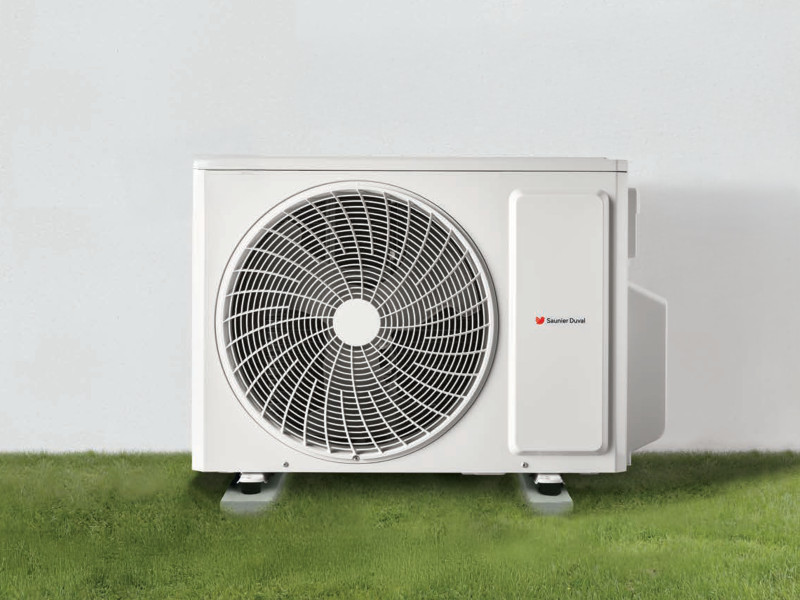
The reference standard is NBN S 01-400-1. In Flanders, the limit is 45 dB(A) during the day and 40 dB(A) at night at the boundary of the plot. There is no statutory federal distance requirement, but many local authorities stipulate a distance of 1 to 3 metres from the property boundary, and it is recommended to aim for 3 to 5 metres from the bedroom window of the nearest neighbour. A few simple precautions will resolve most issues: point the fan towards a solid wall rather than the window opposite, mount the unit on anti-vibration mounts, install a sound barrier, and switch to night mode. And check your local council’s planning regulations before placing an order: this will help you avoid any unpleasant surprises.
Pensions and Taxation 2026
The key change this year is VAT. From 1 January 2026 until 31 December 2030, the VAT rate on all heat pumps will be reduced to 6 per cent, including for homes less than ten years old. For a €12,000 installation, this represents a saving of around €1,800. At the same time, the VAT rate on the fossil fuel component of gas and oil-fired boilers has reverted to 21 per cent since July 2025.
As far as the regions are concerned, the situation varies:
Region | 2026 Air-to-Water Heat Pump Grant | Key terms |
| Wallonia | €1,200 to €3,600 depending on income (scheme valid until 30 September 2026) | Compulsory housing audit prior to building works; air-to-air systems excluded |
| Brussels | Renolution heating suspended | Reduction in the ECORENO credit at a reduced rate; VAT at 6 per cent to remain in place |
| Flanders | €1,500 to ~€4,800 (My Renovation Grant) | COP ≥ 4, RESCert-certified installer, A+ rating |
In Wallonia, the housing audit is a mandatory first step, and it is itself subsidised. The current scheme runs until 30 September 2026, after which a new scheme will come into force, focusing on upgrading the PEB rating – the conditions for which have not yet been finalised. If your project is at a mature stage, finalising the application before this date means you won’t have to take a gamble on the unknown. The 0% Rénopack loan (up to €60,000 via the SWCS) can still be taken in conjunction with this.
In Brussels, the lack of a heating allowance is a blow, but the 6 per cent VAT rate applies regardless, and since January 2026 a minimum E energy performance certificate (EPC) has been required to let a property: enough to encourage landlords to switch to a heat pump.
Frequently asked questions
Q1. Is it really possible to install a heat pump in an uninsulated house?
In a house that is really poorly insulated (PEB F or G), a heat pump on its own is not recommended: in very cold weather, your radiators would need to reach 80–90 °C, which is beyond the capabilities of a standard unit. There are two options: either insulate at least the roof and walls first, or opt for a hybrid heat pump that lets the boiler handle the peaks. First, run a test at 50–55 °C on your current boiler: this will tell you where you stand.Q2. Do I have to replace all my radiators?
No, not necessarily. Many older radiators are oversized and already heat effectively at 50 °C. The winter test identifies the problematic units, and it is often sufficient to replace just two or three radiators with low-temperature models (€100 to €800 each) rather than the entire system.Q3. A hybrid heat pump or a high-temperature heat pump for an older house?
A hybrid system is a good option if you want to keep the initial investment down and phase out fossil fuels gradually: the heat pump covers 80 per cent of the heating season, with gas covering the rest. The high-temperature R290 system is justified when you cannot insulate or alter the radiators – typically on a listed building. It is less efficient and more expensive, so it is reserved for these specific situations where there are constraints.Q4. Can a heat pump cope with the Belgian winter?
Yes. Modern air-to-water heat pumps operate down to -20 °C and maintain a positive COP at -10 °C. In Belgium, temperatures rarely fall below -5 to -8 °C. On the rare occasions when it gets very cold, the system is supported by the built-in auxiliary electric heater or, in a hybrid system, by the gas boiler.Q5. What grants are available for a heat pump in an older property in 2026?
In Wallonia, from €1,200 to €3,600 depending on your income, subject to a compulsory housing audit, until 30 September 2026. In Flanders, between €1,500 and approximately €4,800 via Mijn VerbouwPremie, with a minimum COP of 4. In Brussels, the heating grant has been suspended, but the 6% VAT rate and the ECORENO credit remain available. The amounts are subject to change: check the official regional websites before committing.