Bathroom furniture: exotic wood or solid wood – which should you choose?

A teak vanity unit and a solid oak vanity unit are, technically speaking, both made of solid wood. The real difference lies not between ‘exotic’ and ‘solid’, but between two sources of solid wood: imported tropical timber on the one hand, and European timber on the other. This comparison sets out the key differences between the two, to help you make a choice that takes into account durability, the desired style and the ranges actually available in Belgium.
Solid wood or exotic wood? Don’t lump them all together
‘Exotic wood’ and ‘solid wood’ are not mutually exclusive: the former is a category of the latter. Solid wood refers to a solid piece of timber. What really distinguishes the two categories is the geographical origin of the timber species, and everything that this origin entails: the climate in which it grows, its natural oil content, colour and price.
Our guide ‘Why choose solid wood furniture for your bathroom?’ sets out the general advantages of solid wood over composite panels. This guide goes further, addressing the specific question of whether to choose tropical or European timber, once you have already opted for solid wood.
Moisture resistance: two different approaches
Teak, iroko and doussie owe their reputation to a natural oleoresin found in their fibres. This substance waterproofs the wood from within, making it resistant to fungi and insects, and enabling it to last for decades in a bathroom without any deep-penetrating treatment. This is a genuine advantage, not just a marketing ploy: spill a glass of water onto a plank of untreated teak, and it will simply bead up on the surface.
However, not all tropical woods are created equal. Teak remains the benchmark for bathroom furniture, with the highest natural oil content. Iroko, sometimes presented as a more affordable alternative, offers slightly lower durability but remains more than adequate for domestic use. Doussie and sipo, which are less common in bathroom furniture, are more frequently used in outdoor joinery. Checking the specific timber type on the product description helps you avoid paying the price of teak for the durability of iroko, or vice versa.
European oak, beech and chestnut behave differently. Their denser grain slows down the penetration of water, but they require a water-repellent oil or varnish to withstand the conditions in a damp room. Chestnut is an exception: naturally classified as durable thanks to its tannins, it behaves similarly to tropical woods without being of tropical origin. Once protected, oak and chestnut will last 15 to 20 years with normal use, a figure comparable to that of untreated teak over the actual lifespan of a piece of bathroom furniture.
Price and availability: why do exotic items cost more?
A piece of furniture made from tropical timber generally costs 30 to 60 per cent more than a comparable model made from European oak, assuming the same standard of craftsmanship. There are three reasons for this. Firstly, transport: a teak log has to cross an ocean before reaching the workshop, whereas Belgian or French oak only has to travel a few hundred kilometres. Secondly, availability: tropical woods of furniture-grade quality are produced in smaller volumes, with less predictable lead times. Finally, processing: dense exotic wood causes cutting tools to wear out more quickly, which increases the cost of production.
Delivery times follow the same pattern. A standard piece of solid oak furniture, available in a manufacturer’s current catalogue, can be delivered within a few weeks. A piece of furniture made from exotic wood, often produced in small batches or made to measure, may take two to three months from order to delivery.
At Facq, solid oak dominates the range of bathroom furniture, at prices that remain affordable: the Sanijura Eleven, in natural oak with a country-style front, starts at around €1,070 for a width of 120 cm. The Sanijura Bocage, in solid oak with two drawers, is priced at around €2,500, whilst more elaborate ranges such as the Sanijura Epic or the FACQ Creation Nature, in solid oak or Halifax oak, exceed €5,000 for a width of 140 cm. The eco-friendly oak collections (Sanijura Mundo, Doblo) fall somewhere in between, at around €1,300 to €2,400. Exotic woods such as teak remain available at the EXPOcenter.
Combining exotic wood or solid wood with the rest of the room
The choice of wood doesn’t stop at the furniture itself: it is the combination with the tiling, taps and other materials that makes or breaks a project. Three combinations feature regularly in Belgian bathrooms in 2026.
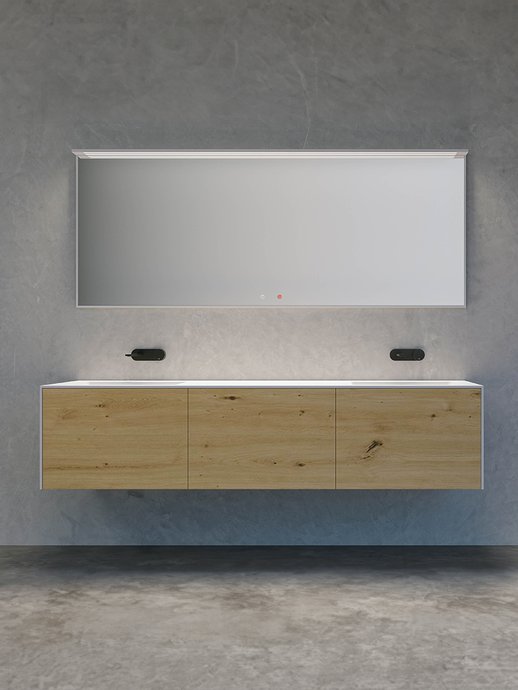
Combining solid wood and lacquered finishes remains a safe bet: an oak front adds warmth, whilst a lacquered element (such as a vanity unit or storage column) brings a clean, contemporary look. Our guide combining solid wood and lacquered finishes sets out the proportions that work best between the two materials.
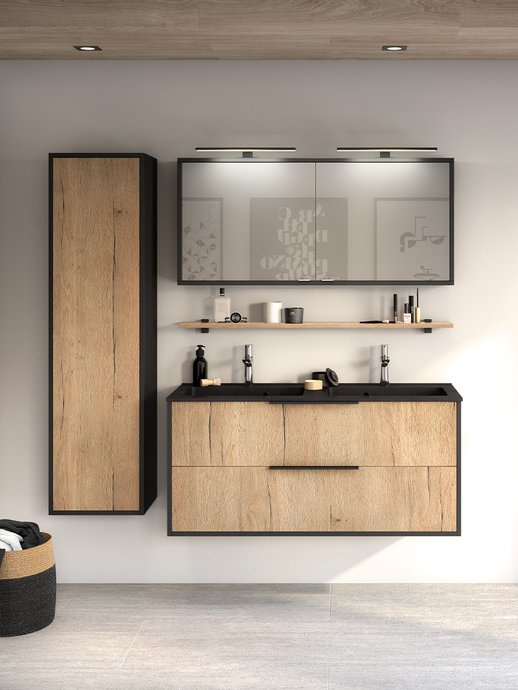
The combination of exotic wood and black metal is the hallmark of the industrial style: a piece of furniture in teak or iroko alongside matt black taps and a steel frame creates a warm-cool contrast that is very much in vogue at the moment. Wood, which is darker and more textured than light oak, is particularly well suited to this role.
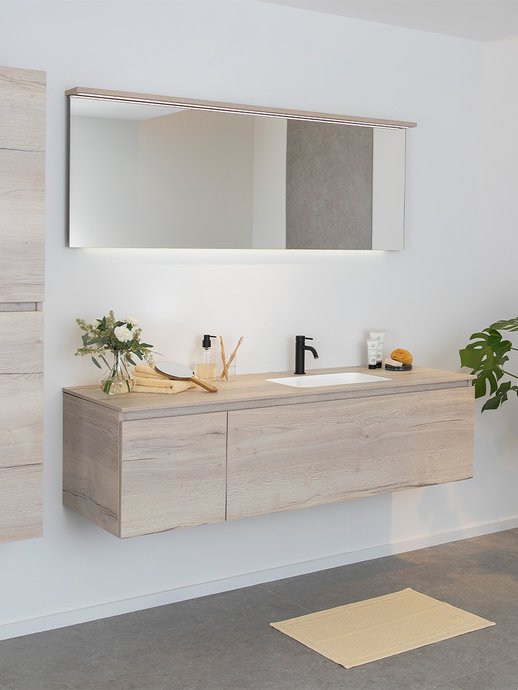
Light-coloured wood (bleached oak, weathered teak) blends very naturally with natural stone, rattan or mosaic tiles, in a more boho or biophilic style. In all three cases, the rule remains the same: do not use more than two or three distinct materials in the same room, otherwise you risk detracting from the desired effect.
Day-to-day maintenance: oil, varnish, or nothing at all
Thanks to its natural resin, a piece of furniture made from untreated teak can be cleaned simply with soapy water for years on end, without the need for regular oiling. This is the most compelling argument in favour of exotic wood for those who do not want to carry out regular maintenance. Occasional oiling, every two or three years, is enough to restore the wood’s golden hue if it begins to turn grey.
Furniture made of oak or chestnut requires more systematic protection: either a specific oil for damp rooms, applied in three thin coats, or a special bathroom varnish applied in two coats, allowing sufficient drying time between them. The oil penetrates the wood fibres and preserves the natural appearance of the grain, though it does require more frequent maintenance. Varnish offers greater protection but may yellow over time on light-coloured finishes – something to bear in mind before choosing between the two finishes. On the other hand, oak can be easily restored by sanding: a deep scratch or an old stain can be removed and the furniture regains its original appearance – an advantage shared by both types of solid wood, unlike melamine-faced or laminated panels.
In both cases, the same mistakes can prove costly: leaving a damp towel to dry directly on the furniture, using acetone or ammonia for cleaning, or failing to ensure the room is well ventilated. Wood, whether exotic or European, remains a living material that needs air to age well.
Which type of wood suits which style of bathroom?
Teak and tropical woods with golden or brown hues blend naturally with minimalist, Japanese- or spa-inspired interiors, where the warmth of the material balances the clean lines. They also work well in an industrial style, paired with black metal, or in a boho-style setting with rattan and natural stone.
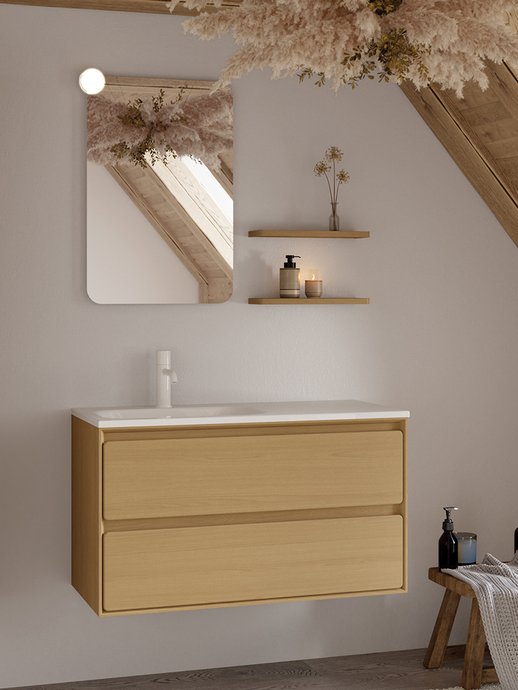
Light or bleached oak is more suited to Scandinavian or contemporary minimalist styles, whilst darker oak or weathered chestnut is ideal for a rustic décor or a distinctly country-style ambience, as seen on the Sanijura Eleven fronts mentioned earlier. Neither of these two ranges is restricted to a specific style: it is the colour and surface texture – whether rough or smooth – that truly determine the final look and feel.
Frequently asked questions
Q1. Is teak furniture really more durable than solid oak furniture?
In its untreated state, yes: teak’s natural oleoresin protects it from moisture without the need for treatment. Once the oak has been properly oiled or varnished, the difference is greatly reduced, and both types of wood will last 15 to 20 years with normal use in a well-ventilated bathroom.Q2. Why does a piece of furniture made from exotic wood cost more than one made from oak?
Transport from South-East Asia, Africa or South America, more limited availability and a more labour-intensive processing process account for a price difference of 30 to 60 per cent in favour of European oak, for comparable quality.Q3. Which style should you choose for an industrial-style or spa-style bathroom?
Teak or iroko, which are darker and have a more textured finish, blend naturally with the matt black metal of an industrial style or the clean lines of a spa-inspired setting. Light oak is better suited to a Scandinavian or minimalist style, where light is paramount.Q4. How can you tell if a piece of furniture is really made of solid wood and not veneer?
Take a look at the cross-section of an open drawer: a grain pattern that continues through the thickness indicates solid wood, whilst a grain pattern that stops at the surface suggests veneer. The weight of the piece of furniture and the manufacturer’s technical specifications, which should specify the type of material, will then confirm your assessment.Q5. Is European chestnut a good alternative to exotic timber?
Yes. Naturally rich in tannins, it withstands damp well without the need for heavy treatment, with a colour and grain reminiscent of aged teak. It is an option worth considering for anyone seeking the aesthetic appeal of an exotic wood whilst sticking to a European species.