Mix and match materials: polished concrete, wood and metal in the bathroom
Why does combining polished concrete, wood and metal work so well?
This trio works because each material balances out any overly pronounced characteristics the other two might have if they were used on their own in the room. Polished concrete, on its own, can create a rather cold and impersonal atmosphere if nothing is there to soften it, particularly over large areas with no other material to break up this mineral continuity. Wood, on its own, can quickly make the room feel too rustic or too much like a chalet if nothing is there to give it structure and a more contemporary feel. Metal, on its own, can appear cold and industrial if nothing is there to warm it up, especially when used in large quantities rather than as occasional accents. Together, the three materials balance each other out naturally, each providing what the other two might lack to form a complete composition.
It is also a combination that spans several interior design styles at once, making it a safe bet for anyone who is still unsure about the exact direction of their project or who wants a design that can evolve over time. The same trio can create an industrial, Scandinavian, Japandi or contemporary feel depending on the proportions used and the shades chosen for each material, which allows for great freedom of interpretation whilst providing a solid foundation on which to base your choices.
The risk of a piece that lacks a clear hierarchy
The main risk with this type of combination is trying to give equal prominence to all three materials throughout the room, without deciding which one should actually provide the overall structure. A bathroom where polished concrete, wood and metal all vie for attention in the same space gives an impression of clutter rather than richness, even if each material, taken on its own, is of good quality and well chosen. The most reliable rule is to choose a dominant material, which will cover the largest surface area, and to reserve the other two for more subtle accents that add structure and warmth to the overall design without ever overshadowing the overall composition.
Polished concrete: the material that sets the tone
In most successful projects, polished concrete plays the dominant role, covering large surfaces and setting the overall mood of the room at first glance. Its matt, uniform texture makes it an excellent backdrop for showcasing wood and metal without competing with them visually, unlike patterned tiles, which would draw more attention to themselves.
On which surfaces is polished concrete best suited?
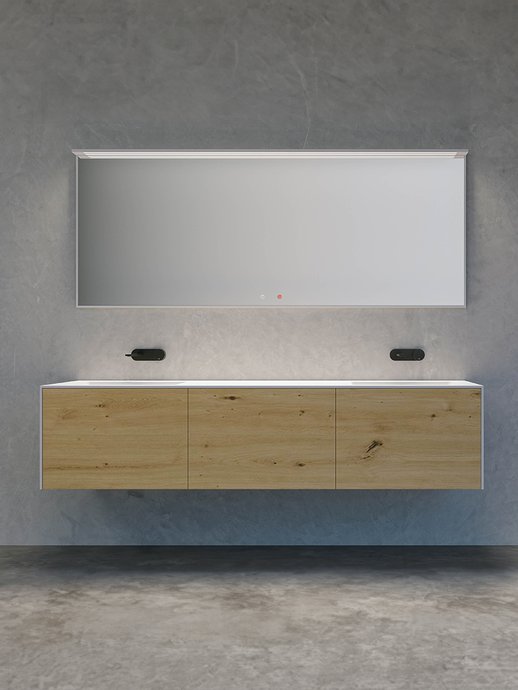
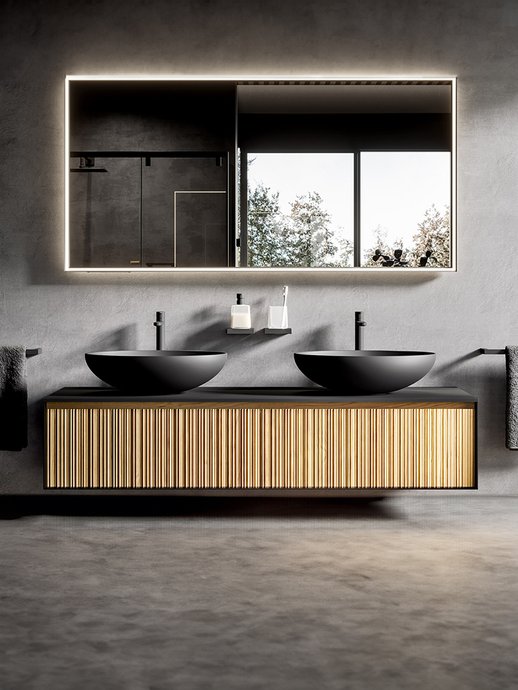
The shower floor and walls remain the most natural surfaces for polished concrete, as its visual continuity enhances the perception of space and creates a cohesive base upon which touches of wood and metal are then added, much like a canvas prepared before incorporating the more striking elements of the composition. A polished concrete vanity top also works very well, particularly when paired with a wall-mounted wooden unit which softens the mineral-like appearance of the surface directly below, creating an immediate contrast between the top and bottom of the unit.
Wood, the material that brings warmth
Set against the mineral quality of polished concrete, wood plays a vital balancing role in the overall design. It is wood that prevents the room from appearing cold or too austere, bringing a lively texture and natural nuances that no other material can truly replicate, not even the most carefully crafted imitations available on the market.
The vanity unit: the most natural use of wood
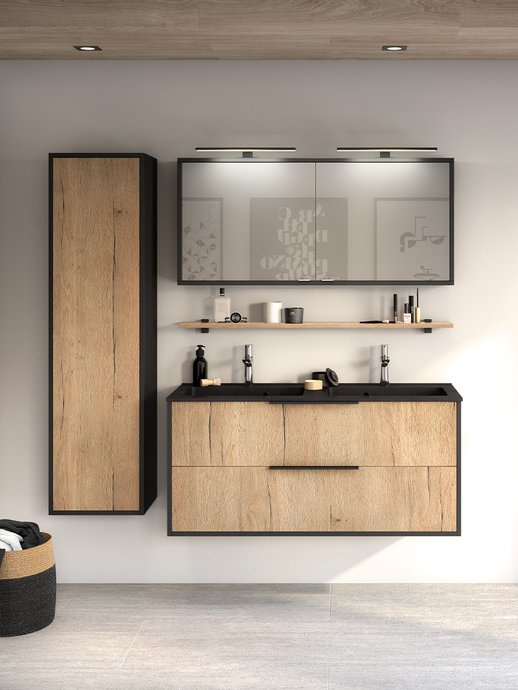
The vanity unit remains the most obvious way to incorporate wood into a bathroom dominated by polished concrete, and it is often the first purchase to be considered in this type of project. A unit made of solid wood or veneered wood, set against a polished concrete floor, immediately creates a contrast that adds warmth to the whole room without requiring any further changes to the rest of the décor. The more textured and knotty the wood chosen – with clearly visible grain and distinct natural shades – the more striking and visually interesting the contrast with the smooth surface of the polished concrete will be, which may be enough to give character to an otherwise rather understated room.
Light or dark: which type of wood should you choose to go with polished concrete?
Light-coloured wood paired with light-coloured polished concrete creates a soft, bright atmosphere, particularly suited to Scandinavian or Japandi styles, which specifically favour this kind of subtle combination. Dark wood paired with light-coloured polished concrete, on the other hand, creates a striking contrast that gives the room more structure and character, immediately drawing the eye to the piece of furniture or feature in question. The choice depends largely on the degree of contrast you are seeking, bearing in mind that a more pronounced contrast draws the eye more strongly and is well suited to rooms where you wish to establish a distinct decorative identity rather than a subtle, versatile ambience.
Metal, the material that gives the room its structure
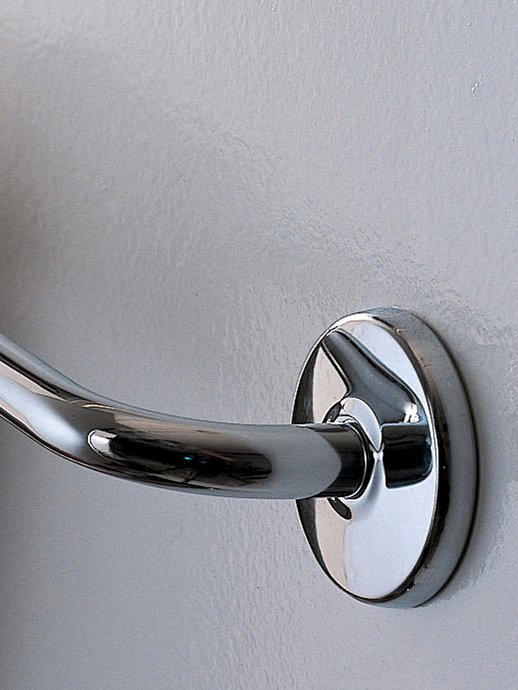
Metal is generally used in more subtle touches than polished concrete and wood, but its role is no less important in achieving a balanced composition: it is metal that lends precision to the lines and visually structures the whole, providing a contrast to the softness of the wood and the matt finish of the polished concrete.
Taps and fittings: the simplest point of entry
Taps remain the most direct way of introducing metal into a bathroom that combines polished concrete and wood, and this is often where the planning begins once the other two materials have already been chosen. A mixer tap in brushed brass or gold is enough to add this third dimension without requiring major work, making it an accessible option even in a partial renovation project that does not alter the existing finishes or the structure of the room.
Choose a single metallic finish to create a cohesive look
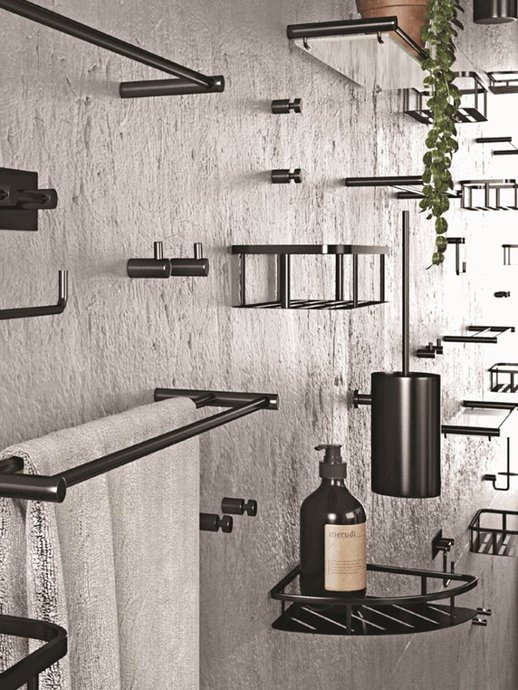
Whichever colour you choose – brass, matt black or brushed stainless steel – the key is to maintain the same metallic finish across all elements in the room, from the taps right down to the smallest accessories such as a soap dish or a dispenser. This consistency prevents the metal from looking disjointed and, on the contrary, allows it to fulfil its role as a visual thread linking the different areas of the bathroom, even when the polished concrete and wood vary slightly in colour from one part of the room to another.
A mix that comes together with a few simple guidelines
Combining polished concrete, wood and metal in a bathroom is by no means an exercise reserved for experienced interior designers or projects with an unlimited budget. With a dominant material clearly identified from the outset, decreasing proportions of the three materials that structure the composition, and a consistent metallic finish throughout the room, this combination becomes accessible to any renovation project, whether it’s a large bathroom or a more compact space where every choice counts for more.
When the balance is right and each material plays the role it is best suited to, the result is a room full of character that never feels overloaded – one that is at once minimalist, warm and well-structured. To explore the combinations of materials and finishes best suited to your own project, and to see for yourself how these three materials work together in a real-life setting, the Facq teams are on hand in the showroom to guide you through these choices and answer your questions about the configurations that best suit your space.
Frequently asked questions
Q1. Should polished concrete always be given priority in this mix?
Not necessarily, but it is generally the easiest option to balance for a first project of this kind, as its neutral, uniform texture lends itself well to acting as a backdrop without imposing any particular constraints on the rest of the choices. It is entirely possible to reverse the hierarchy and give more prominence to the wood, for example by covering an entire wall with wooden slats from floor to ceiling, whilst reserving the polished concrete for a smaller area such as a vanity unit or just part of the floor.Q2. Can you mix different shades of metal in the same room?
This is not generally recommended, as it introduces an additional variable into a mix that already comprises three different materials which need to be balanced against one another. Using a single metallic finish – brass or matt black, for example – across all the elements in the room helps to maintain a clear and coherent overall look, without the eye having to interpret a fourth variable in addition to the polished concrete, the wood and the metal itself.Q3. Is this combination of materials suitable for a small bathroom?
Yes, provided you opt for light shades for the polished concrete and wood, which preserve the sense of space rather than reducing it, and reserve metal for subtle accents rather than large surfaces that would take up too much visual space in a small room. This combination actually works even better in a small, well-proportioned space than in a large room where the three materials might be used without giving any thought to proportions, which clearly shows that the available floor space is not the decisive factor in achieving this type of décor.Q4. How can you prevent the room from looking too cold, even though there is wood in it?
If the wood is too understated against very large areas of polished concrete, the feeling of coldness may persist despite its presence in the room. Slightly increasing the amount of wood – for example, by adding shelves or a stool alongside the existing vanity unit – or choosing a warmer, more distinctive shade of wood than the one originally selected, usually helps to restore the desired balance without having to overhaul the entire project.Q5. Does the metal necessarily have to be subtle in this sort of combination?
Not necessarily, but it’s the easiest option to balance for a first project of this kind, particularly if you’re not used to working with several strong materials at the same time. It is possible to give the metal a more prominent role, for example with a large shower screen featuring an exposed metal frame rather than a simple, slender frame, provided you balance the other two materials accordingly so that the overall effect remains cohesive rather than scattered amongst three elements, each vying to dominate the composition.