Bathroom furniture: materials that are truly resistant to humidity
Natural materials that stand up to moisture
Your bathroom deserves furniture that can withstand daily use. Constant humidity puts all materials to the test, but some fare particularly well. We guide you towards natural solutions that combine robustness and aesthetics.
Treated solid wood: performance that lasts
Teak is the undisputed champion for bathroom furniture. Its natural oils create an effective barrier against water, with no additional treatment required. This wood from South-East Asia is naturally resistant to fungi and insects – a considerable advantage in a humid environment.
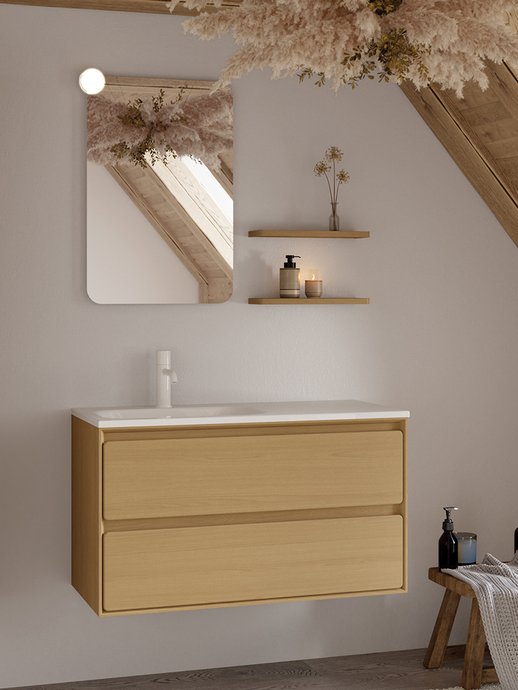
Oak requires treatment with oil or varnish, but once protected, it becomes a long-lasting ally for your bathroom vanity units. Its density limits deformation caused by changes in humidity. The result is stable furniture that retains its shape year after year.
Bamboo is surprisingly strong. This eco-friendly alternative offers excellent stability once treated against moisture. Perfect for freestanding bathroom furniture, it combines lightness and strength.
Marine plywood and water-resistant MDF: efficiency without breaking the bank
Marine plywood costs less than solid wood while offering remarkable strength. Its cross-laminated layers bonded with waterproof resin create a particularly stable structure – ideal for your bathroom furniture sets.
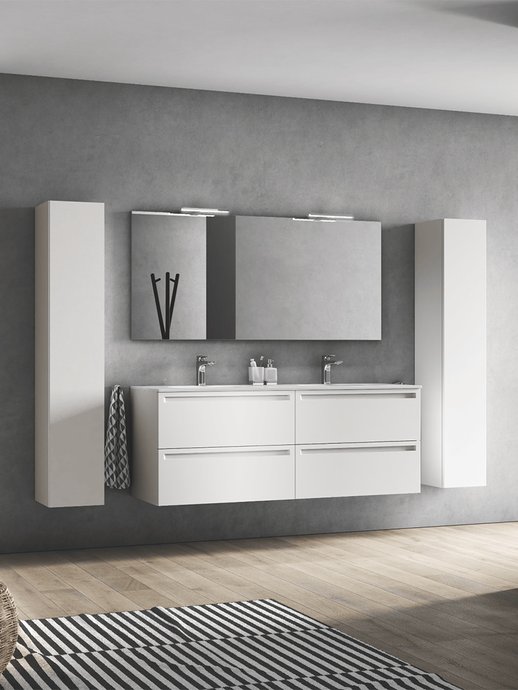
Water-resistant MDF is an attractive modern option. This fibreboard, treated with synthetic resins, absorbs very little moisture. Its perfectly smooth surface allows for flawless finishes, which are particularly appreciated on contemporary double basin bathroom furniture.
Melamine: a practical solution for small spaces
Is your budget tight? Melamine is a wise choice for small bathroom furniture. Its protective layer effectively resists moisture while offering a wide range of decorative finishes.
Its main strengths:
- Simple maintenance with a damp cloth
- Wide range of colours and textures
- Easy installation thanks to its light weight
- Satisfactory durability if the edges are well protected
For small bathroom furniture, this material offers excellent value for money. Essential condition: ensure that the edges are completely watertight to prevent water infiltration.
Modern materials: sustainable solutions for your bathroom
Contemporary materials offer remarkable performance in the face of constant humidity in the bathroom. We have selected the most effective options for you, combining technical resistance and ease of daily maintenance.
Ceramic and porcelain stoneware: robustness for everyday use
Porcelain stoneware is the ideal choice for your bathroom furniture. Its dense surface is resistant to all common household cleaning products. Daily maintenance? A simple damp cloth is all you need.
This material offers considerable advantages: resistance to temperature variations, exceptional durability and environmental friendliness. Its abrasion resistance makes it an ideal solution for vanity units, even in high-traffic bathrooms.
Available in a wide range of colours, porcelain stoneware suits all interior design styles. Unlike natural materials, it does not warp under the effects of heat or humidity.
Tempered glass: modernity and total impermeability
Tempered glass adds a contemporary touch while ensuring perfect waterproofing. Clean it like any other glass surface: it's as simple as that.
Its strength far exceeds that of ordinary glass, making it perfectly suited to everyday demands.
Polypropylene: technical performance at an affordable price
This engineering plastic offers excellent value for money for your free-standing bathroom furniture. It is impact and chemical resistant, while retaining its properties over time.
Particularly suited to spaces such as laundry rooms, polypropylene is ideal for washbasin units that need to be extremely robust. Its affordable price does not detract from its exceptional durability.
Materials to avoid in your bathroom
Protect your investment by avoiding certain materials that may seem attractive but prove problematic when exposed to moisture. We will guide you in avoiding the most common pitfalls.
Untreated wood: a trap to avoid
Saving money on wood treatment can cost you dearly in the long run. Raw wood absorbs moisture like a sponge, causing it to swell and gradually warp. Even without direct contact with water, the humidity in your bathroom is enough to damage your bathroom furniture. Eventually, rot sets in and irrevocably compromises your furniture.
Standard chipboard: a false economy
Despite its attractive price, standard chipboard is a risky choice for your bathroom vanity units. This material quickly disintegrates when exposed to moisture. Even if the surface is protected, moisture seeping into the edges is enough to cause the chipboard to swell and break down. Your furniture will then lose its stability and appearance in just a few months.
Unprotected metals: guaranteed rust
Untreated raw steel and ferrous alloys undergo accelerated corrosion in humid environments. This deterioration particularly affects hinges and fasteners, compromising the integrity of your bathroom furniture assemblies. Rust appears quickly and weakens the entire structure.
Porous marble: beautiful but demanding
Untreated natural marble requires demanding maintenance for your small bathroom furniture. Extremely porous, it absorbs liquids and stains easily when in contact with soap or cosmetics. Without annual waterproofing treatment, it loses its shine and can suffer permanent damage. Be careful with cleaning products too: vinegar and lemon should be avoided at all costs.
How to choose the right bathroom furniture
Choosing bathroom furniture is not just about appearance. We guide you in selecting durable furniture that will withstand the constant humidity in your bathroom.
Always check water repellent treatments
Ask your retailer the right questions about the treatment applied to your bathroom vanity units. Properly sealed wood prevents moisture from penetrating and ensures optimal longevity.
For oak, larch or robinia, insist on a high-quality sealant despite their natural resistance. Teak, on the other hand, is already naturally waterproof thanks to its oils. As for plywood, its cross-laminated layers ensure remarkable stability in the face of humidity variations.
Opt for freestanding furniture
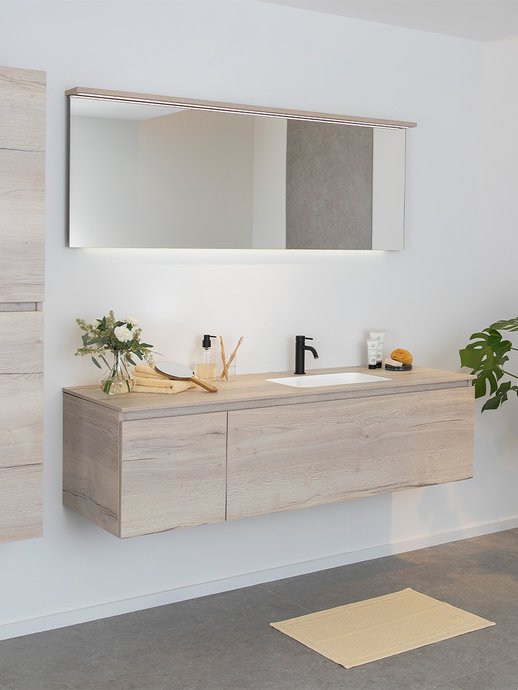
Freestanding bathroom furniture saves you a lot of trouble. This configuration limits moisture rising through capillary action and allows natural air circulation behind the furniture.
There are numerous benefits: reduced ambient humidity, mould prevention and extended service life. This ventilation also improves the thermal insulation of your installation.
Adjust the dimensions to suit your space
The dimensions determine your choice of bathroom furniture set. Modern bathrooms favour a reduced depth of 40-45 cm rather than the standard 50-55 cm.
For width, allow at least 50 cm for small bathroom furniture, although 60 or 80 cm is more practical. Double basin bathroom furniture requires at least 100 cm, with 120 cm being the ideal size.
Also assess your storage needs based on the number of users and the products to be stored.
Choose the right materials for a sustainable bathroom
Each material you choose determines the longevity of your bathroom. Teak, treated oak and bamboo provide that sought-after natural warmth while being perfectly resistant to constant humidity. For a more modern approach, porcelain stoneware, tempered glass and polypropylene offer remarkable performance with simplified maintenance.
Avoid standard chipboard and untreated wood at all costs. These materials deteriorate quickly and compromise your investment. Unprotected metals and porous marble without treatment also pose maintenance problems that can become costly.
Always check for water-repellent treatments before making a purchase. Choose freestanding furniture, which allows for better air circulation and naturally reduces humidity problems. Always adapt the dimensions to your space to optimise both aesthetics and functionality.
With the right materials and precautions, your bathroom will retain its appearance and performance for years to come. Humidity will no longer be an obstacle to successful design.
Frequently asked questions
Q1. What is the best material for moisture-resistant bathroom furniture?
Teak is considered one of the best materials for bathroom furniture. Its natural oil content gives it remarkable waterproofing properties and exceptional resistance to moisture, fungi and insects.Q2. Is wooden furniture suitable for damp bathrooms?
Wooden furniture can be suitable for damp bathrooms if it is properly treated. Oak and bamboo, for example, offer good resistance when treated with specific oils or varnishes to protect them from moisture.Q3. What modern materials are recommended for bathroom furniture?
Ceramic, porcelain stoneware and tempered glass are highly recommended modern materials for bathroom furniture. They are waterproof, easy to maintain and resistant to the humid conditions found in bathrooms.Q4. How can I choose bathroom furniture that will last a long time?
To choose durable bathroom furniture, check the water-repellent treatments applied, opt for freestanding furniture to prevent moisture rising, and choose water-resistant materials such as marine plywood or water-repellent MDF.Q5. What materials should be avoided for bathroom furniture?
It is best to avoid untreated wood, standard chipboard, unprotected metals and porous marble without treatment. These materials are likely to deteriorate quickly in the humid environment of a bathroom.