Smart homes: how can you manage your home for greater comfort, security and savings?

Smart homes: what are we actually talking about?
The term covers a wide range of applications, from voice-controlled light bulbs to comprehensive home automation. For a Belgian home, the most tangible benefits lie in three areas: heating, water and security.
Devices that exchange information
A smart home relies on devices capable of measuring, communicating and taking action. A thermostat measures the room temperature, a valve adjusts the flow rate of a radiator, and a sensor detects any unusual water leaks. These devices exchange data with a control centre or directly with your Wi-Fi network.
The benefit is that it helps you avoid: heating an empty room, forgetting to turn the heating down before a weekend away, or discovering a leak too late.
One app to control everything, whether you’re at home or away
Most systems are controlled via a smartphone or tablet app. You can check the temperature in each room, change a programme or turn the heating back on before you get home, wherever you are.
Common settings can still be adjusted directly on the device itself, using the screen or the dial: there’s no need to use the app.
Where to start?
There’s no need to fit everything at once. Heating, which accounts for a large proportion of your energy bill, is the best place to start. Protection against water damage comes next. You can complete the installation over time, provided you choose compatible equipment from the outset.
Controlling your heating room by room
Heating is the area where the smart home offers the greatest benefits, in terms of both comfort and savings. Three types of equipment work together: the thermostat, the radiator valves and, for larger systems, a central control unit.
The smart thermostat: the maestro of comfort
The smart thermostat replaces your standard room thermostat. It controls your boiler or heat pump and can be operated remotely.
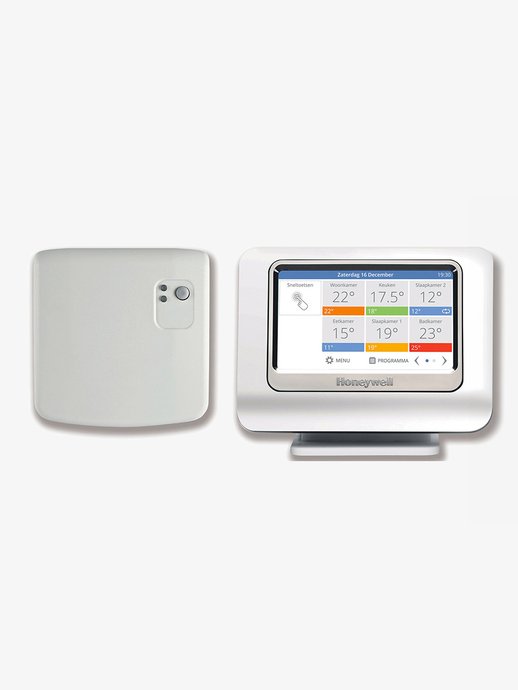
- The Evohome Wi-Fi thermostat from Honeywell Home controls up to 12 heating zones wirelessly. It also works with a heat pump and can switch between heating and cooling if your system allows it.
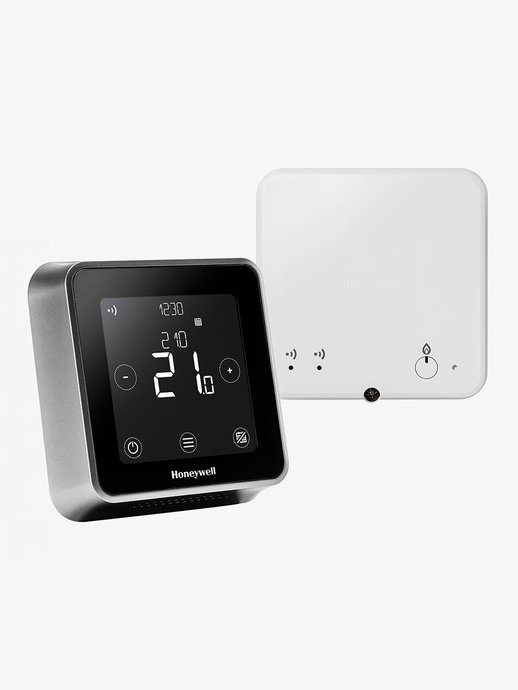
- The Lyric T6 thermostat, also from Honeywell Home, offers 7-day programmes, an away mode and automatic adjustment of the setpoint based on your location.
- For more complex installations, the Vaillant SensoCOMFORT VRC 720 thermostat, fitted with an outdoor sensor, is suitable for boilers, heat pumps and hybrid systems.
Smart thermostatic valves fitted to radiators
A single thermostat controls the temperature of a reference room. To heat each room to its own temperature, you need to adjust the radiators. Connected thermostatic valves replace the heads of your existing valves and follow a programme specific to each room.
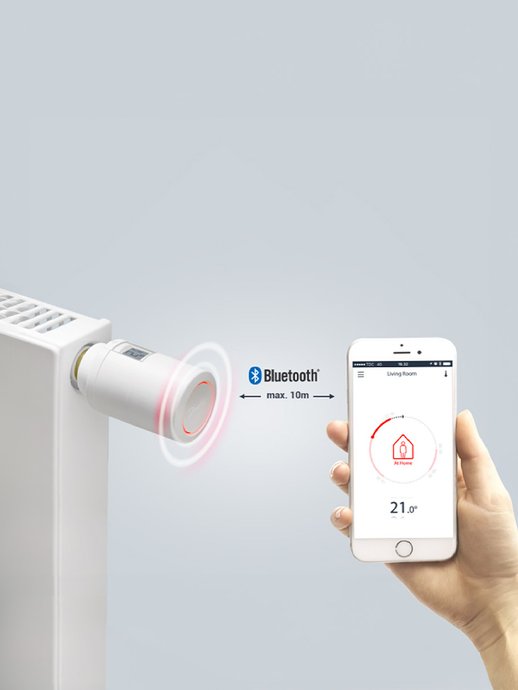
The Danfoss Eco smart valve can be programmed via a free app using Bluetooth, within a range of approximately 10 metres. The Honeywell Home HR 92 smart valve integrates with the Evohome system and is compatible with most standard radiator valves with an M30 x 1.5 thread.
A central unit to coordinate the whole system
As the number of devices increases, a central unit simplifies management. Radson’s Unisenza Plus gateway connects up to 100 devices – room thermostats, radiator valves, receivers and sensors – to your internet router via Wi-Fi or an Ethernet cable. It uses the Zigbee 3.0 protocol, which is widely used in home automation.
To choose between these options, browse the full range in our ‘Smart Thermostats and Valves’ section.
Protecting your home against water damage
A burst pipe whilst you are away can cause significant damage within a matter of hours. Connected detection systems alert you, and some automatically shut off the water supply.
Detect a leak before it gets worse
Fitted to the house’s main water supply, the Grohe Sense Guard safety system monitors all the water entering your home. It detects pipe bursts as well as even the smallest leaks and automatically shuts off the water supply in the event of a burst. It is still possible to shut off the water supply manually.
To monitor a specific location, the Honeywell Home Lyric W1 Wi-Fi detector can be placed under a washing machine, near a boiler or at the base of a water heater. It is battery-powered and requires no wiring. Its 1.2-metre detection cable can be wrapped around a pipe, and an audible alarm sounds on the spot.
Monitor the risk of frost in winter
In a garage, a cellar or a second home, frost can cause a pipe to burst. The Grohe Sense Guard and the Lyric W1 also monitor the temperature and alert you to a risk of frost before the water freezes in the pipes. You can then switch the heating back on remotely or take action in good time.
This monitoring provides a useful complement to good winter practices, such as keeping the heating on a frost-protection setting rather than switching it off completely whilst you are away.
Security throughout the whole house
A wireless security system can also incorporate smoke, heat or motion detectors. Connected to your home automation network, they send real-time notifications to your smartphone and can be controlled remotely, just like the heating. To find out more, see our section on smart security against burglary and fire.
Reducing your energy consumption without compromising on comfort
A smart home does not generate energy, but it prevents it from being wasted. The savings come from adjustments that are more precise and more consistent than those made manually.
Every degree counts
According to the Wallonia Public Service’s leaflet on energy saving, a temperature that is one degree too high increases the heating bill by 7 to 8 per cent. The same publication recommends 19 to 20 °C in living areas, and 16 to 17 °C at night, when you are away and in rooms that are rarely used.
A smart heating system applies these settings room by room, without you having to think about it. To find out more, take a look at our 10 tips for saving on heating and the 8 mistakes to avoid when setting your thermostat.
Plan according to your lifestyle
The weekly programme is the most cost-effective feature. You set comfort ranges for the morning and evening, a lower temperature during the day when the house is empty, and a lower night-time setting. The Lyric T6 thermostat, for example, allows for up to six time periods per day.
In the event of unforeseen circumstances, the app allows you to adjust the programme remotely. The optimised start-up function anticipates the warm-up time so that the room is at the right temperature at the desired time.
How to successfully set up your smart home
Connected equipment will only work properly if it is compatible with your existing system. Carrying out a few checks before you buy will help you avoid any unpleasant surprises.
Check compatibility with your system
Your boiler, heat pump or underfloor heating will determine which thermostat you choose. Some models are designed for a specific boiler brand, whilst others are compatible with most systems. You should also check the type of radiator valves you have before ordering smart radiator valves.
Wi-Fi, Bluetooth or Zigbee: choosing the right protocol
Not all devices communicate in the same way:
- Wi-Fi: connects directly to your router; handy for one or two devices, such as the Evohome or the Lyric T6.
- Bluetooth: range limited to a few metres; suitable for adjusting settings from home, like the Danfoss Eco.
- Zigbee: a dedicated network that connects numerous devices to a central unit, such as the Unisenza Plus range.
Stick to a single ecosystem wherever possible: your devices will communicate more easily, and you’ll only have one app to manage.
Have the connection carried out by a professional
Fitting a smart radiator head is something most homeowners can do themselves. However, connecting a thermostat to a boiler or heat pump and fitting a shut-off valve on the main water supply are jobs best left to a professional installer. This professional will check compatibility, set up the system and show you how to use it.
A smarter home that’s more comfortable and peaceful
A successful smart home doesn’t require every room to be kitted out with gadgets. It starts with room-by-room heating control, is complemented by protection against leaks and frost, and then expands at your own pace. The benefits are evident in everyday life: a temperature suited to every moment, less energy wasted, and peace of mind whilst you’re away.
To compare the different solutions and find the one that suits your setup, our advisers are on hand to welcome you at our EXPOcentres. And when it comes to installation, the Install+ service will put you in touch with a partner installer who will take care of the fit-out and set-up.
Frequently asked questions
What is a smart home?
It is a home fitted with devices capable of measuring, communicating and taking action, such as a smart thermostat, smart radiator valves or a water leak detector. You can control them via an app or directly on the device itself, either from home or remotely.Does a smart thermostat really help you save money?
Yes, because it applies precise settings without fail: the temperature is lowered at night and when you’re away, and heating is controlled room by room. According to the Wallonia Public Service, setting the temperature just one degree too high increases your heating bill by 7 to 8 per cent.Is a smart thermostat compatible with a heat pump?
Several models are, such as the Evohome from Honeywell Home or the SensoCOMFORT VRC 720 from Vaillant, which also supports hybrid systems. Always check compatibility with your appliance before purchasing.How does a smart leak detector protect the home?
It monitors water flow and temperature and alerts you in the event of a leak or a risk of freezing. Fitted to the main water supply, a system such as the Grohe Sense Guard also automatically shuts off the water in the event of a burst pipe.Do you need to hire a fitter for a smart home?
A smart radiator valve is easy to fit. However, connecting a thermostat to the boiler or heat pump and fitting a shut-off valve on the water supply must be carried out by a professional.