Home air conditioning: how to choose the right system?

Key points:
1. System type: single-split for a single room, multi-split for the whole house, ducted for discreet installation, reversible for heating and cooling with the same unit.
2. Power: calculated based on floor area, insulation and orientation. In Belgium, the figure generally ranges from 100 to 130 W/m² depending on the house.
3. Installation and financial assistance: 6% VAT if your home is over 10 years old, regional grants depending on your region (Flanders, Wallonia, Brussels), and a requirement to use an F-gas certified installer.
The result: demand for air conditioning installations has skyrocketed in Belgium, and with it, a rise in poor choices. Too much capacity, too little, the outdoor unit in the wrong place, a system that’s too small for the flat, or too big for the bedroom. This guide is designed to help you avoid these mistakes.
1. Why install air conditioning in Belgium in 2026?
The question remains a valid one. We still regularly hear people say, ‘We don’t need it in Belgium’. This is becoming less and less true. But above all, this line of reasoning misses the point: a reversible air-conditioning system is also a heating system. What you install for the summer, you can also use in winter.
A tool for year-round thermal comfort
Current models operate in heating mode down to outdoor temperatures of -15 to -20°C, depending on the range. In mid-season, when the boiler seems too powerful and the air is still cool, the reversible air conditioning takes over at a lower cost. Its energy efficiency (COP) exceeds 3 in heating mode: for every 1 kW of electricity consumed, it produces 3 kW of heat.
This explains why Belgian installers no longer refer to ‘air conditioning’ but to ‘air-to-air heat pumps’. Both terms refer to the same equipment, and it is this terminology that paves the way for regional grants.
The Belgian context: insulation, damp and urbanisation
Belgian homes have a distinctive thermal profile: they were often poorly insulated prior to the 1980s, feature large windows, and include terraced houses with no access for an outdoor unit on the front façade, as well as flats subject to strict regulations. These constraints directly determine which system is suitable for your home.
What you need to know before you start
In Belgium, any professional who handles refrigerants must hold an F-gas certificate (European Regulation 517/2014). Always ask to see this certificate before signing a quote — it is a legal requirement, not just a matter of convenience.
2. The five types of air conditioning systems: which one is right for your home?
The market offers five main categories. They do not all meet the same needs, nor do they all cost the same. Here are the key differences.
The portable air conditioner: the quick fix
A unit on castors, a hose fed through a slightly open window, and a mains plug. This is the option that requires no installation – but doesn’t deliver much in the way of results either. The slightly open window allows warm air to enter constantly, forcing the unit to work twice as hard. The noise level reaches 50 to 65 dB. It consumes a lot of energy for limited results.
It’s a viable stopgap solution during a heatwave, or for a tenant who isn’t allowed to carry out building work. It’s not a long-term investment.
The single-split wall-mounted unit: a reliable choice for a single room
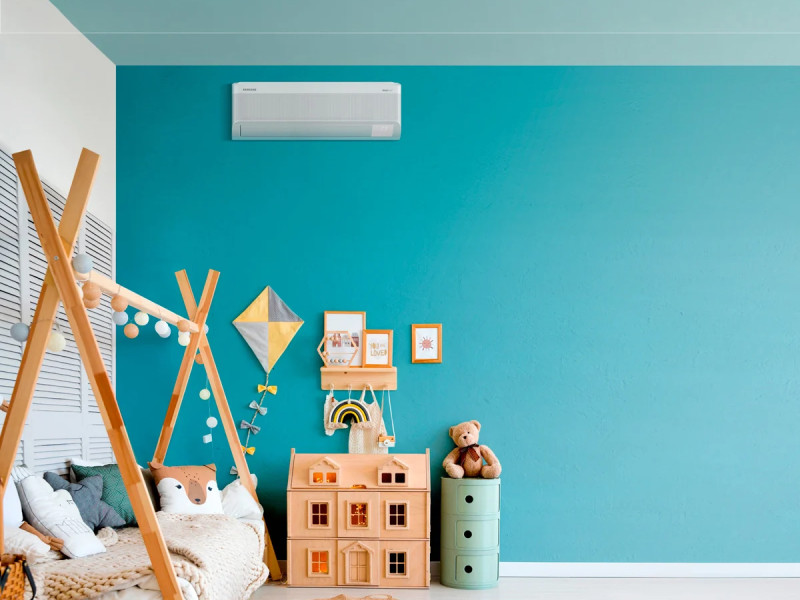
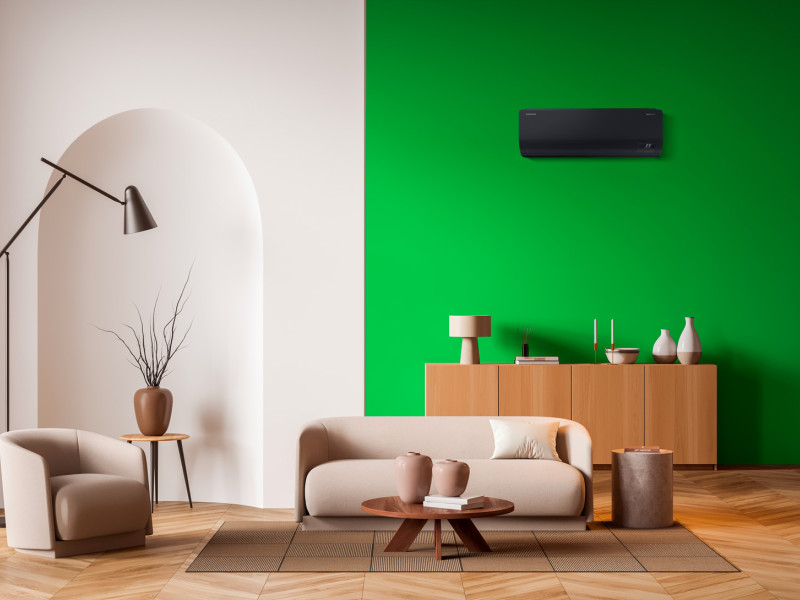
This is the most widely installed system in Belgium. It consists of an indoor unit mounted on the wall, an outdoor unit on the façade or on the ground, and refrigerant pipes connecting the two. Installation takes a day. The system efficiently heats and cools an area of 20 to 50 m², depending on its capacity.
Inverter technology is now standard on models from the mid-range upwards: the compressor adjusts its speed rather than stopping and restarting, which reduces energy consumption by 20 to 30% compared to older on/off systems. Key figures to check: SEER (cooling efficiency) and SCOP (heating efficiency). If the figures are below SEER 6 / SCOP 3.5, you can find a better option.
The multi-split system: a single outdoor unit for the whole house
Each indoor unit operates independently: you can set the living room to 24°C whilst keeping the bedroom at 22°C. This flexibility, combined with a smartphone app, is a real advantage when it comes to optimising energy consumption.
Beware of oversizing: a three- or four-way multi-split system installed in a poorly insulated house with rooms that vary greatly in terms of their aspect may produce disappointing results if a thermal assessment has not been carried out beforehand.
Ducted air conditioning: invisible, discreet, for comprehensive projects
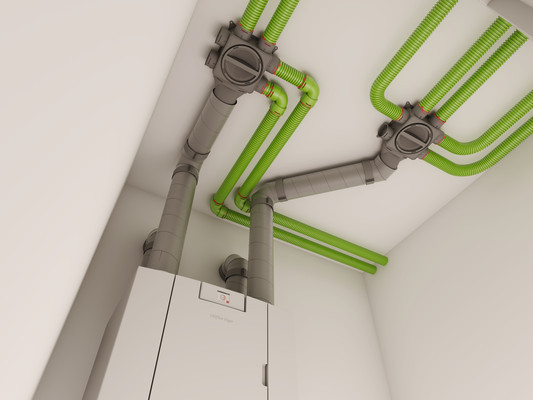
The indoor unit is concealed within a false ceiling or a service cavity. Air is distributed through vents built into the ceilings or walls. The result: no visible equipment in the rooms.
This is the ideal solution for a new build or a major renovation involving a suspended ceiling. It is also the most expensive and least flexible option: once installed, the vents cannot be moved. If you’re planning to reclaim the space in five years’ time, think twice.
It remains the go-to solution for homes larger than 150 m² where multi-split systems reach their limits, or for projects where aesthetics are a priority.
Reversible air conditioning: the principle, not a type of unit
A point that often causes confusion: ‘reversible air conditioning’ is not a fifth type of system. It is a feature found in almost all split, multi-split and ducted systems today. It simply means that the unit can reverse its thermodynamic cycle to provide heating in winter.
What changes is how you use it. A system used solely for air conditioning in the summer and as the main heating source in the winter is not sized in the same way as a system used exclusively for cooling.
| System | Number of items | Price including installation (excl. VAT) | Key feature | Limit |
| Mobile | 1 room (supplement) | 200 – 800 € | No installation required | Inefficient, noisy |
| Monosplit | 1 item | 1 500 – 4 500 € | Value for money | Only 1 item available |
| Multi-split | 2 to 5 rooms | 3 000 – 10 000 € | Just one outdoor unit | Thermal assessment required |
| Gainable | Whole house | 4 000 – 15 000 € | Invisible, silent | Major works required |
| Reversible | Any configuration | Depending on the system chosen | Heats and cools | Not a guy in the usual sense |
3. Air-to-air vs air-to-water heat pumps: what’s the difference for your home?
This question comes up often, especially when comparing the different models available. Both use the same basic technology (extracting heat from the outside air), but the way they distribute it is radically different.
| Air-to-air heat pump | Air-to-water heat pump | |
| Distribution | Air blown by the indoor units | Hot water in the radiators or underfloor heating |
| Best use | Air conditioning + auxiliary heating | Main heating + domestic hot water |
| Cooling efficiency | Yes, directly | Rarely (except for specific reversible systems) |
| Compatibility | Suitable for any home, easy to install | Requires underfloor heating or low-voltage radiators |
| Installation cost | 1 500 – 10 000 € | 8 000 – 18 000 € |
If you already have a boiler that works well and are simply looking to add summer cooling with supplementary heating, an air-to-air heat pump (split or multi-split) is the answer. If you’re planning a complete overhaul of your heating system with underfloor heating, consider an air-to-water heat pump.
4. Underfloor heating and cooling: can it be used to cool the room in summer?
It is comfortable, quiet and energy-efficient. But it has its limitations: the cooling effect is gentle – we’re talking about a drop of 2 to 4°C at most – and humidity control is critical. If the water temperature is too low, condensation forms on the floor. A hygrometer and a dew point controller are essential.
The perfect combination for summer: cooling underfloor heating for all-round comfort (day and night), with a reversible split-system air conditioner in the bedrooms for those sweltering nights when you want to quickly bring the temperature down to 22°C.
5. How do you work out how much power you need?
This is the step that most people skip, and this is where things go wrong. An oversized system constantly switches on and off (cycling), uses more energy and causes fluctuations in humidity. An undersized system runs continuously without ever reaching the desired temperature.
The 100 W/m² rule: a starting point, not an absolute truth
A rough estimate suggests 100 to 130 W per square metre to be cooled. For a standard house of 150 m², this works out at around 15 to 19 kW in total. In practice, you never cool the whole house at once; you start with the priority rooms (living room, bedrooms).
But this calculation fails to take into account three variables that make all the difference:
- Insulation: a house built before 1975 without additional insulation may require 150 W/m². A passive house reduces this to 50–60 W/m².
- Orientation: a south-facing room with a large bay window may require 40% more power.
- The type of glazing: double glazing from the 1990s and modern triple glazing do not provide the same level of solar gain at all.
The heat balance: what your installer needs to do
A reputable installer will not recommend a model without first carrying out a thermal assessment, even a simplified one. They will measure the floor area, volume, insulation, orientation, type of glazing and number of occupants. Those 30 minutes of work will determine the next 15 years of comfort and energy bills.
If an installer offers you a quote over the phone without having visited the property, that’s a red flag.
| Configuration | Correction factor | Approximate power (20 m² room) |
| Well-insulated house (built after 2000) | × 0,8 | 1,600–2,000 W |
| Standard house (1975–2000) | × 1,0 | 2,000–2,600 W |
| A poorly insulated house (built before 1975) | × 1,3 | 2,600–3,400 W |
| South-facing with a large window | + 20–40% | Depending on the database |
| Roof space (attic) | + 30–50% | Depending on the database |
6. Air conditioning and electricity consumption: how can you keep the bill down?
In January 2026, the average price of electricity in Belgium stood at around €0.35/kWh all-inclusive (energy, transmission, distribution and taxes), according to data from the CREG. This figure is important when assessing the cost of running an air conditioning system.
How much does air conditioning really cost to run?
A 2.5 kW single-split air conditioner in cooling mode consumes between 0.6 and 1 kW/h, depending on its energy efficiency rating and outdoor conditions. Over an 8-hour period of use, this amounts to 5 to 8 kWh, or €1.75 to €2.80 per day at Belgian electricity rates.
Over a 60-day period of intensive use (a high estimate for Belgium), the electricity cost for a single room is between €100 and €170. This is comparable to leaving a 1 kW electric heater on for a month in winter. It is manageable provided you do not leave the system running with the windows open.
Five habits that help keep bills down
- Set the temperature to 24–26°C in summer, not 18°C. Every degree below 22°C results in an additional 6–8% in energy consumption.
- Keep the south-facing windows shaded between 12 noon and 5 pm. This is the most effective measure you can take, even before switching on the air conditioning.
- Use night mode (Sleep): power consumption gradually decreases whilst you sleep.
- Clean the indoor filters every fortnight during the heating season. A dirty filter can increase energy consumption by 10 to 20 per cent.
- Combine this with night-time ventilation: open the windows as soon as the outside temperature drops below 22°C, close them, and switch on the air conditioning the next morning rather than leaving it running all night.
A quiet air conditioner: a factor not to be overlooked
The noise level of an indoor unit ranges from 18 dB (virtually inaudible) to 45 dB (the level of a normal conversation). For a bedroom, aim for below 25 dB. For a living room, 35 dB is acceptable. Brands such as Daikin, Mitsubishi Electric and Panasonic have ranges specifically optimised for bedrooms.
7. Air conditioning for flats: solutions when major building work isn’t an option
Apartments come with their own specific constraints: building regulations that may prohibit outdoor units on the façade, restrictions on drilling into certain walls, and close proximity to neighbours. There are options available, but they require a bit of creativity.
The outdoor unit: where should it be placed if it cannot be mounted on the façade?
The general rule in Belgian co-ownership schemes is that any alteration to the external appearance of the building requires the approval of the general meeting. Installing an outdoor unit on the front façade is often blocked. Alternative solutions:
- A private terrace or balcony: if you have exclusive use of it, this is the simplest solution. The unit is either placed on the floor or attached to the railing.
- The communal roof terrace: a co-ownership agreement is required, but this is often easier to obtain than for the façade.
- A skylight or an internal courtyard: with refrigerant lines measuring 10 to 15 metres, the outdoor unit can be installed some distance away from the indoor unit.
- The fixed monobloc air conditioner (without an outdoor unit): it is installed in a wall or window with a simple core drill hole. Less efficient than a split system, but not subject to any restrictions under the terms of the building regulations.
Systems that do not require major drilling
A portable air conditioner remains the only option that requires no installation work. For a rented room or a studio flat, it is sometimes the only realistic choice. A few so-called ‘single-split’ models—which do not require an outdoor unit—are available, but their performance falls far short of that of proper split-system units. These should be reserved for situations where no other option is feasible.
8. Air conditioning grants in Belgium: what you can claim depending on your region
Air conditioning alone does not qualify you for many grants. What does qualify you is a reversible air-to-air heat pump used as the main heating system. This distinction is important: if you install a split-system unit solely for use in the summer, you will probably not be eligible for financial assistance.
| Region | Prime available | Main condition | Approximate amount |
| Flanders | My Renovation Grant | Air-to-air heat pump = sole heating system, minimum energy rating: A+ | €300 to €720 |
| Wallonia | Energy Bonus (RENOLUTION) | Replacing a direct electric heater | Varies according to income |
| Brussels | RENouveau / Energy Grants | Specific conditions based on income and energy performance certificate (EPC) | Variable |
| All regions | VAT at 6% | Housing over 10 years old | Save 15% on installation |
A few practical points about the reduced VAT rate: it applies if the property was built more than 10 years ago and if the installation is carried out by a certified professional. This is the most accessible and consistent way to save money on an installation costing €5,000 excluding VAT, representing a saving of €750 on the final bill.
Since 2025, in Flanders, each property owner is only eligible for one air-to-air heat pump grant every 10 years. Always check your grant balance before starting a project.
Key points to remember about premiums
Subsidies vary depending on the year and region. The information above reflects the situation in 2025–2026, but the rates are subject to change. Always check the latest figures on your region’s portal (Mijn VerbouwPremie for Flanders, RENOLUTION for Wallonia, Brussels Environment for Brussels) before signing a quote.
9. Air conditioning maintenance: how often should it be carried out, and why is it so important?
What you can do yourself, every 2 to 4 weeks during the season
- Clean the filter in the indoor unit: unplug the unit, remove the filter, rinse it under running water, leave it to dry, then put it back in. This should take no more than 10 minutes.
- Check that condensation is draining away properly: a full drip tray or a blocked drainpipe can damage the walls.
- Clear the area around the outdoor unit: grass, leaves or objects blocking the ventilation grilles reduce efficiency.
What the professional does once a year
The annual service carried out by a certified technician includes cleaning the indoor and outdoor heat exchangers (which cannot be reached by hand), checking the refrigerant charge, inspecting the electrical connections and measuring the operating pressures.
It is not a legal requirement for domestic systems below a certain fluid volume threshold, but it is strongly recommended.
10. Which brands should you choose in Belgium?
The Belgian market is dominated by four Japanese manufacturers, all of which have an after-sales service network across the country. There are genuine price differences for models of equivalent power, but durability and reliability are comparable at the top end of the range.
| Brand | Iconic range | Belgium's strength | |
| Daikin | Perfera, Emura | The most extensive after-sales service network in Belgium | |
| Mitsubishi Electric | MSZ-EF, MSZ-AP | Very low noise level | |
| Toshiba | Shorai Edge, Haori | Value for money | |
| Panasonic | Etherea, Press Release | Built-in air purification | |
| Fujitsu | KE, KG series | Performance in heating and cooling mode |
11. 7 mistakes to avoid when installing an air conditioning system
- Buying without a prior thermal assessment: choosing a capacity based solely on the room’s square footage often results in the system being oversized. A system that is too powerful cools too quickly, switches off, then switches back on, causing fluctuations in humidity and consuming more energy than a correctly sized system.
- Position the indoor unit facing away from the bed or sofa: a direct draught creates an unpleasant feeling of cold and can cause muscle tension. The indoor unit should blow air along the length of the room, not directly towards the occupants.
- Failing to ensure access to the outdoor unit for maintenance: an outdoor unit installed in a hard-to-reach spot (on a sloping roof, behind a pergola, or against a wall that blocks access) will eventually never be cleaned. The result: reduced efficiency and a lifespan cut in half.
- Don’t forget ventilation: an air conditioner cools the air but does not renew it. Without mechanical ventilation (MVV), a closed, air-conditioned space accumulates CO₂ and humidity. In Belgium, the RGIE imposes ventilation regulations that also apply to air-conditioned rooms.
- Choosing an installer without F-gas certification: this is illegal for them and risky for you: a refrigerant installation carried out by an uncertified person can lead to leaks, loss of the manufacturer’s warranty, and liability when the property is sold.
- Setting the temperature too low: 18°C when it’s 32°C outside is a difference of 14 degrees. The World Health Organisation recommends keeping the difference between indoor and outdoor temperatures to no more than 8°C to avoid thermal shock. 24–26°C is the target setting for a Belgian summer.
- Check for grants before signing: it is sometimes possible to claim the 6% VAT and any regional grants after the fact, but it can be complicated. Check your eligibility before signing the quote, not afterwards. Some grants have time limits that require you to apply before work begins.
Frequently asked questions
What is the difference between a heat pump and an air conditioning system?
Technically speaking, there is no difference. An air-to-air heat pump and a reversible air conditioner refer to the same piece of equipment. The difference lies in their intended use: if you use it mainly for heating, it is referred to as a heat pump. If it is mainly used for cooling with supplementary heating, it is referred to as an air conditioner. This distinction is particularly important when it comes to accessing financial incentives.Do you need planning permission to install air conditioning in Belgium?
In most cases, no. Installing an outdoor unit on a building façade or in a garden does not require planning permission in Belgium, provided that the unit is not visible from the main public road and does not significantly alter the building’s external appearance. However, co-ownership regulations may impose additional restrictions. Always check your co-ownership regulations before signing a quote.How long does an air conditioning system last?
A properly sized, correctly installed and regularly maintained system will last 15 to 20 years. Compressors from leading brands (Daikin, Mitsubishi Electric) generally come with a 5-year warranty, with the option to extend this to up to 10 years. The first signs of ageing often appear after 10 to 12 years: a gradual decline in efficiency, increased noise from the outdoor unit, and longer time taken to reach the desired temperature.Is air conditioning bad for your health?
When used correctly, no. Health issues associated with air conditioning are mainly caused by dirty filters (accumulation of bacteria and allergens), the temperature being set too low (temperature shocks, chilled muscles), or a lack of additional ventilation. Regular maintenance of the filters and setting the temperature to around 24–26°C reduce these risks to almost nothing.Can air conditioning replace my boiler in winter?
In some cases, yes. The latest generation of air-to-air heat pumps operate efficiently at outdoor temperatures as low as -15 or -20°C, depending on the model. For a well-insulated home (PEB A or B), a correctly sized multi-split system can provide the main heating. For a less well-insulated home with large volumes, it will often be used as a supplement to a boiler. This is a calculation that needs to be carried out on a case-by-case basis with a professional.
Your air conditioning project with Facq
Choosing an air-conditioning system is a decision that will ensure your comfort for the next 15 to 20 years. Ensuring the system is correctly sized, the units are positioned correctly, and choosing the right brand to suit your layout and budget — these are decisions that warrant a face-to-face consultation.Book a free appointment
At Facq, our advisors at the EXPOcenter deal with this type of project every day. Whether you own a detached house, a flat in a block of flats, a terraced house or are planning a new-build project, they are well versed in the specific requirements of the Belgian market.
The Facq Install+ service allows you to manage the whole process: selecting the system, a comprehensive quote that includes installation, and putting you in touch with a certified F-gas partner installer. A single point of contact, a comprehensive quote, and installation carried out in accordance with regulations — including RGIE and F-gas standards.