A walk-in shower in a 4 m² space: is it really possible?

Key points
Yes, a walk-in shower will fit into a 4 m² space, and is often even the best choice for this type of area. You need a shower area of at least 80 × 80 cm (90 × 90 cm for comfort), 60 cm of clearance at the front, and a correctly positioned drain. The real decision in Belgium isn’t ‘walk-in or not’ but ‘masonry screed or extra-flat shower tray’: in flats or on wooden floors, the extra-flat shower tray is almost always the answer. Realistic budget: €2,500 to €6,000 depending on the scope of the work. Key point: a continuous floor-to-wall finish and a fixed glass screen make the room appear much larger than a closed shower cubicle.
This is a question that often comes up when designing a small bathroom: is 4 m² enough to fit a walk-in shower? The answer is yes, provided you plan the layout carefully. In a small space, every centimetre counts, but a well-designed scheme can make the room feel larger.
This is, in fact, one of the main advantages of a walk-in shower. With no step or bulky enclosure, it creates a sense of visual space, makes it easier to move around and gives a pleasant feeling of openness.
4 m² – How big a shower is that, really?
A 4 m² bathroom is typically a 2 × 2 m square or a 2.5 × 1.6 m rectangle. Within this space, you need to fit a shower, a washbasin and, almost always, a toilet – whilst ensuring there is enough room to move about comfortably.
Here are the key measurements for the shower area:
Element | Absolute minimum | Comfortable | Why |
Shower area | 80 × 80 cm | 90 × 90 cm or 80 × 120 cm | If you’re under 80 cm tall, you’ll bump elbows whilst soaping yourself |
Space in front of the shower | 55 cm | 60-70 cm | Space to get in, get out and dry off whilst standing |
Passage width (door/opening) | 50 cm | 60 cm | 60 cm allows access for people with reduced mobility should the need arise in the future |
Headroom | 195 cm | 200 cm | Genuine comfort under the rain shower head |
A shower area measuring 80 × 80 cm takes up 0.64 m². So, with 4 m² available, you’ll have more than enough space left to fit in the rest, provided you think of the layout as a whole rather than considering each item of fittings in isolation. A corner shower is almost always the best option: it makes use of a corner, which is the part of the room least suitable for any other purpose.
A masonry screed or an ultra-thin shower base: that is the real question
A ‘pure’ walk-in shower is a built-in shower: a slope is incorporated into the screed, which is then waterproofed and tiled. It is the most minimalist and durable option. However, it requires the floor to be excavated by a few centimetres to accommodate the slope and the drain. In a Belgian house built on a concrete slab, whether undergoing major renovation or being built from scratch, this is feasible.
The problem lies with the actual state of Belgium’s housing stock. Many bathrooms in need of renovation are upstairs, on a wooden floor, or in a flat where the concrete slab cannot be altered. Raising the floor to accommodate a slope is not always possible, and ensuring the wooden floor is watertight requires particular care. This is where the extra-flat shower tray really comes into its own.
Today’s ultra-thin shower trays, made from enamelled steel or solid surface, are less than 3 cm thick. Installed flush with the floor, they look very much like a proper screed, but can be fitted onto existing plumbing without the need for demolition, often in a single day. For a 4 m² bathroom in a flat, this is the best solution nine times out of ten.
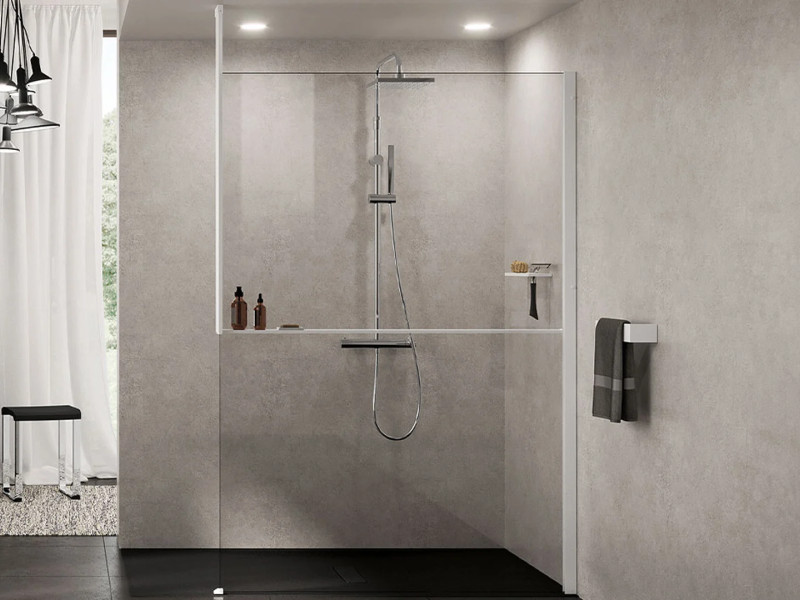
Solution | Ideal if… | Works | Approximate cost (excluding installation) | The trap |
Masonry screed + linear drain | Major refurbishment, concrete slab, new-build | Important (waterproofing, slope, tiling) | 800-2 000 € | Faulty waterproofing = leaks – this is one job you must never cut corners on |
Extra-flat freestanding shower tray | Flat, wooden flooring, quick refurbishment | Lightweight | 200-700 € | Check the available clearance beneath the drain |
Tile-ready shower tray (flush with the floor) | Compromise: screed-style finish, easier to lay | Moderate | 400-900 € | Looking for a meticulous tiler for the joint |
FACQ tip: On a wooden floor, never install a concrete screed without seeking professional advice. The weight of the wet screed and the waterproofing requirements are ill-suited to this substrate. The extra-flat shower tray, which is lighter, is designed for this purpose. This is exactly the sort of detail we go through together at the EXPOcenter before you commit to spending a single euro on the work.
Drainage: the detail that makes all the difference
In a 4 m² space, the positioning of the drain is not just a technical detail for the plumber; it determines the entire layout. There are two options.
The central drain is simple, inexpensive and compatible with all standard shower trays. The slope tapers towards the centre. It is perfect for an extra-flat square shower tray.
A linear drain (a channel running along a wall or door) costs more but makes a real difference to the end result. It allows for large-format tiles to be laid without awkward cuts, a slope in one direction only, and a very architectural look. In small spaces, another advantage is accessibility: no threshold, a gentle slope – ideal if you plan to grow old in your home.
In renovation projects, the limiting factor is almost always the available height beneath the finished floor to accommodate the trap. Ultra-low-profile drain plugs are now available in very shallow depths, but you’ll need to measure this yourself rather than just assuming it.
Making a room look bigger: what works
The visual comfort of a small bathroom depends on minimising visual breaks. Every dividing line that the eye encounters makes the room feel smaller. Here are a few principles that make a real difference in a 4 m² space:
A single type of covering for the floor and walls, or a maximum of two materials. Using the same tiles from the floor of the room right through to the shower floor blurs the boundary and makes the space appear larger.
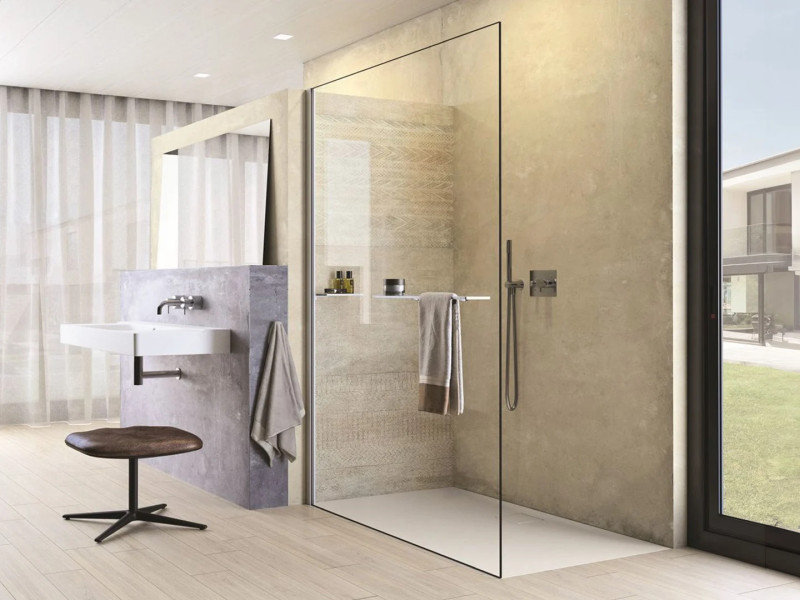
A fixed, transparent glass partition rather than an enclosed cubicle. A walk-in partition allows a clear view and lets light through. If you’re worried about splashes, a sliding door is preferable to a hinged door, which takes up space when opened.
A shower system recessed into the wall. This frees up the space around the shower area and creates a clean, uncluttered look for a reasonable additional cost.
Large-format tiles with narrow grout lines. Fewer lines, greater unity.
Large-format tiles and walk-in showers are among the design features we detail for each type of room in our guide to choosing the right shower for your bathroom, where we also compare walk-in showers, extra-flat shower trays, fully enclosed shower enclosures and recessed showers based on your specific layout.
Belgian limestone: a factor not to be overlooked
Two practical solutions. Firstly, glass treated with an anti-limescale coating (nano-coating): water beads up rather than clinging to the surface, so cleaning is as simple as a quick wipe with a squeegee. Secondly, if your water is very hard, a water softener provides long-lasting protection for the entire system, including the taps. Frosted or textured glass is also a good option in a small space: it hides marks and provides a bit of privacy when the shower is visible from the doorway.
Actual budget for 4 m² in Belgium
Prices vary considerably depending on whether you keep or replace the drainage pipes, tiling and waterproofing. Here are some indicative figures for 2026, including installation, for the shower area alone.
Project level | What’s included | Shower area budget |
Simple replacement | Extra-shallow shower tray + fixed side panel fitted to an existing drain | 1 500-3 000 € |
Partial renovation | Tile-ready shower tray + linear drain + tiling + thermostatic taps | 3 000-5 000 € |
Full Italian brickwork | Screed + waterproofing + linear drain + large-format tiles + concealed taps and fittings | 4 500-7 000 € |
Please check: depending on your region and the nature of the work, renovation grants may be available, particularly when the bathroom is adapted for accessibility (walk-in shower, no threshold). The conditions change frequently and differ between Wallonia, Brussels and Flanders. Check with your regional authority before starting the work.
The mistakes that ruin a little Italian girl
There are three pitfalls that crop up time and again on 4 m² building sites.
The first is to aim too small just to make room for something else. A 70 × 70 cm shower to save 10 cm on the washbasin means showering in a cramped space every day for twenty years. Stick to 80 cm.
The second is to neglect the waterproofing of a masonry screed. Any water ingress in a small upstairs bathroom will show up on the ceiling of the room below. This is an area where you should never cut corners or improvise.
The third option is a hinged door. In a 4 m² space, a shower door that opens outwards will clash with the toilet or washbasin. Always opt for a fixed panel or a sliding door.
Discover your future 4 m² shower at a FACQ EXPOcenter. Compare the actual width of an 80 cm shower screen, assess the thickness of an extra-flat shower tray and see the differences between a central drain and a linear drain. An advisor will also help you determine whether your floor is suitable for a screed or requires a shower tray. Nothing beats a visit in person. At one of our 17 EXPOcentres in Belgium, turn your project into a concrete solution with a free, no-obligation appointment.
Frequently asked questions
What is the minimum size for a walk-in shower in a 4 m² space?
80 × 80 cm for the shower area, with at least 55–60 cm of clearance in front. This is the minimum size below which comfort really suffers. If your layout allows, 90 × 90 cm or 80 × 120 cm make a big difference in terms of usability for a minimal increase in floor space.Is it possible to install a walk-in shower with a screed floor in a flat?
It is possible, but rarely straightforward: you need sufficient floor-to-ceiling height to allow for the slope and drainage, and the waterproofing must be flawless. In most Belgian flats, an extra-flat surface-mounted shower tray achieves the same visual effect without altering the structure, and can be installed in a single day. This is the safest option.Is a glass screen really necessary?
No, but it is recommended for small spaces. A fixed screen helps to limit splashes without creating a partition. Clear glass makes the room appear larger; frosted glass is better at concealing limescale and smudges. A fully enclosed cubicle, on the other hand, makes the space feel smaller.A central or linear drain for a 4 m² shower tray?
A central drain is sufficient for an extra-flat square shower tray and is cheaper. A linear drain allows for large-format tiles without the need for cutting and provides perfect level access, but requires more headroom and a higher budget. If you’re renovating the whole bathroom, a linear drain really makes a difference to the final result.Does a walk-in shower add value to a small property?
Yes. A well-designed walk-in shower is accessible to people of all ages, easy to maintain and seen as modern. In a studio or small flat in Belgium, whether for sale or to let, it’s a real selling point.How long does the installation take?
An extra-flat shower tray fitted over an existing drain: usually one day. A fully built-in walk-in shower, including waterproofing and tiling: typically 4 to 7 working days, depending on how long it takes for the screed and waterproofing to dry.