Self-closing or electronic: which technology should you choose for public washrooms?
In public and commercial environments, the choice of sanitary equipment is no longer separate from strategic objectives related to hygiene, sustainability, and operational efficiency. Selecting the right tap technology plays a key role in this. DELABIE offers two complementary solutions, each with its own strengths: self-closing taps and electronic taps. Both systems can achieve up to 90% water savings, but they do so through fundamentally different approaches.
Self-closing taps: robust autonomy and maximum control
Self-closing taps stand out as the most durable and low-maintenance option. They operate fully autonomously, without the need for electricity or batteries, making them particularly suitable for environments where reliability and continuity are essential.
Operation is simple and intuitive: pressing the push button activates the water flow, which automatically stops after a preset duration, for example seven seconds for washbasins. This controlled flow prevents waste and ensures consistent water consumption. While traditional taps typically consume around 9 l/min, these solutions limit the flow rate to approximately 3 l/min.
They are also designed for intensive use. The chrome-plated brass body and shock-resistant mechanisms make them highly vandal-resistant. The integrated anti-blocking system prevents continuous flow in case of deliberate misuse. In addition, Soft-touch technology ensures smooth and accessible operation, offering clear added value in environments with children or people with reduced mobility.
Operation is simple and intuitive: pressing the push button activates the water flow, which automatically stops after a preset duration, for example seven seconds for washbasins. This controlled flow prevents waste and ensures consistent water consumption. While traditional taps typically consume around 9 l/min, these solutions limit the flow rate to approximately 3 l/min.
They are also designed for intensive use. The chrome-plated brass body and shock-resistant mechanisms make them highly vandal-resistant. The integrated anti-blocking system prevents continuous flow in case of deliberate misuse. In addition, Soft-touch technology ensures smooth and accessible operation, offering clear added value in environments with children or people with reduced mobility.
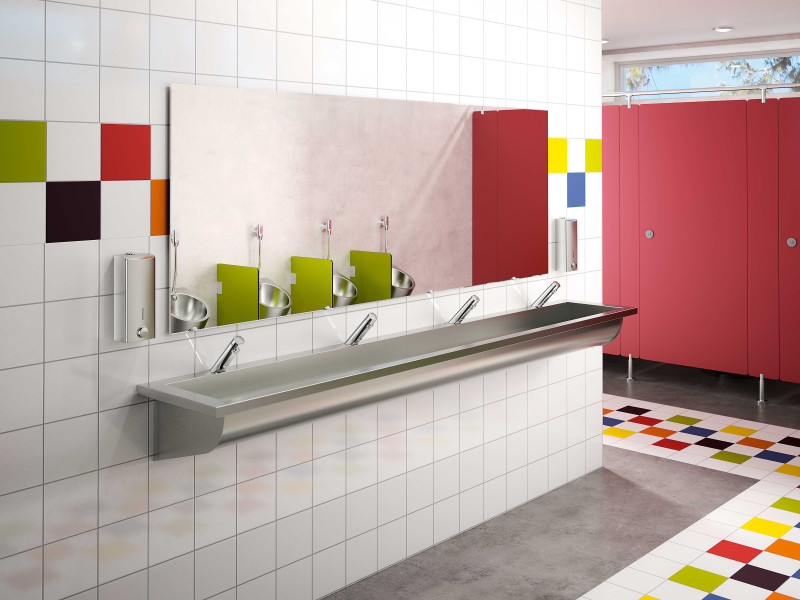
Electronic taps: hygiene and precision as standard
Electronic taps meet the highest hygiene standards thanks to their contactless operation using infrared detection. Water flow is activated only when hands are detected and stops immediately once they are removed. This results in extremely precise dosing and eliminates unnecessary consumption down to the second.
In addition to water savings, these systems also deliver significant energy savings. Reduced hot water usage directly translates into lower energy costs, making it an important lever in total cost of ownership (TCO).
Another advantage is the integrated periodic flushing function. If the tap is not used for 24 hours, an automatic flush is triggered to prevent water stagnation and limit the growth of bacteria such as Legionella. Thanks to a patented anti-stagnation solenoid valve, the water is fully renewed with each use, which is a key differentiator compared to conventional diaphragm valves.
In addition to water savings, these systems also deliver significant energy savings. Reduced hot water usage directly translates into lower energy costs, making it an important lever in total cost of ownership (TCO).
Another advantage is the integrated periodic flushing function. If the tap is not used for 24 hours, an automatic flush is triggered to prevent water stagnation and limit the growth of bacteria such as Legionella. Thanks to a patented anti-stagnation solenoid valve, the water is fully renewed with each use, which is a key differentiator compared to conventional diaphragm valves.
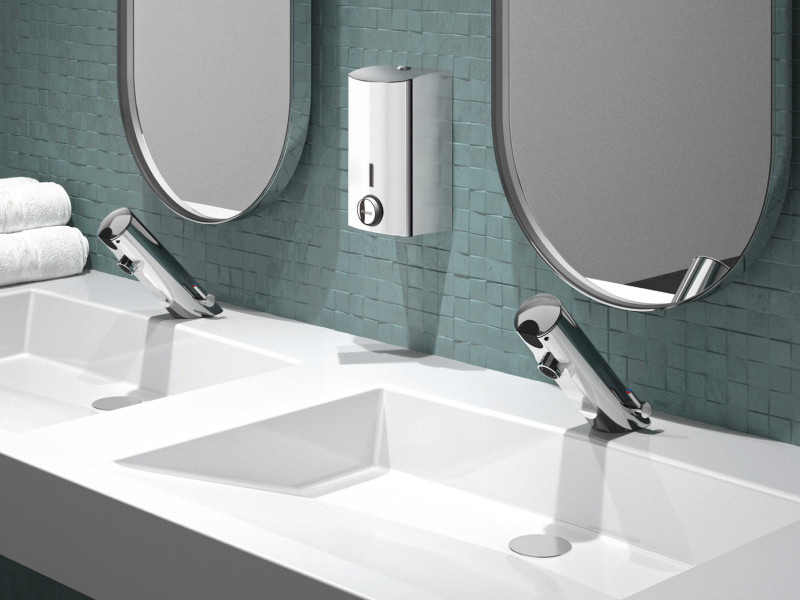
Sustainability as a structural advantage
Whichever technology you choose, sustainability remains central. Both solutions are backed by a 30-year product warranty and a 50-year repairability guarantee, reflecting a long-term vision focused on circularity and investment security. They also comply with leading environmental standards such as BREEAM, LEED, and GRO, directly contributing to the sustainability performance of any construction or renovation project.
By consciously selecting the right tap technology, you can not only meet current hygiene and environmental requirements, but also create long-term, future-proof value for every project.
Discover the full rangeBy consciously selecting the right tap technology, you can not only meet current hygiene and environmental requirements, but also create long-term, future-proof value for every project.